The human cost of governing by spreadsheet

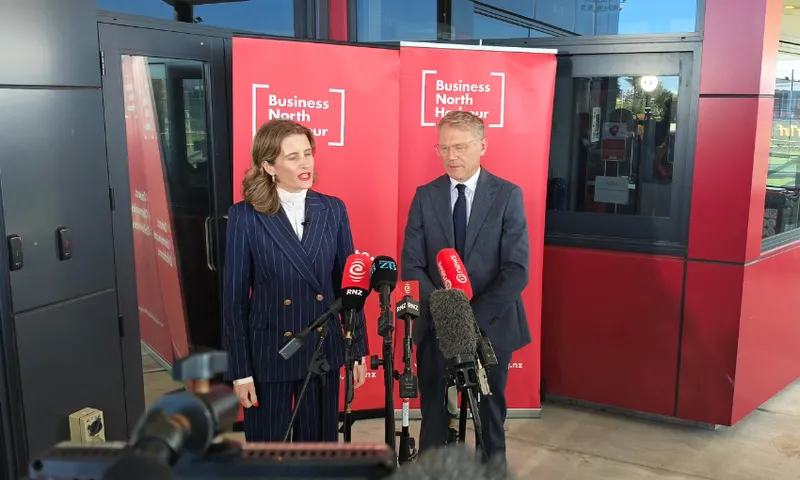
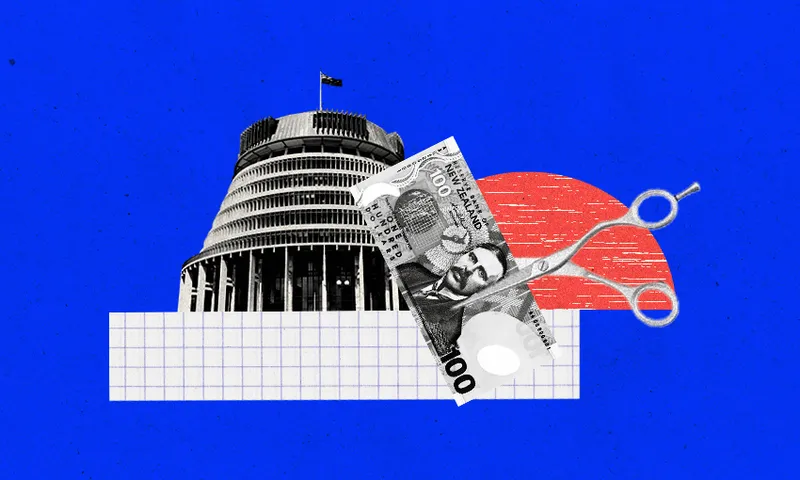
Nicola Willis announcing the public service overhaul this week, against a backdrop of public service workforce stats (Photo: Dean Purcell/New Zealand Herald via Getty Images; Public Service Commission; additional design by The Spinoff)
New Zealand’s democracy operates on an implicit social contract. A government that repeatedly destabilises workforces, reduces services and creates widespread insecurity will find that contract beginning to erode, writes Rebecca Jayde.
Some of the most important things in New Zealand society exist for a reason that has nothing to do with money. Most of us know this. We have just spent the last two years watching a government that seems to have forgotten it. Imagine how we would get on without Hato Hone St John Ambulance in our hour of crisis, without Plunket supporting new parents as they find their feet through the fog, without Playcentre providing the village young families need, without Hospice sitting with dying people so their families don’t have to do it alone. Without community legal aid; without the food banks that quietly absorbed the shock when inflation outpaced wages and nobody in power wanted to say the word “poverty” out loud.
None of these places would pass this coalition government’s pure market-efficiency audit. And yet most New Zealanders would say, without hesitation, that these are precisely the things that make this country worth living in.
We are living in a time where our instinct that some things matter more than their bottom line is being systematically challenged by a government that has decided that our quality of life can be measured only in terms of its fiscal output. Every organisation and department measured by this metric alone. Every worker assessed against cost, and every service evaluated by whether it can be cheaper, faster or, ideally, done away with entirely.
What is actually being done away with is not inefficiency. What is being done away with is us.
National ministers Nicola Willis and Paul Goldsmith announced this week that the government intends to reduce the core public service to around 55,000 workers by 2029, down from just over 63,000 today, through mergers, digitisation, AI tools and spending caps. The stated rationale is returning staffing to pre-2017 levels. This implies the country has simply been running excessive paperwork for the past nine years and that the solution is obvious. The implied logic of these cuts is that 9,000 people were essentially surplus. Warm bodies occupying desks, processing nothing, contributing nothing, simply drawing salaries while the real work happened around them. It is an extraordinary claim. And no evidence has seriously been offered, let alone proved.
But New Zealand in 2026 is not New Zealand in 2017. Our population has ballooned significantly by over half a million more people. We are older. Housing demand has intensified. In late 2017, the Ministry of Social Development’s public housing waitlist sat at roughly 6,182 applicants. By March 2026, despite a massive building boom, the register still contained 19,704 applicants. This means that while Kāinga Ora successfully grew its housing portfolio by roughly 23%, the demand grew by roughly 218%. Social services are under pressure from multiple directions simultaneously. Even the Ministry of Health acknowledged years ago that population growth and an ageing population would place increasing strain on public infrastructure.
So what exactly is the logic of restoring a historical staffing ratio while ignoring the reality that the country itself has fundamentally changed? Kāinga Ora did not expand because the population or demand stayed static. Public demand did not rise because life became simpler. Government agencies grew, in large part, because the workload clearly grew.
In the interests of fairness, I want to explore where this government is coming from, because their decisions are shaped from this ideology. National came to power with a clear and loudly repeated message: Labour overspent, debt is dangerously high, and New Zealand is living beyond its means. This narrative has been pervasive. But it deserves scrutiny rather than simple acceptance.
While it did rise significantly under the Labour government, New Zealand’s public debt remains comparatively low by international standards. The OECD average for net government debt sits considerably higher than New Zealand’s position. Much of Labour’s spending increase occurred during and immediately after a global pandemic – a period when virtually every developed economy in the world, including those run by conservative governments, dramatically increased public expenditure to prevent economic collapse. Wage subsidies, health responses and economic stabilisation were not unreasonable indulgences. They were emergency measures.
The “debt crisis” framing is not entirely fabricated – debt did increase, and there are legitimate questions about the pace of post-pandemic fiscal consolidation. But the language of emergency, of crisis requiring urgent and sweeping cuts, does political work that the underlying numbers don’t fully support. It creates the conditions for decisions that might otherwise face far greater public resistance. When a government says the house is on fire, people are not stopping to consider whether the proposed solution will actually put the flames out – or whether it might, in fact, accelerate them. They just want the fire out so the house can be saved.
Thousands of public sector roles have already been cut since the coalition came to power. Many of those workers have struggled to find new employment in an economy where job advertisements have sharply declined and unemployment has risen. Some now rely on government support themselves, which is a bitter irony in a political climate obsessed with reducing “dependence”.
This is not merely speculation. Research on austerity and destabilised labour markets consistently shows that large-scale public sector layoffs can reduce government expenditure in one area while increasing it elsewhere: through unemployment support, reduced tax revenue from lower economic activity, and declining consumer spending in the communities most affected. The savings are frequently overstated. The costs are always coming back around somewhere; they don’t just disappear.
Now we are told AI will absorb the remaining work. Robots over humans.
But AI is not free. It requires enormous digital infrastructure, expensive implementation, cybersecurity investment, ongoing licensing costs, cloud services, consultants and technical specialists. The public service’s own digital workforce data shows rapid growth in ICT and cybersecurity roles precisely because digital systems create new risks and dependencies alongside their efficiencies. Nor is AI environmentally neutral – large-scale systems consume vast amounts of energy and water globally. These costs are rarely mentioned in the rhetoric of AI as a magical budget solution.
Then there is the question of sovereignty. What does it mean for a government to increasingly rely on international technology corporations with questionable values to process public information, manage services and make decisions about citizens’ lives? What protections exist around that data? What happens when terms of service change, when systems fail, or when foreign-owned platforms become so embedded in the machinery of government that democratic accountability becomes effectively impossible? Scholars studying technocracy and automation have warned for years that this kind of dependency can centralise power in ways that are invisible until something goes badly wrong and it can’t be walked back. Do we want a supposedly more efficient government at the cost of our country’s autonomy and resilience? Really?
Behind every “back-office role” being cut is the invisible infrastructure that allows frontline services to function at all – payroll systems, compliance, housing coordination, information management, safety processes, case administration. When those systems degrade, frontline workers feel it immediately. These are not jobs that exist because someone forgot to trim the bureaucracy. They exist because complex administration of a complex modern state is genuinely complex work.
Michael Sandel, the Harvard political philosopher, has argued that when market logic moves into domains where it doesn’t belong, it doesn’t just allocate resources differently – it corrupts the meaning of the thing itself. A public servant evaluated purely by what they cost rather than what they hold together is no longer a civic actor; they are a line item and cutting them starts to feel obvious rather than devastating.
Max Weber identified the same danger a century earlier, coining the phrase “the iron cage” to describe what happens when rational efficiency becomes the organising principle of all human life – not that institutions fail, but that they succeed so completely at reducing everything to measurable procedure that the people inside them lose the capacity to ask what any of it was for. That is precisely the trap a government falls into when it announces thousands of job cuts and describes them, without apparent discomfort, as “optimisation”.
Hannah Arendt was one of the 20th century’s most important political philosophers. She wrote in the shadow of totalitarianism, trying to understand what makes democratic public life worth preserving and what causes it to collapse. One of her central arguments was that work is not merely economic. It is tied to dignity, to contribution, to identity, to a person’s sense of having a place in the world and meaning within it.
When a government publicly frames large groups of workers as inefficient burdens, as excess to be shed in the name of modernisation, it is doing something that goes well beyond a budget adjustment. It is making a statement about whose labour counts. And by extension, whose lives count. That is not fiscal policy. That is political philosophy. And it has consequences that will not appear on any spreadsheet, but will show up, quietly and stubbornly, in the fabric of the society left behind.
New Zealand’s democracy operates on an implicit social contract: citizens pay taxes, governments provide stability, infrastructure and services, and in return people feel invested in these institutions that represent them. A government that repeatedly destabilises workforces, reduces services and creates widespread insecurity will find that contract beginning to erode. Civic trust weakens. Democratic confidence falls.
And the research on this is clear – the scholars studying the austerity programmes that swept through the United Kingdom and Europe after 2008 documented the consequences of this in detail: declining institutional trust, increased political polarisation, weakened local economies, worsening mental health outcomes, lower civic participation, accelerating brain drain, delayed family formation. The social costs accumulated mostly in communities without political voice and arrived on governments’ balance sheets years later in ways nobody wanted to connect back to the original decisions.
Over the past two years, job insecurity has become the defining emotional weather of New Zealand’s public sector. Restructures, hiring freezes, redundancies and warnings of further cuts have created a persistent atmosphere of anxiety.
A society cannot endlessly threaten people’s livelihoods and expect social confidence to hold.
Ambulance. Hospice. Plunket. Playcentre. Legal aid. We value those things – instinctively, immediately – because we understand that a society is not a corporation. It does not exist to generate returns. It exists to allow human beings to live with some degree of dignity, security and meaning. We valued those needs and decided to build those institutions – public and private, funded by donation and taxpayer alike – because we understood that economic policy, in and of itself, does not care for the dying, does not sit with the grieving, does not visit the new mother at the moment when everything feels impossible. People do.
The question is not whether AI can assist parts of government work. Of course it can. The question is whether we are building a stronger, more sovereign, more humane community – or dismantling one, quietly and incrementally, under the language and guise of innovation and fiscal responsibility.
A healthy society is not an efficient one. It is a stable one. It is one where people trust that institutions will be there when they need them, where work carries meaning beyond a salary, where ordinary people can see themselves in the future being built around them.
It is one that has hope.
You cannot govern a society as though it were a failing business to be restructured. Strip away enough of the people who hold it together and eventually you are no longer trimming the excess. You are cutting into the bone.
We are not your failing commodities. We are the country.

Rebecca Jayde
Rebecca is a coach and facilitator as well as a writer with postgraduate training in communication, education and trauma theory. She explores stories of grief, resilience and the human condition in both historical and contemporary contexts.


