


The new coach has assembled some old familiar faces to help restore the team’s dominance. But will his nostalgia-tinged appointments pay off?
William Shakespeare had a bleak view of the ageing process. In As You Like It, he described old age as “second childishness and mere oblivion. Sans teeth, sans eyes, sans taste, sans everything.”
A lot has changed since 1599, not least life expectancy and dental care. Nevertheless, incoming All Black coach Dave Rennie’s decision to add Sir Graham Henry to his coaching/management team as an independent selector is, on the face of it, reactionary in the sense of harking back to a bygone era.
The 2011 World Cup winning coach, one of the most consequential figures in the world game over the past 30 years, turns 80 early next month. He’ll reach that milestone six days before US president Donald Trump, hardly living proof that age confers wisdom.
Factor in the third coming of Gilbert Enoka, who has clocked up 23 years as leadership and mental performance coach under four head coaches, and the appointment of Don Tricker, another veteran of the golden era, as high performance director, and Rennie’s project takes on a back to the future feel. A less sanguine view would be that it smacks of generals fighting the last war.
Rennie has surrounded himself with people he knows and trusts: he and defence coach Tana Umaga go all the way back to Wellington club rugby last century. Strength and conditioning coach Phil Healey has accompanied Rennie on much of his coaching journey, from Hamilton to Glasgow to Japan.
It all brings to mind those Sylvester Stallone movies in which a bunch of ageing hard cases reunite for one last caper, telling themselves and each other that the fact they’re still alive proves they’ve still got what it takes.
We’re entitled to wonder if this nostalgia-tinted approach is the best way forward. Professional sport, especially at the elite level, never stops evolving and is littered with examples of coaches who failed to adjust to change, whether tactical, technical or generational. They end up learning the hard way that, in the words of a Warren Zevon song, “The shit that used to work, it won’t work now.”
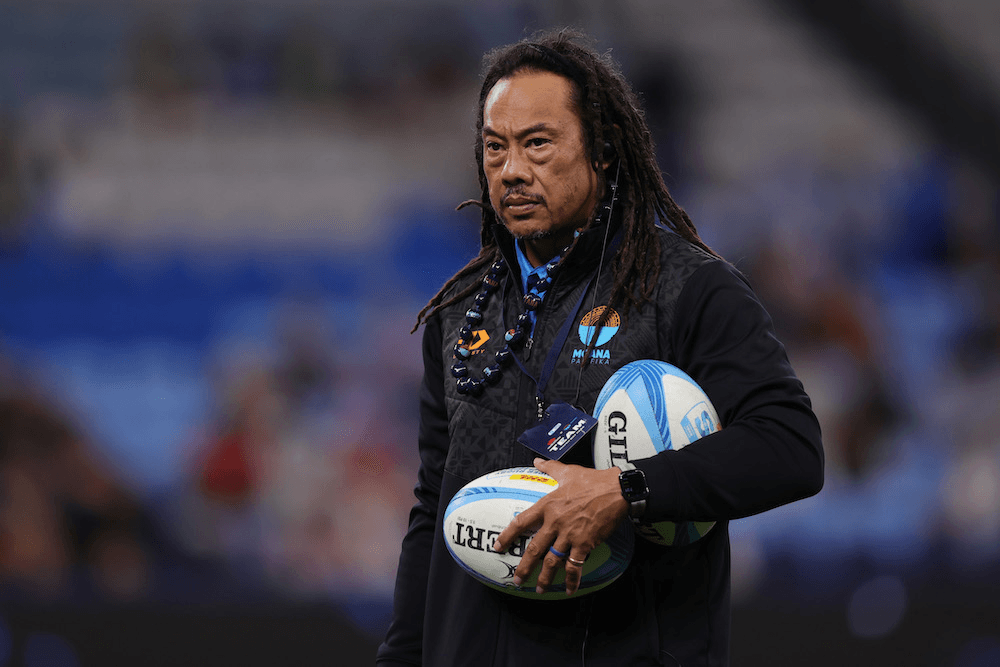
In his autobiography, Umaga reflected on being coached at the Hurricanes by legendary All Black Bryan ‘Beegee’ Williams: “He came in with a lot of respect but soon found himself behind the eight ball. Information technology had taken analysis to a whole new level… He wasn’t really up to speed with this new dimension of the game. I felt for him but we rugby players aren’t very patient people. At first we cut him some slack but, when things didn’t change, the players started putting it on him and getting a bit cheeky.”
On balance, though, you’d have to assume the individuals concerned are too hard-headed and bear too much scar tissue to believe they have the Midas touch or that getting the old gang back together is a one-step method for replicating the All Blacks’ pre-eminence from 2005 to 2016.
It seems likely that Rennie’s choices were driven by his short runway and the enormity of the challenges ahead. In August the All Blacks embark on a tour of South Africa involving midweek games against provincial franchises and three tests against the Springboks – the reigning World Champions and, in 2025, the best team in the world by some distance. (A fourth test will be played in the rugby hotbed that is Baltimore, Maryland.)
Given the tour is being hyped as “The Greatest Rivalry”, it would be both chastening and embarrassing if the All Blacks aren’t highly competitive. To give an idea of the degree of difficulty: the All Blacks first toured South Africa in 1928; it took them until 1996 to win a test series there.
Next year, less than 500 days away now, is the World Cup, which the All Blacks haven’t won since 2015.
Secondly, as the sacking of Rennie’s predecessor Scott “Razor” Robertson suggested, there’s an urgent need to restore the All Blacks’ self-belief and persuade a restless rugby public that the team is, in New Zealand Rugby chairman David Kirk’s terminology, on the right trajectory.
Rennie appears to see value in surrounding himself with, and exposing the players to, a more self-assured, worldly and demanding coaching and management group than Robertson’s. Robertson and his closest lieutenants Scott Hansen and Jason Ryan were all products of the (enormously successful) Canterbury/Crusaders system. It’s hard to quibble with their seven successive Super Rugby titles but equally hard to play down the significance of having the best playing roster in the competition. The All Blacks haven’t enjoyed that luxury for the best part of a decade.
Following Robertson’s sacking, reports emerged that he wasn’t a good listener or open to differing points of view. With the famously salty and assertive Henry on board, the new regime should be anything but an echo chamber.