Viva la Bevolution: Watching the Wellington Phoenix women make history

Photo: Hagen Hopkins / Getty Images
Day one Phoenix fan and Porirua Park regular Miriam Moore on how the women’s team went from wooden spooners to A League grand finalists.
In 2007, my dad asked if I’d like a season ticket to watch a new football team. As a 14-year-old who gave up football for hockey at seven (after seeing the Black Sticks play once), I shrugged and agreed to check them out. It turned out I absolutely love football – I’m still renewing that Wellington Phoenix season pass all these years later.
In 2021, the Phoenix added a women’s team to compete in the expanding A League Women competition. I was embarrassingly slow to start backing the Wāhinix, as they’re affectionately known – their first season took place entirely in Australia due to Covid restrictions, and it took 11 games for them to register their first win. (Unlike our unbearably successful Auckland counterparts, Phoenix supporters know that being a fan comes with plenty of lows.)
On 20 November 2022, I and a record number of fans turned up for their first game of the second season and first proper home game at Hnry (nee Sky) Stadium, witnessing a 4-1 loss to Melbourne City. We would go on to claim the wooden spoon for the second season in a row. But something shifted in the air that year – a little event called the Fifa Women’s World Cup came to town, and for as little as $10 I could turn up to every game in Wellington and have my world opened up to elite women’s football.
Suddenly I was watching every pool game, collecting the Panini cards, discovering who Pernille Harder, Aitana Bonmatí and Klara Bühl were. The abrupt end of the World Cup left a huge women’s football-sized hole in this woman’s heart, and only Phoenix Women’s games could fill the void.
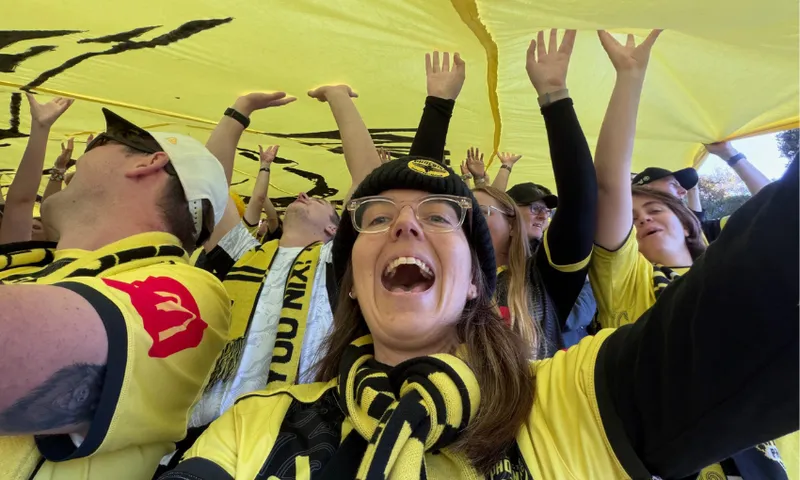
In the beginning I struggled to convince people to come with me. Bravely, I started attending games alone. This turned out to be no problem at all – the intimate nature of Porirua Park, and the ever-inclusive Yellow Fever zone, created a space where it was completely OK to spend your Sundays afternoons by yourself, enjoying women’s sport.
The third and fourth seasons had their moments. Venezuelan Mariana Speckmeier created some buzz with 10 goals in the 2023-24 season, while in 2024-25 beloved captain Annalie Longo’s dog ran onto the pitch mid-game. We witnessed the debut of Macey Fraser, an unbelievable talent, then lost her to the US National Women’s Soccer League for a record fee.
In the background of all of this, newfound (or long-standing) women’s football fans may have noticed a commotion at the 2024 Olympics. The Canadian coach was suspended by Fifa for one year after a drone was spotted spying on none other than New Zealand’s Football Ferns during a training session. That coach was Bev Priestman, who had previously taken Canada to Olympic gold and had now become a national sporting enemy.
Back in Wellington, the Phoenix quietly parted ways with coach Paul Temple after another season finishing outside the playoffs. Leading up to the current season, we started seeing some exciting signings being announced – internationals like Ellie Walker and Tessel Middag, and Football Ferns like Grace Jale and experienced keeper Vic Esson. By the announcement of hugely popular Nepalese striker Sabitra ‘Samba’ Bhandari, it was impossible to deny the signs were all pointing to a seismic shift at Porirua Park. The announcement of the new coach was to come in late July, exactly one year after Fifa served Bev Priestman her ban.
There were initially some reservations when Priestman was (surprise!) unveiled as the Wāhinix’s new coach. But it was also evident from the calibre of players being signed that this was someone people wanted to train under, and maybe it was time for forgiveness. The big signings kept coming – Women’s Super League player CJ Bott returned to her hometown, and the prodigal Macey Fraser returned. Suddenly the Phoenix was a place where young talent grew, rising talent stayed, international talent came, and old talent returned – the perfect ingredients for a successful team.
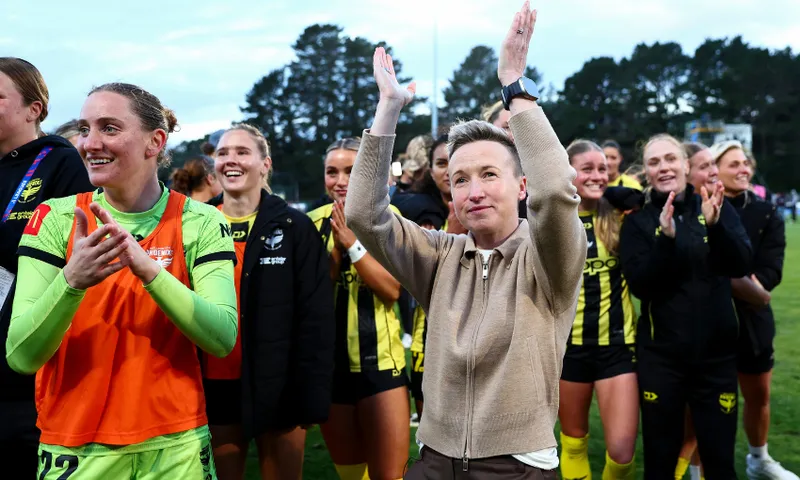
The impact has been momentous. Our lowest attendance this season of 772 is higher than the average attendance the season prior. The stardom of Samba saw more Phoenix fans turning up to away games than home fans, thanks to the loud and proud Nepalese diaspora in Australia.
But this season hasn’t been without its roadblocks – in our first game, Dutch international Middag suffered an ACL tear (a season ending injury infamous for being more likely to impact women due to football boots not being made for our lady feet). Five-season Nix veteran Alyssa Whinam followed, then the superstar Samba. Captain Bott took leave for a nicer reason, falling pregnant with her first child.
The team didn’t give up, though, and the fans didn’t stop turning up. We signed injury replacements, including this season’s top scorer Makala Woods, whose two goals in the second-leg semi-final against Brisbane saw us pull off the greatest comeback in our history. Brooke Nunn and 17-year-old local Pia Vlok have proven formidable, with the latter becoming the first Wāhinix hat-trick scorer in history.
This team’s success lies not only in what Bev Priestman’s coaching has produced on the pitch, but in the culture that’s developed off it. It’s impossible not to notice (via Instagram, of course) how close-knit the team are – it feels like being part of the best friendship group ever, and watching them succeed is bringing me the greatest joy in the world.
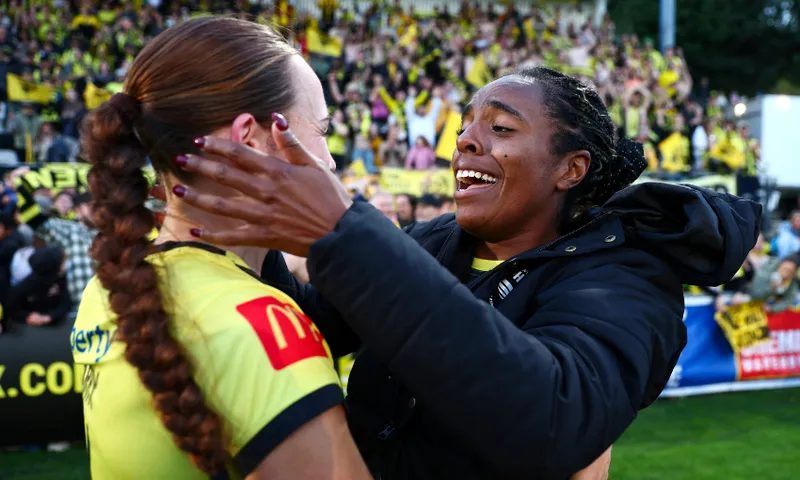
New captain Mackenzie Barry, the only other member of the team to have played all five seasons, said it best after winning Sunday’s semi-final: “I’m saying this right now but it’s hard for me to comprehend that we’ve made history. It’s so amazing.” As one of 5,293 people in the crowd, it truly was an incomprehensible feeling. I stayed over an hour after the game, soaking up every last second, chatting to players as they signed autographs, even caving and sheepishly asking Pia Vlok to sign the sleeve of my Phoenix jersey.
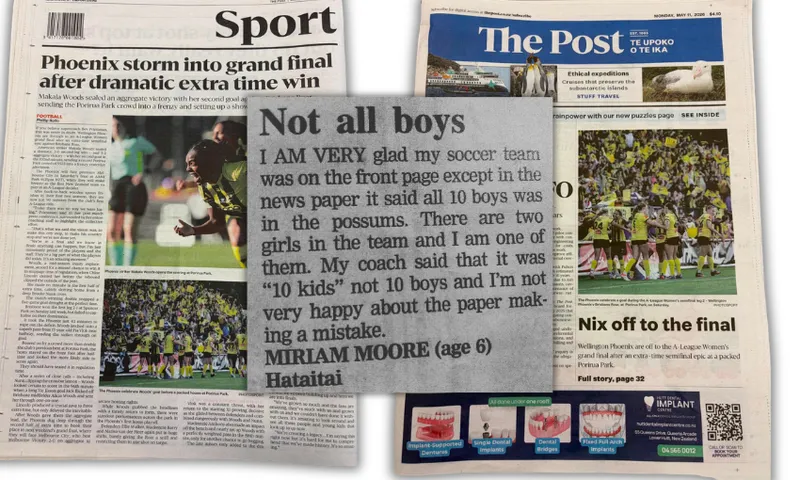
The recognition of what it means to be the first New Zealand team to reach the A League finals has extended beyond the diehard fans. Seeing women’s sports on the front page of the Post was something special. Unbelievably, I’ve had four separate Auckland FC fans message me their excitement, proving a Fever-Port bond may be possible after all. Likewise, the away supporters’ bay in Melbourne’s AAMI Park is selling out faster than the home bay, due not only to Melbourne-based expats (and committed Wellingtonians flying over), but also fans of other A League clubs turning up to back the underdogs over five-time premiers Melbourne City.
Reaching the finals means a lot. For the players, for the fans, for the club, for football in Aotearoa, for all the young children in the stands, looking up to our women’s football team as their heroes. I think back to myself quitting football at seven, and how if this team had been around back then I might still be playing today.
A win on Saturday night would of course be everything, and the footballing world is backing us to do it. But the impact of this team – of the Bevolution – has already changed women’s football in Aotearoa. Up the Wāhinix.

Miriam Moore
Miriam is an urban designer and member of Women in Urbanism, based in Pōneke.


