Farmers support it. Animal activists want it. Will the government take action?

Behind ordinary products lies differential treatment of animals. (Image: The Spinoff)
Animal products, specifically pork, eggs and wool, are imported to New Zealand from countries with fewer animal welfare laws in place. Farmers and activists alike say this is unfair and the law should change.
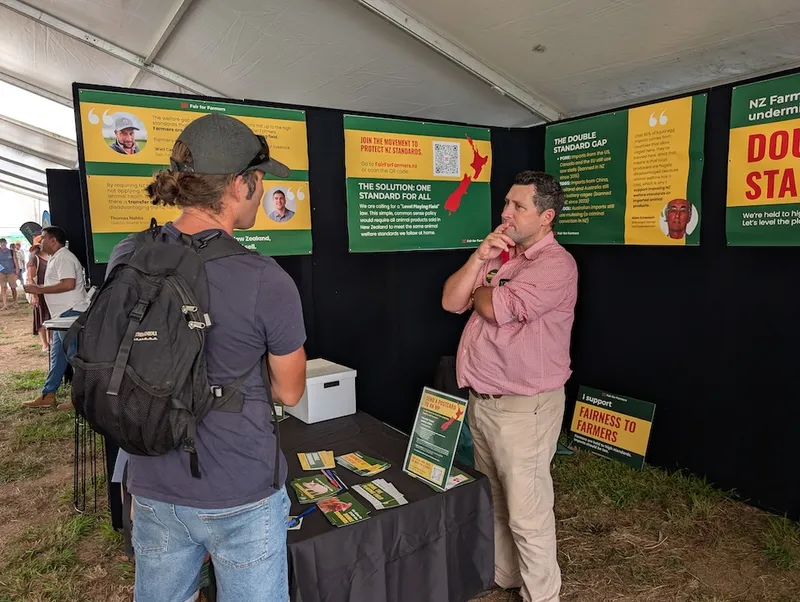
At Northern Fieldays last week, an unlikely alliance presented itself: Animal Policy International, an animal-rights group focused on changing the law to make animals’ lives better, and a group of farmers from the pork, dairy, beef and chicken industry.
Bringing them together was the question of the “welfare gap”: how animal products are imported to New Zealand from places that do not meet our animal welfare laws. Here’s a brief introduction to the current state of animal welfare discrepancies – and why animal welfare minister Andrew Hoggard is being targeted by concerned farmers and animal rights campaigners alike.
What is the welfare gap?
“I support New Zealand’s animal welfare standards, but it shouldn’t be at the cost of New Zealand farmers competing with other places,” says Robert Hickson, a sheep and beef farmer based in Wairarapa. While the competition doesn’t affect him directly, he’s supporting the campaign in solidarity with chicken and pig farmers who “have to compete against countries without the same standards as New Zealand.”
Almost all laws to protect animal welfare come with costs, such as providing more space for animals, enabling natural behaviours and housing them in adequate shelters.
Most animal welfare provisions are in the 1999 Animal Welfare Act, which has been updated several times, including recognising that animals are sentient in a 2015 amendment.
New Zealand has heaps of farms – how much animal products do we import, anyway?
Pork is the biggest culprit, with 63% of pork consumed in New Zealand imported – even if it is partially processed into products like ham and bacon here.
Another is eggs. While fresh eggs come from New Zealand, powdered and liquid eggs are imported as a convenient additive for baked, packaged food made at a commercial scale, like biscuits or confectionery. In 2023, 50% of New Zealand’s liquid egg imports came from China, where battery cages are allowed for hens. In New Zealand, a ban on battery cages came into effect in 2023 (although slightly-more-spacious colony cages are still legal).
While not an edible product, wool is also part of a welfare gap. In many parts of the world mulesing is common – a practice in which strips of a live sheep’s skin are removed to prevent flystrike infection. In 2018, we became the first country to impose a ban on mulesing. Yet New Zealand imports millions of dollars of wool, mostly from Australia, where mulesing remains legal.
“People don’t know this cruelty is on our shelves,” says Mandy Carter, co-director of Animal Policy International.
Imports of products from other domesticated animals, such as dairy, beef and lamb are limited – mostly specialty products, like French cheese. However, farmers of all types have backed an open letter asking for equal standards.
OK, what’s going on with pigs? Wasn’t there something about regulations being rescinded?
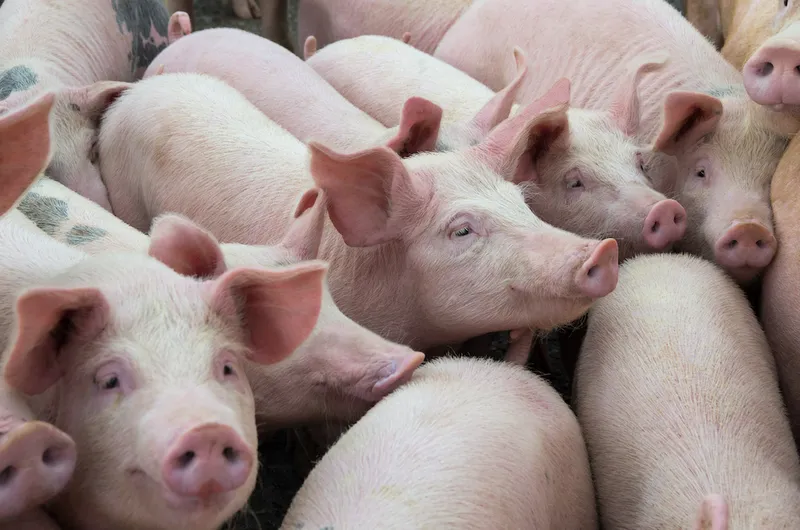
At the end of 2025, Hoggard changed aspects of the law relating to pig farming – increasing how much space the animals get, allowing them to engage in nest building behaviours and reducing the time they spend in controversial farrowing crates. These structures prevent pregnant and lactating pigs from moving around. “Together, these proposed new requirements will be amongst the highest in the world and demonstrate the importance New Zealanders place upon animal welfare,” said the minister in a statement. However, while regulations were tightened, the law actually extended the use of farrowing crates, that would have kicked in at the end of 2025. Instead, their use is permitted until 2035.
Part of the argument made by industry body NZ Pork in seeking the extension was the discrepancy with the US, where much of New Zealand’s pork imports originate. In most parts of the US, not only is extended use of farrowing crates permitted, so are sow stalls, another restriction on pig movement which New Zealand banned in 2010.
Global trade is volatile, and New Zealand depends on buying and selling stuff from other countries. Would imposing more rules on imports hurt our trading relationships? Would the price of food go up?
Research from Carter’s organisation suggests that New Zealand producers could fill gaps from any import restrictions resulting in a ban, and that extra costs would be an average of 25 cents a week per household. “It would be simple to adjust volumes of imports, or importers could send higher-welfare products,” she says.
Because New Zealand is such a small market, and most animal products are supplied domestically, the likelihood of a trade retaliation is low, advocates argue. In other places, similar sales bans haven’t impacted supply. For example, California has a sales ban on products that don’t meet its state-level animal welfare standards for pigs and hens. The bill hasn’t had a major impact on pork and egg availability; pork costs have risen by about 1%. However, it has been opposed by Republicans, even though it was supported in the Supreme Court.
The EU is currently revising its animal welfare policy, and a similar ban on non-compliant products has been suggested. Switzerland has imposed a policy where fur produced in other countries has to meet its domestic welfare standards.
Carter says legal analysis suggests welfare-based import restrictions wouldn’t impact New Zealand’s free trade agreements. “We do it for biosecurity – so we could do it for welfare,” she says. While some welfare provisions were included in the NZ-UK free trade agreement, that’s a less effective mechanism on the whole, she says. “If it’s up for negotiation at each separate negotiation, each time it can be negotiated down.”
The government seemingly doesn’t agree. “We don’t restrict trade and, if we did do so on animal welfare grounds, it would open New Zealand primary sector exporters up to similar retaliatory non-tariff trade barriers.”said associate agriculture minister Andrew Hoggard, in comments provided to The Spinoff. “That’s not a good idea for a country that exports more than 80 percent of the food it produces, including $42 billion a year of animal products.”
If not a ban, some kind of tariff could be applied to products from places with fewer animal laws in place, to account for what New Zealand farmers spend to comply with animal welfare regulations, says Hickson. “I think we should just say this is what we believe in and we don’t think we should have different standards for pork in this country.” He also thinks the government should advocate for trading partners to improve animal welfare.
And what about animals – would import restrictions mean more animals have better lives?
Animal Policy International estimates that several hundred thousand animals are eaten or used by New Zealanders while not experiencing care in line with New Zealand law. For comparison, New Zealand has more than 30 million farmed animals, including 24 million sheep and nearly 6 million cows. So in the grand scheme of things, an import ban wouldn’t affect that many animals – but, Carter says, that’s all the more reason to do it.
How likely is the government to act?
Hickson says that animal welfare and imports should “definitely” be on the agenda in an election year, and he’s confident that public pressure can make that happen. “For parties to support it depends whether we get enough support for this important issue.”
The National Party has repeatedly said that it “backs farmers” – and animal welfare is a reasonably popular issue, with 83% of people in a 2023 poll saying that imported products should meet the same standards as New Zealand-made products. Steve Abel, a Green Party MP, currently has a “closing the welfare gap” members’ bill in the biscuit tin.
There might be no movement no matter who is elected in November. “Under the previous government, the primary production committee considered a petition on this issue and concluded that it would not be appropriate to impose domestic animal welfare standards on imported products because doing so would be contrary to New Zealand’s international obligations,” Hoggard said.
Carter says public support and farmer advocacy should be enough for the government to move without delay. Her message to the National-led coalition is that “it’s important not to be all talk and no action.”

Shanti Mathias
Shanti is a contributing writer at The Spinoff with a focus on Christchurch and the South Island. Email her at shanti@thespinoff.co.nz


