Trevor Mallard on where Labour went wrong

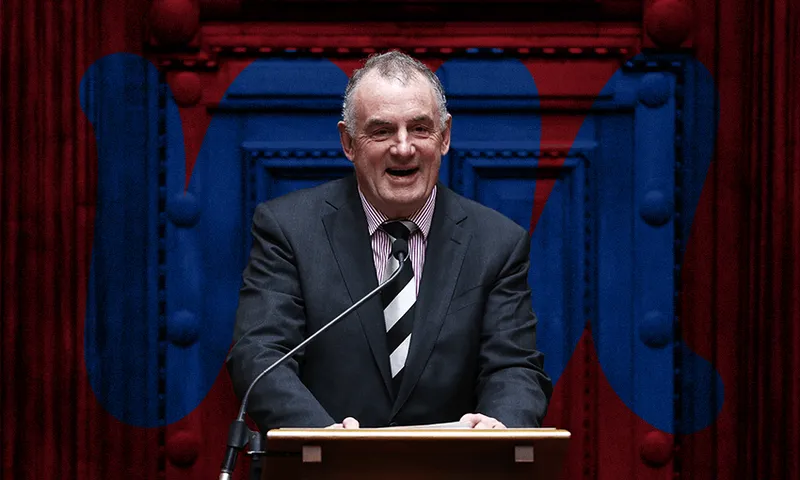
Trevor Mallard pictured at the Labour away caucus in January 2022. (Photo: Andy Jackson/Getty Images)
The former speaker revisits the Ardern years, defends his response to the parliamentary occupation and suggests foreign financing was at play.
After a high-profile, influential and sometimes pugnacious career in politics that spanned the 1980s through to the 2020s, Trevor Mallard hasn’t quite given it away yet. He’s been providing advice to Chris Hipkins – the Labour leader whose first work in parliament was as a staffer in Mallard’s ministerial office – on policy work for the approaching election.
Despite the paucity of policy announcements from Labour so far, there’s plenty of work under way, he told me at the weekend. And, he said in his first major appearance since returning from an ambassadorial posting to Dublin which ended after he was recalled by foreign minister Winston Peters, such preparedness is crucial.
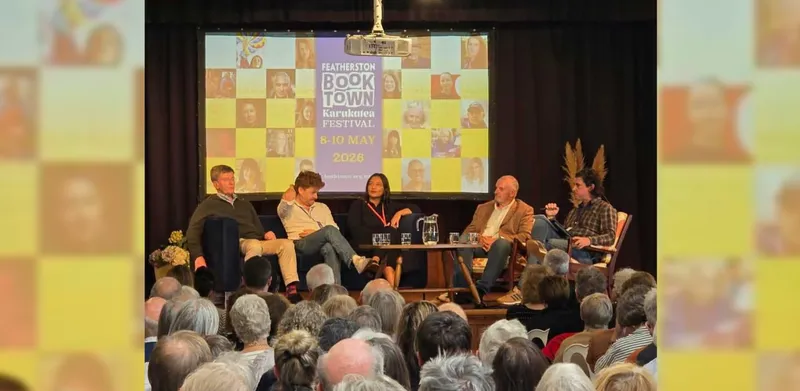
Speaking as part of a panel I chaired at Featherston Booktown Karukatea Festival on Saturday, tasked with traversing the period 2017-2023 and the impact of the sixth Labour government, Mallard said that it wasn’t just the succession of crises across that time that had impacted the policy legacy, but the lack of preparation.
“Both in 2017 and 2020, there wasn’t what we would consider to be a properly debated, discussed within party branches, properly built manifesto that people had ownership of,” said Mallard.
In both of those elections “the unexpected happened”, he said. In 2017, the late surge following the elevation of Jacinda Ardern culminated in the first MMP government led by a party with the second-largest haul of seats. Three years later the first single-party MMP majority was achieved. “And I just don’t think that the policy preparation and thought had gone in by the party and the spokespeople to be prepared to take the opportunities that were there.”
The list of policy ambitions that came a cropper, whether by falling short or being legislated too late to become embedded, is sobering: KiwiBuild, pay agreements, the Māori Health Authority, the media merger, income insurance, Auckland light rail. Asked whether it was fair to say that amounted to an opportunity lost, Mallard said: “It’s very fair. And I think part of that goes to the preparation, but also I think some of it goes to a lack of foresight.”
He explained: “I mean, there’s no point in trying really hard to get something done in the last few months before the election, because the chances are, if you lose, it’s going to be undone afterwards. And my view is that some of the older habits that used to happen across a lot of policy areas, of reaching across the aisle and actually trying to get a bit of a consensus around policy, has been lost, and as a result of that, we continue to be left with some really big problems.”
On this front, he said, both the current and previous government bear responsibility.
“We can go on about infrastructure, the whole superannuation policy. Well, no one’s made any progress on that since the work Michael Cullen did. We do need to work in a way that neither this government nor the previous one did, at saying, ‘Let’s get something that’s going to work for New Zealand in five, 10, 15 years time,’ rather than trying to get something that we can get ourselves on TV tonight announcing it.”
By the time 2017 rolled around, Mallard was over it. “I’d spent by that stage nine years in opposition,” he told a sold-out Anzac Hall. “I tell you, it was awful. So I decided I wasn’t going to continue … The only reason I didn’t resign was just as I went to tell the leadership that I was going to not run at the election, Annette [King] did, and we decided it would look like rats leaving a sinking ship, and it would have been.”
Mallard had “spent the period after the election and before the announcement of the government writing my valedictory”, expecting to deliver it when parliament resumed. Instead, New Zealand First decided to go into coalition with a Labour-led government. That was “a decision which I was not expecting”, said Mallard. “I think that led to a lot of problems for parties who weren’t ready to govern and a coalition agreement which gave too much power to someone to whom nothing should be given.”
‘There’s no doubt the money came from offshore’
Mallard had to file that valedictory speech away for a few years, after being made speaker of the house, a perch from which he made an early, global impression by creating a baby-friendly parliament. When 2022 rolled around, Mallard found himself watching from the speaker’s office as a group of people protesting the government’s Covid-19 response gathered on the lawns.
“The very first image I have was when I saw the first tent going up,” said Mallard. “There were only about 40 people, and I said: this is going to get out of hand, I’m going to go out there with the security guards and get that tent down. Unfortunately I took police advice. Because I’m pretty sure that if we had got that first tent, police would have supported us, and we would have stopped the occupation.”
He added: “I mean, it was awful. You know, most of the homeless and mental health, serious mental health cases I had been dealing with in Hutt South were there on the lawn. But there was a guy who I used to regularly walk with in Rimutaka Forest Park, he was out there too. There was a daughter of one of my cousins, a really good woman, a stalwart of a couple of clubs and on the school board, and all of that stuff. Good people who had gone down rabbit holes.
“But, because of the security, for quite a period of time, I stayed overnight in the buildings. I looked out and saw people defecating on the grass in the middle of the night. Before the toilets went in, people were urinating all over the place. There were a lot of marginal people mixed in with rabbit-hole people, I think it’s fair to say. And I think the police took far too long to deal with the situation, and then it got worse.”
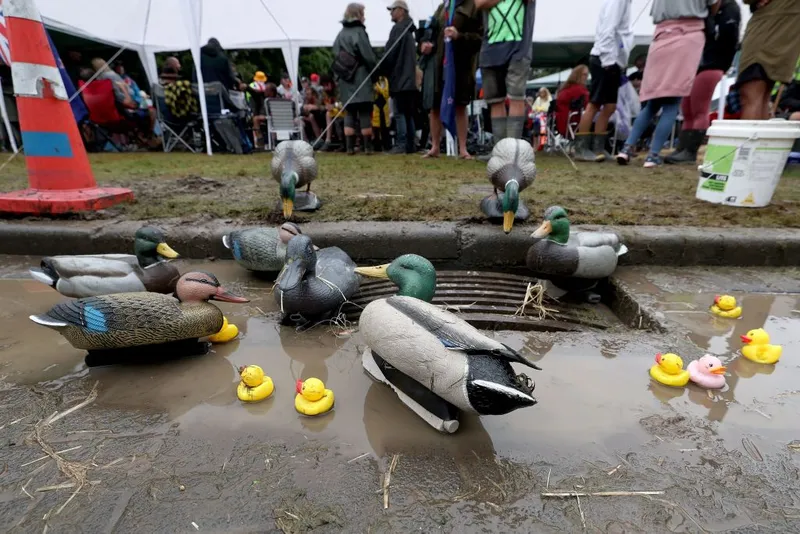
Mallard went on to suggest that there were questions “about the financing of it”. He elaborated: “You know, the fact that people were able to go out in a couple of days and clean Wellington out with credit cards that appeared not to have limits – every camping shop in the Wellington region got cleaned out. There’s no doubt that that money came from offshore. And I think the only question for me was whether it came from Russia via the States, or whether it came directly. People who really wanted to cause social destruction in New Zealand were financing that.”
Was he really suggesting that foreign actors were funding the protest activity?
“Someone from offshore was funding the purchase of probably millions of dollars worth of camping gear,” he said.
The NZ Security Intelligence Service has not identified any evidence of foreign actors funding the protests, but did note it was partly inspired by similar events in Canada.
In its 2023 Security Threat Environment Assessment, the SIS noted, “Foreign states may leverage significant social tensions to further their interests and shape narratives on a topic of interest or to sow disruption.”
It continued: “State-backed disinformation doesn’t need to be targeted specifically at the New Zealand context to have an effect. New Zealanders will still come across it. Russia’s international disinformation campaigns have not targeted New Zealand specifically, but have had an impact on the views of some New Zealanders.”
At the time, Jacinda Ardern said the scenes at parliament suggested “some kind of imported form of protest”.
As for firing up ‘Baby Shark’ and Barry Manilow on the forecourt speakers, Mallard said he was motivated by hearing “all the shit that was being said to those police whose job was to line up between the buildings and the protesters … The music was an attempt to actually get something between the loud shouters and the police’s relatively weak PA systems.”
The only thing that was questionable, he said, was the choice of music. “In the end, I stopped it not when the senior police asked me to, but when, you know, the duty sergeants came and said, look, it’s driving our police mad.”
What about turning the sprinklers on the protesters?
“That was just a case of getting rid of the shit on the [grounds].”
Would he do it again?
“Yes, absolutely, I would, but I’d probably get steel-reinforced sprinklers first. You just cannot have people defecating on the front door with 2,000 people sleeping. It’s just wrong. You had to wash it away. Luckily, it rained pretty heavily soon afterwards.”
Another controversial decision Mallard took was issuing a trespass order to Winston Peters after the veteran MP visited the occupation. Despite being withdrawn shortly after, “it didn’t endear me to him”, deadpanned Mallard.
Mallard was shortly afterwards appointed by Jacinda Ardern to be ambassador to Ireland. That stint was cut short in 2025, when Peters, restored to the office of foreign minister, recalled Mallard from Dublin.
“Don’t share it with anyone,” Mallard told the audience of 400, but as it turned out the paperwork hadn’t been completed fully, and so, in the end, “I only came home a couple of weeks early.”

Toby Manhire
Toby Manhire is editor-at-large at The Spinoff. He loves to cast a pod, whether it's Gone By Lunchtime, At Large or Juggernaut. He is a former editor of The Spinoff and has worked as a journalist in NZ and the UK since the last millennium.


