A year after Luxon’s press secretary scandal, it’s still legal to secretly hit record

Michael Forbes, left, and Paul Goldsmith and Christopher Luxon, right. (Image: The Spinoff)
The government says it hasn’t addressed the gaps in the law laid bare by the Michael Forbes scandal as it has a busy legislative agenda.
A year after the prime minister’s deputy chief press secretary was accused of secretly recording sex workers, the government has yet to close the gaps in the law exposed by the scandal.
Stuff revealed last June that a police complaint had been made accusing Michael Forbes of making audio recordings of sex workers without consent. He was also accused of possessing images of women taken in public places, including close-up shots of different body parts. No charges were laid and the news sparked widespread astonishment that there was no law against making sexual audio recordings without consent. There was also surprise that it was lawful to take videos or images of women in public places, including close ups of clothed body parts.
A year on, justice minister Paul Goldsmith told The Spinoff that the government has not made any changes to the law to address the issues, despite Christopher Luxon responding to calls for legislative change at the time by saying he was open to looking at legal settings. Luxon also said he was “incredibly concerned with this issue”.
The Spinoff asked Luxon and Goldsmith for comment. Goldsmith responded. “We are still taking advice and will consider potential reforms when resourcing allows.We have an extremely busy legislative agenda, particularly in justice,” he said.
That’s disheartening news for Dame Catherine Healy, the national coordinator of Aotearoa New Zealand Sex Workers’ Collective. “It sounds like it’s been parked, which is disappointing because real harm occurs in these situations.” Healy said the legal gap didn’t only impact sex workers, but affected other people – mainly women – and it was disappointing that it remained legal to make covert sexual audio recordings and that victims had no legal recourse.
“Our belief is that the legislation could be amended. It surely wouldn’t be that difficult.”
Legal expert Cassandra Mudgway said an opportunity had just been missed to address the audio recording issue. The senior lecturer at the University of Canterbury law school said the Deepfake Digital Harm and Exploitation Bill, which passed its first reading in March and is now at select committee stage, seeks to amend parts of the Crimes Act and the Harmful Digital Communications Act that define the offence of making an “intimate visual recording”.
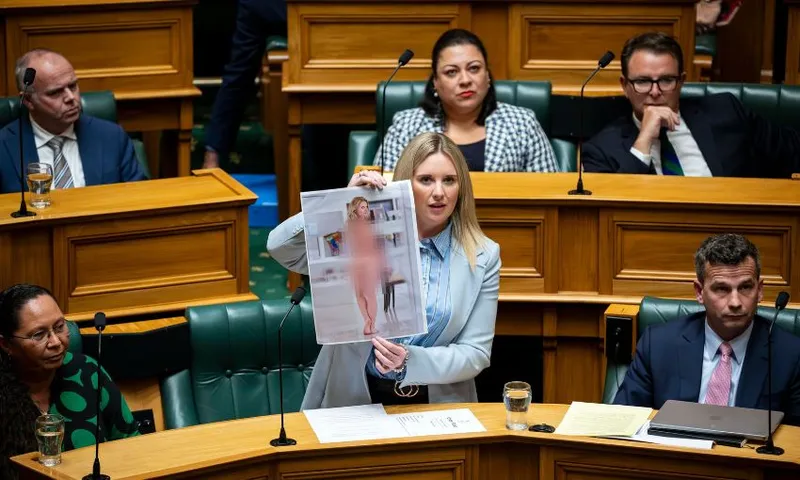
Right now intimate visual recording covers making non-consensual images and video in a range of circumstances, including if a person is naked, partially clothed or engaged in a sexual activity, but the member’s bill, introduced by Act’s Laura McClure, will expand the offence to include deepfakes. Mudgway said the definition could also have been expanded to include audio recordings. “It could have been an opportunity to say, while we’re here, let’s look at audio recordings… I think it’s a missed opportunity, but I’m not surprised as it’s a member’s bill not a government bill.”
Mudgway said the new stalking laws, which came into force last month, could cover some covert images and recordings, however in order to be captured under the rules, the offender would have to record the same person more than once within two years knowing this would be likely to cause fear or distress.
She would like to see an overall legal framework developed, with privacy, autonomy and consent as its core. That would be a large piece of work but would mean even as technology continued to change, the law would offer protection.

After the accusations about Forbes became public, he resigned. He apologised to “the women I have harmed” and said he had sought treatment. The Department of Internal Affairs investigated whether vetting and information sharing processes were robust enough.
Mudgway said it was disappointing that even a high-profile case that erupted so close to the heart of law-making had not prompted legislative change. She thought it was worth considering why. “It’s a story about sex workers, fundamentally, and women who did not know they were being followed, and I do think historically, those groups have been left by the wayside when it comes to law reform.”
Labour’s justice spokesperson Camilla Belich said the government had “clearly decided this is not a priority”. “If elected, Labour will look at law changes to better protect people from this kind of conduct.”
At the time of the Michael Forbes case, the author of this article wrote a legislative wish list for Christopher Luxon.

Veronica Schmidt
Veronica Schmidt is the editor of The Spinoff. She has worked in newsrooms in New Zealand and the UK for more than 20 years, yet still gets excited to hit publish.


