The new UK prime minister just cut taxes on pubs. New Zealand should do the same

UK PM Andy Burnham at the Hare Inn in Harlow, Essex. Photo: Richard Pohle/Getty Images
Andy Burnham’s 20% cut on business rates for pubs, clubs and live music venues will be a tempting policy to copy for parties looking to offer support to New Zealand’s struggling hospitality industry.
One of Andy Burnham’s first announcements as the newly appointed prime minister of the United Kingdom was, in effect, a direct government handout to a corporate industry group. The policy, which he framed as support for “working class culture”, was a 20% cut on business rates for pubs, clubs and live music venues.
It’s a relatively small policy in the scheme of things. It’ll save the average pub about £1,000 per year. It won’t decide the next election or rescue the British economy. But it’s something every New Zealand political party will be watching with interest. The hospitality sector is crying out for help amidst a cost-of-living crisis and an economic recession which has particularly affected urban areas.
It’s a particularly interesting piece of policy because it was designed with relatively low costs (about £100 million per year in forgone revenue for the UK government, but no additional costs) and has low political risk (most people like their local pub), but has the potential to deliver high economic, cultural and political impacts.
New Zealand’s rates system is different to the UK’s, but there are several options available for a party that wants to roughly replicate Burnham’s policy. At a local level, councils could introduce a rates rebate off their own dime (though the costs would have to be redistributed to other ratepayers). Nationally, central government could provide a subsidy to cover the discounted rates on certain businesses. Other options could include industry-specific GST exemptions or changes to the alcohol excise tax settings.
There will be some free market absolutists who don’t like the idea of the government picking favourites, but the reality is that this already happens. The government provides subsidies for video game companies and films, farming exemptions in the emissions trading scheme and tax credits for research and development.
The question is: why does the hospitality industry deserve direct government support over any other industry that’s doing it tough right now? Hospitality isn’t a major driver of the New Zealand economy. It contributes just 2% of GDP. However, it represents 6.7% of jobs and is an important source of employment for young and low-skilled workers.
Hospitality is a highly cyclical industry that has been hit particularly hard in the current cost of living crisis. A total of 449 hospitality businesses went into liquidation in the past year, a 49% increase year-on-year. The result is a seemingly constant stream of headlines about closures and struggles from some of the most vocal small business owners in the country.
The case for direct government support isn’t that it’ll make pints any cheaper for the average punter; it’s more that it’s easier to save existing spaces from closing than it is to open new ones once they’re gone. New Zealand politicians have tried all sorts of initiatives to boost the hospitality sector, from paying international rock stars to come here, to paying Michelin judges to come here, and even building a massive new train tunnel under central Auckland. A direct cut to operating costs is a much simpler way to support the industry.
Successful venues and bars get more people out of the house, spending money and forming connections. When it comes to the economy, vibes matter. It’s also a self-fulfilling prophecy. People spend more and invest in growth when they feel confident. Most people have very informal ways of gauging the economic vibe of their local areas – they check whether local bars and restaurants are bustling or dead on a Saturday night. Keeping the pubs full keeps the voters happy.
For the arts, any government policy that supports live performance venues will have a positive impact on talent development. Research shows that the strength of a city’s local music scene is highly correlated with the number of music venues it has, because those venues allow more opportunities for young artists to perform and hone their skills. Burnham’s tax discounts may be a more palatable way for some on the political right to support the arts than direct payments or complex schemes such as Ireland’s artists’ benefit.
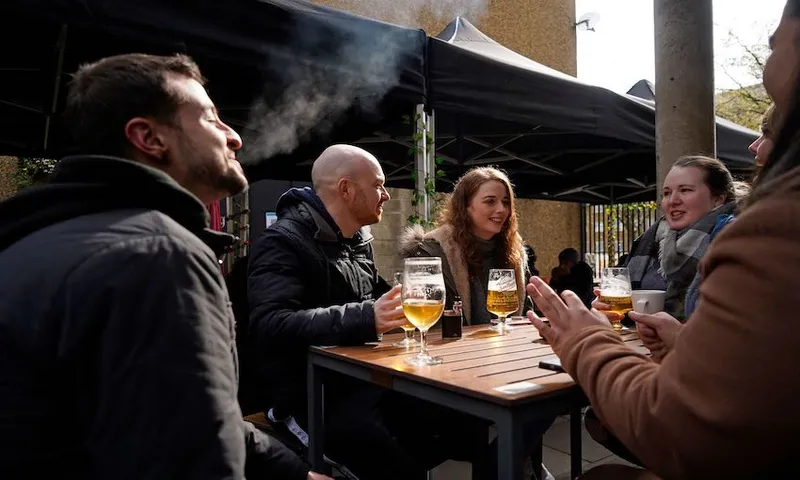
The wider cultural benefits are the hardest to quantify but may be the most significant of all. Hospitality businesses foster community, friendship and relationships. In a world that increasingly exists online, where young people are reporting record levels of loneliness and isolation, third spaces for people to socialise outside of their homes are more important than ever. This is especially important given the ongoing decline in physical retail trade. More than ever, city centres thrive by providing in-person experiences.
However, Burnham’s policy comes with an aggressive, intoxicated elephant in the room: alcohol. The businesses it favours make their money by selling a harmful poison that causes an enormous amount of social problems. New Zealand has spent the better part of two centuries pursuing public policy intended to reduce alcohol consumption or at least ensure the industry contributes its fair share to the cost of policing and healthcare.
For the first time in living memory, alcohol consumption is decreasing, especially among young people. So it may seem counterproductive for the government to incentivise people to go to the pub and drink more of it. There is an option available which could support pubs and venues without any change to the total tax revenue generated by alcohol: New Zealand could follow Australia’s example and change the weighting of excise tax to be lower at on-licence venues and higher for off-licence purchases at supermarkets or liquor stores. Industry groups for brewers and distillers have already thrown their support behind this option.
Then there’s the question of where to draw the line. Do you just include theatres and live music venues, or do you expand it to cover all pubs? Once you include all pubs, why not cafes, bakeries and restaurants? And while you’re giving tax discounts for businesses that have positive social value, why not childcare centres, pharmacies or bookshops?
One of the great challenges of modern politics is the balance between technocracy and populism. Technocrats can become too focused on the bigger picture and lose touch with regular voters. Populists can become so focused on chasing short term votes that they spend 39 years in parliament without achieving anything more significant than discounted bus fares for seniors.
And that, really, is what makes this particular policy so attractive for New Zealand, even if it isn’t going to turn the world upside down. It manages to balance low cost with high impact and low political risk with high potential reward. Most people generally want to support their local venues and pubs. The fact that it has genuine benefits for economic and social development is just a bonus.

Joel MacManus
Joel MacManus is a senior writer for The Spinoff. He previously worked at RNZ and Stuff, and began his career at Critic Te Ārohi. His writing explores the political, economic and cultural systems that underpin modern New Zealand. He won the 2025 Voyager Media Award for Best Columnist, Opinion or Critique.


