Act wants to abolish the Waitangi Tribunal. What do experts make of the party’s policy?

David Seymour and Act are keen to abolish the Waitangi Tribunal. (Design: Emily Wong).
David Seymour says the Waitangi Tribunal has done its dash. But do experts like Carwyn Jones and former treaty negotiation ministers like Andrew Little and Chris Finlayson agree?
The Act Party announced yesterday that if it’s part of the next government, it wants to disestablish the Waitangi Tribunal. The policy would remove the tribunal’s ability to inquire into contemporary Māori claims of Crown breaches of the treaty. Instead, the tribunal’s sole focus would be settling all outstanding historical claims – particularly those in Ngāpuhi. Following the settlement of all historical claims, the tribunal would be wound up.
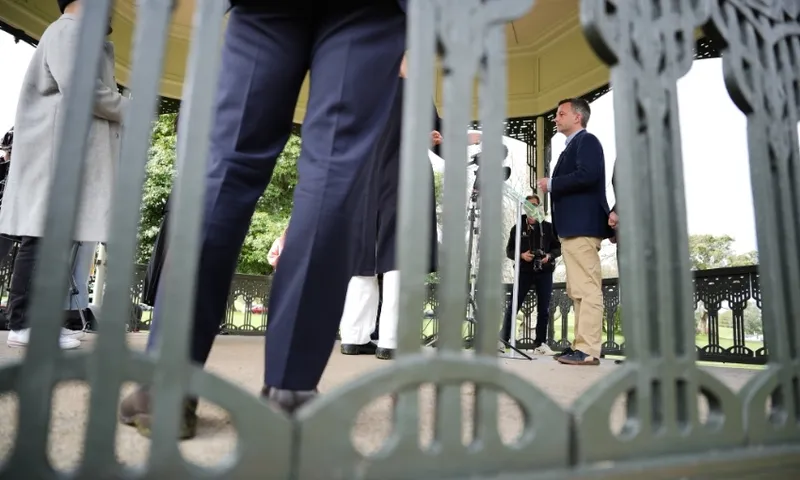
“I’d start by acknowledging the enormous pride that I and so many New Zealanders have in the treaty settlement process,” Act leader David Seymour told the small crowd of journalists gathered under the rotunda near the Auckland Domain’s Winter Gardens for his announcement.
“There have been many wrongs in our past when governments took military action against citizens, took away their land, trampled their mana and took away things that they had been promised in the treaty,” Seymour said.
Then he quickly turned to the policy, placing particular emphasis on the addition of property rights to the Bill of Rights Act – something he said would “further embed the simple idea that property should be owned by New Zealanders” and that “ownership of property should be safe from any force, including that from the government”.
When asked how the Crown would be held to account over any potential breaches of the Treaty of Waitangi in the future, Seymour said the tribunal “has been incredibly inventive in saying that treaty breaches are still occurring” and “the people of New Zealand who elect a government” would be the ones deciding whether or not the Crown had breached te tiriti.
We asked four experts for their thoughts on the policy.
Chris Finlayson, lawyer and former National minister for Treaty of Waitangi negotiations: ‘And what do they propose replacing it with?’
“What they’re proposing, really, would be a major change to the constitutional structure,” Finlayson said.
He thought some of the contemporary claims “had gone a bit far”, were “somewhat expansive” and “somewhat peculiar”.
He said he struggled with some of the tribunal’s reports during his time as associate minister of Māori affairs and attorney-general, particularly its report on the reform work concerning the overhaul and rewriting of Te Ture Whenua Māori Act 1993 (the Māori Land Act), which was “frankly a shocking piece of work”.
“We all get annoyed at certain reports of the tribunal, or where they just plainly get it wrong. But whether you need to destroy the entire edifice and cause a lot of strife in the country is quite another matter,” Finlayson said.
Finlayson acknowledged the Waitangi Tribunal was “regarded by tangata whenua as one of the principle ways by which they can hold the government to account” and suggested that instead of being wound up, reforming the tribunal to “get back to the original intent of the 1975 legislation” could be more beneficial. This included changing membership of the tribunal to exclude current members of the Māori Land Court and instead appoint “a smaller, more professional group of members of the tribunal”. He also said there could be “a greater role for the High Court in investigating declarations of breaches”.
Bayden Barber, chair of Ngāti Kahungunu Iwi Incorporated: ‘I think they’re in a dream world.’
Ngāti Kahungunu chair Bayden Barber had been out riding horses near Havelock North when the announcement was made, preparing for the start of horseback hīkoi to parliament to deliver a petition protesting the removal and amendment of te tiriti principles or references in legislation.
“It’s an out-the-gate policy,” Barber said. “That doesn’t surprise me, the Act Party trying to get rid of the Waitangi Tribunal.”
Barber scoffed at Seymour’s suggestion that the tribunal was inventive about Crown breaches. “I think they’re in a dream world,” he said. “We had the iwi National Iwi Chairs Forum about a month ago, and there was a 30-page double-sided table outlining all of the instances where the Treaty of Waitangi has been undermined over the last three years.”

While acknowledging the tribunal “does need clear guidelines” to ensure it was “operating within its defined scope”, Barber said the tribunal continued to play a vital role in “maintaining the essence of Te Tiriti o Waitangi across all facets of government policy”.
“The treaty should be something that we all, as New Zealanders, support and appreciate its importance for over the past, present, and future of Aotearoa New Zealand,” Barber said.
He was fearful that without the tribunal, it would become “near impossible to hold the government to account” over any potential breaches of te tiriti. With the Māori population estimated to grow to 1.3 million people by 2040, Barber suggested “any government that was really thinking straight would do more to bring Māori into the picture”.
Don Brash, founder of Hobson’s Pledge and former leader of the National Party: ‘I’m delighted.’
Former National Party leader and founder of right-wing lobby group Hobson’s Pledge Don Brash said the policy was “long overdue” and consistent with the message he was relaying in his infamous Orewa speech in 2005.
Brash said resolving historical grievances was “important”, but “the logic for the tribunal continuing on once the historical settlements have been fixed” was beyond him.
There was no need for the tribunal to exist as “parliament is there for anyone who objects to the way people are being treated”, including grievances over Crown breaches of the treaty. “We have a democratic, elected government in order to settle current disputes,” said Brash.
He also supported Seymour’s opinion that the Crown wasn’t currently breaching the treaty: “I don’t understand how the Crown can breach the treaty now, provided it treats all New Zealanders equally. That’s what the treaty fundamentally said.”
Carwyn Jones, head lecturer for Maori laws and philosophy at Te Wānanga o Raukawa: ‘This would be taking us back 150 years.’
Legal academic Carwyn Jones believed the policy showed “a profound misunderstanding of both te tiriti and the Waitangi Tribunal”. However, he said that wasn’t surprising given the party’s introduction of the failed Treaty Principles Bill.
Jones said the tribunal was established to investigate contemporary claims, and removing those powers was confusing. “There doesn’t seem to be any reasoning about why it shouldn’t be looking at contemporary government policy now.”
During his announcement, Seymour said the tribunal had tried to fashion itself as an alternative parliament. Jones said that wasn’t happening. “The tribunal doesn’t determine policy. It provides recommendations to the government. The government can choose what it does with those,” Jones said. “It just seems to be another attempt to remove a level of accountability and transparency in what the government is doing.”
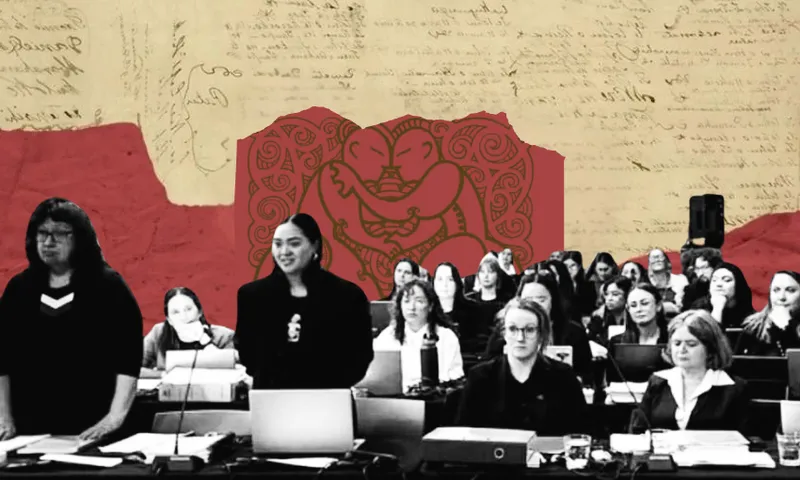
Jones took issue with Seymour’s framing of the kaupapa inquiries. The inquiries were Waitangi Tribunal thematic hearings, conducted to address nationally significant issues. They often included multiple claims. Seymour has argued the tribunal’s kaupapa inquiries, as well as its urgent ones, “now routinely passes judgment on ordinary questions of government policy, proposes alternative policy settings, and seeks to influence decisions properly belonging to elected governments and parliament”. Jones sees them as a “kind of efficiency mechanism”. “It makes more sense to address all the claims that are dealing with a particular subject area together, rather than trying to deal with them one by one.”
Jones said if Act succeeded in abolishing the tribunal, alternative avenues could still be available to Māori to claim Crown breaches of the treaty, through the courts. Still, he said “part of the reason for the tribunal being set up in 1975 was because it was very difficult to find mechanisms through the courts to have rights under te tiriti enforced”.
Even if the tribunal was abolished, Jones said the treaty and its principles would remain in many pieces of legislation and that gave him some hope. He said, however, those were being reviewed by the government. Still, the court’s growing inclination to view the Treaty of Waitangi as an integral part of the country’s constitutional canon, meaning it could be considered in decisions, was another positive.
Nonetheless, Jones said winding up of the Waitangi Tribunal would “remove access to justice”, claiming “that’s the intent of all of the government’s policies around weakening te tiriti – removing it from our law and policy – is to remove access to justice. It’s to remove accountability and to remove a mechanism that allows Māori to have their rights recognised”.
Jones warned the policy could also lead to unexpected costs for the government through an increased caseload for the courts. “If these issues are then brought into the ordinary court system, we’ll see that ordinary courts have to try and adjust to deal with the same kinds of extensive and complex evidence that the tribunal has to deal with, and that’s going to be a much more costly process.”
Andrew Little, mayor of Wellington and former minister of Treaty of Waitangi negotiations
Once charged with leading the Crown’s Treaty of Waitangi negotiations, Andrew Little was responsible for passing a number of treaty settlements during his time as minister. Little was particularly focused on progressing a settlement with the country’s largest iwi, Ngāpuhi. While unsuccessful in delivering Ngāpuhi settlement, Little did actively engage with various hapū and claimant groups from the rohe of Ngāpuhi.
“The treaty was a deal between the Crown and Māori to establish the nation state, while providing enduring rights and protections for Māori,” Little said.
In that context, Little said the Waitangi Tribunal “has an important ongoing role in monitoring the implementation of the treaty”. “The tribunal’s role in investigating historic breaches of the treaty is only one function that it has.”
”While the tribunal’s comments on government proposals and initiatives are not binding, they can offer valuable insights and guidance.”

Liam Rātana
Liam Rātana (Ngāti Wairupe/Ngāti Kurī) is editor of The Spinoff's Ātea section. He is passionate about indigenous and minority issues. Liam enjoys cooking, poetry, photography, and exploring the outdoors.


