New Zealand hospitality closures: the latest numbers and what they mean

The list grows.
With liquidations soaring and six-figure debts making headlines, let’s look at the figures (and the bigger picture).
Prices are up everywhere (the cheese! the butter!). Across the country people have one eye on their bank statements and the other on fuel prices. Headlines about restaurant liquidations arrive each morning like clockwork. And yet… hospitality spend in May was up 3.5% on April. There are new openings every week and people are still going out. Some diners are choosing cheaper eateries, but others find mid-bracket restaurants comparable in price to takeaways, making them a tempting alternative. People are queuing outside cafes and kebab shops. Let’s take the temperature of the industry and see what the numbers say.
414
The number of hospitality liquidations in the past year, according to the Credit Indicator Report released by Centrix Credit Bureau in May. It pointed to rising costs, reduced spending and the impact of mortgage stress on small business owners as contributing factors. The industry famously operates on razor-thin margins already, leaving most operators with little buffer to absorb the increasing financial demands of rent, rates, power, gas, wages, produce and, well, everything right now.
49%
The increase in hospitality liquidations year-on-year. It’s a grim figure, but it’s worth noting it doesn’t only apply to eateries. Centrix looked at businesses classified as Accommodation & Food Services, a category that encompasses restaurants and cafes alongside bars, pubs, taverns, clubs, caterers and takeaway shops, as well as hotels, motels and other short-term accommodation providers. Not captured are grocery stores, specialty food shops and places like your local butcher or bakery, which fall under Retail Trade and face similar economic pressures and consequences.
1.3%
The proportion of the hospitality sector that those 414 liquidations amount to. It’s a huge industry.
$3 million
An eye-watering figure. That’s what Christchurch hospitality company Kihon Ltd owes to its creditors, which includes Inland Revenue, who applied for liquidation earlier this month. The company’s restaurants, Jimmy’s Smoke House Ltd, Sake Brothers Ltd and Sushi & Zenbu Ltd, collectively owe nearly $2 million in tax.
$692,000
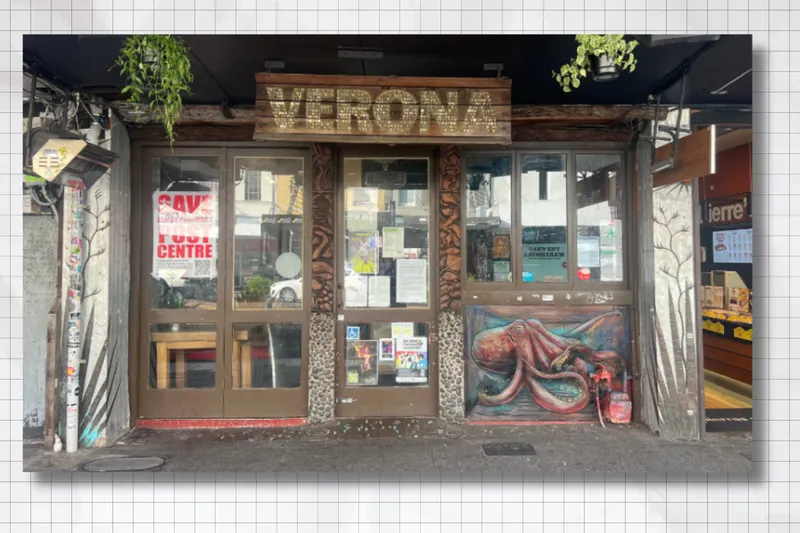
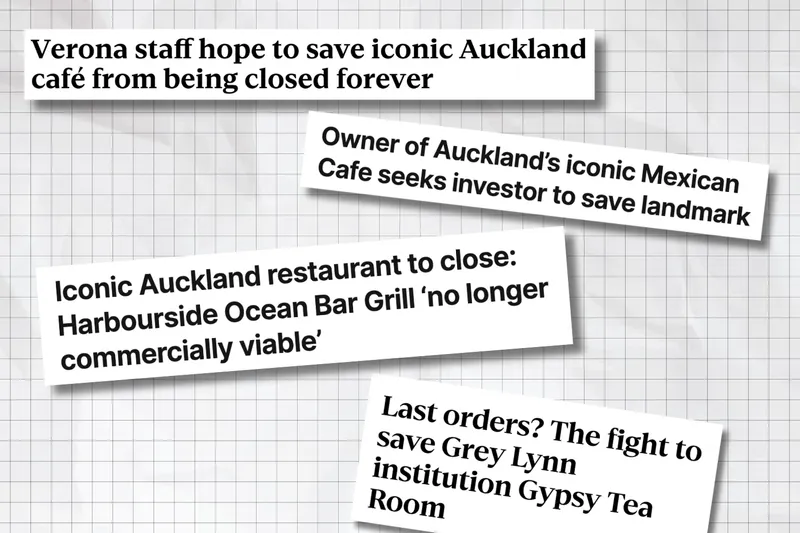
How much Karangahape Road’s fabled Verona was found to be owing according to its liquidators. First opened in 1992, the doors beneath that famous glittering sign shut on April 24 and have stayed closed since.
3
The number of Downlow Burger franchises that have gone into liquidation in the space of nine months. One of them, located in Kelston, only survived three months.
$800,000
The debts accrued by Auckland’s Luna cafe by the time receivers were called in. The lion’s share of it – $624,000 to be exact – was unpaid tax. Luna isn’t alone; Inland Revenue is chasing businesses as part of a wider crackdown on outstanding debts. The increased enforcement – a government directive supported by $64m in funding – since July 2025 has tipped many companies into insolvency.
5 months
The brief honeymoon for Ponsonby matcha bar, Honeymoon Ave, before it ended up in liquidation along with Gemmi and Gochu, two other businesses operated by Namu Group. For years it seemed Namu Group could do no wrong. Founder and director David Lee was considered influential, visionary and awarded accordingly; he was going places. Where is he now? Australia. (We did the numbers on that exodus too.)
38 years
How many years Harbourside stayed in the game before deciding to shut up shop. Last month its owners announced the restaurant would close because it was “no longer commercially viable”. It’s currently in its last days of trading and will shut for good on June 13.
$2.43 million
The property value of 455 Richmond Road. It’s the location of popular Grey Lynn bar Gypsy Tea Room, but not for much longer; the business has to be gone by August. Building owners Barfoot & Thompson have plans to redevelop the spot for its local branch, but they’re currently being threatened with a boycott by local property owners.
3316
People who have signed a petition imploring Barfoot & Thompson to change their mind.
$18,000
How much one Wellington cafe worker was owed by her employer Black Lion Bakery and Cafe, following her unjustifiable dismissal. However, the Cuba Street business never paid her out and was instead placed in liquidation due to the unpaid debt.
43
The age of the Mexican Cafe, which is in dire straits too. The restaurant went public this month with its search for investors or a buyer for the “struggling” business.
30
The lifespan of Wellington’s Chocolate Fish Cafe, which had survived multiple locations and a nearby fire but not the end of its lease, much to its founders’ disappointment. Their February closure compounds the endangered species status of chocolate fish in New Zealand.
26
Leuven Belgian Beer Cafe’s tenure in the capital. With the lease ending, its owners decided it was the right time to step back and do something other than work in hospo. Another of the country’s Belgian beer spots, De Fontein in Mission Bay, closed in April after 20 years.
2025
Last year, which feels like a lifetime ago in hospo land. That was the year when Candela, Celeste, Kind, Kol, Ockhee, Olive, Ponsonby Road Bistro, Sidart and The Grove all closed, along with what felt like every second small business.
0
The number of Michelin-starred restaurants in New Zealand. Hopefully not for much longer – our inaugural guide will be unveiled on June 30.
20-24 months
How long a restaurant bar or cafe usually lasts here, according to The Restaurant Association of New Zealand. The average lifespan has stayed pretty consistent over the years and is comparable with overseas figures.
1.2%
The increase in retail spending in May, even though transactions are down. It was buoyed by food, with people spending more at cafes, restaurants and bars (up 1.9%) and supermarkets compared to December 2025. While higher prices have contributed to the rise, Retail NZ suggested it shows people are choosing to dine out instead of making significant purchases – perhaps an example of “little treat” culture, where a meal at a cafe or restaurant feels like an achievable luxury.
$14
The price of a brisket, jalapeno and cheese pie from Pie Rollas. People used to queue outside its Karangahape Road premises. That’s gone now. The business departed in February, focusing instead on its other locations in the city and a food truck.
1
Levain bakery’s placing in the bacon-and-egg category at last year’s Pie Awards. It closed last month after being slapped with an E grade from council inspectors, but Shaun Vo has since fixed the issues, been awarded an A grade and reopened his business last week.
49
How many of last year’s Metro’s Top 50 restaurants are still open. Only one, Moe Palae’ Myanmar, didn’t make it. The business closed before Christmas, blaming “the current economic situation”. Wellington lost its own Burmese eatery, Mabel’s, 12 months prior.
2027
When lauded Pōneke restaurant Rita will transform. Don’t panic! It’s turning into Super Rita, a more deli-focused daytime iteration of the current business.
3
The number of times Sid and Chand Sahrawat will have closed and reopened their restaurant Cassia by the time spring rolls around. Originally located on Fort Lane, flood damage necessitated a move to SkyCity in 2023. Although that location closed this month, they’ve relocated temporarily to Grey Lynn before returning to new digs in the CBD in August.
193,000
The number of people employed by the hospitality industry (as of March 2025) which is at “historically high” levels according to Shamubeel Eaqub’s report on the sector. That’s comparable to the population of Hamilton. They’re the people that cook your food, clear your table and turn down the hotel bed. On average most work fewer hours than full-time and many work other jobs as well.
220,000
How many jobs “in hospitality or in other sectors” prime minister Christopher Luxon predicts will be generated by government’s ambitious projections for economic growth: 2.7% over four years.
7.7%
The proportion of New Zealand jobs in or related to hospitality.
$9 billion
What the hospitality sector contributes to GDP each year.
3,555
New hospitality ventures launched last year. That’s how many companies incorporate their business using the Accommodation and Food Services business code. It could be more. “BIC code is voluntary data so not all companies provide a code,” explains an MBIE spokesperson. “It is self-selected and not verified.”
Among the many, many new openings in Auckland last year were Blue, Juno, Esarn Rocket and Bistro Seine. Christchurch is asserting itself as a culinary destination thanks to a swathe of new openings. In Wellington, Cuba Street Tavern took over the premises that used to be Olive, and the capital also welcomed pizza purveyors Slice and Cutie Pie Pizza Workshop. More will join them. And so the cycle continues.

Emma Gleason
Emma Gleason is a staff writer at The Spinoff and an award-winning fashion journalist. But it’s not just clothes that interest her, you’ll find her exploring tasty cheese, influenza outbreaks and more important things right here. She has experience with some of the country’s leading media outlets as well as the toaster in our kitchen.


