It feels like restaurants and shops are constantly closing – how bad is it, really?

Scared by the headlines? Like the zombies of Night of the Living Dead, do New Zealand’s cafes, restaurants, bars and shops have life in them yet? (Images: RNZ, Stuff, The Post, Herald, Night of The Living Dead 1968 from IMDB)
As the economy staggers through another unprecedented year, the headlines of high-profile closures are enough to scare even the most optimistic. How afraid do you need to be of another favourite shutting up shop?
It’s a new day, you think, popping a taut plastic pod into the coffee machine while making a mental note to dig out the plunger and buy some of those locally roasted beans they sell at that cafe down the road. Mug in hand, you open up Instagram. Influencer promoting a fashion brand, swipe; horrible global events, swipe; thanks for supporting us, swipe. Wait, what was that? They’re closing? “No!” you cry, tapping the heart, feeling guilty – you always intended to visit, even tried to find a park once, but never quite got there.
Time for some proper news. Scanning the homepage, amid all the politics and infrastructure there’s another one: Wellington fruit shop to close the doors after 65 years. “Not again,” you lament, remembering the deluge of similar headlines from the past couple of years.
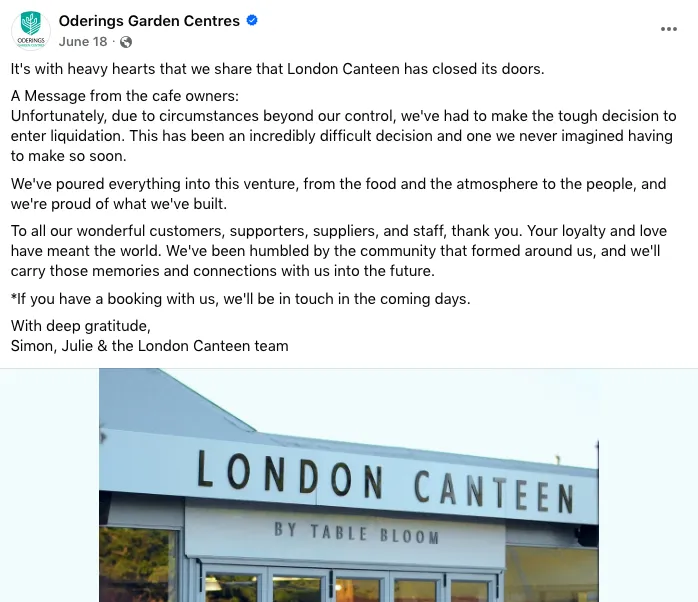
Candela, closed. Homeland, closed. Olive, closed. The Grove, closed. London Canteen, closed. Celeste, closed. Mabel’s and Myrtle? They both closed. Rupa’s, closed (or maybe not?). Kind closed even though Jacinda Ardern went there. There were so many that media outlets started listing them to keep track.
”It’s been such a fight – from the pandemic, to so much uncertainty [with the] global financial crisis and extreme weather events where suddenly vegetables cost more than protein,” Michael Dearth told the Herald upon closing The Grove. It had a 20-year innings. Kol lasted only a couple. “The costs were piling up, we could see the concept wasn’t viable,” Chand Sahrawat said to RNZ when she and Sid decided to pull the plug.
Some stories are tributes to decades of work, others are cautionary tales of businesses falling prey to external factors. In every case, owners and staff are gutted, and decisions were made with “heavy hearts”. If a closure doesn’t make the big news sites, you might read about it in the local rag, if you still have one, or its replacement, the community Facebook group.
Fingers are pointed at road works and parking. Others note the profound changes to daily life. “Is it the working from home?” you wonder, putting a load of laundry on a cold (cheaper) wash cycle. “What about the job cuts and unemployment? Young people not partying? Rising living costs chomping into luxuries like oat milk lattes and kingfish crudo?” Experts and editorials agree with you. Gas, power and coffee beans have all gone up. The economy feels, and is, officially shit.
Dining out is pricey. Spending is down on Karangahape Rd (though exact numbers are disputed) and the neighbourhood’s cafes, bars and restaurants have been hit harder than other categories, with a 20.7% decline. “Even takeaways aren’t as cheap and cheerful as they used to be,” you grumble, shopping online for ingredients to make pad thai yourself, which come to over $60 including delivery.
At least people are still buying clothes, you think, reading that spending on apparel was up 3.1% in June, even after so many high-profile shutdowns. Kate Sylvester, closed. Nisa, closed. Thom Morrison, closed. H&J Smith closed after 123 years, and fellow department store Smith & Caughey’s, closed after 145. DFS is closing by September. It’s enough to make you run screaming “no more” through the cavernous halls of a shuttered department store. (That’s grief you’re feeling.)
Many cited shrinking profit margins, rising costs, reduced foot traffic and stiff online competition as reasons for shutting. “But we’ve got so much Kiwi talent,” you mutter, eyes sliding over to a Temu package, next to the laundry that needs folding.
Local designer stores have been disappearing from Ponsonby Road – Juliette Hogan, Kristine Crabb and Zambesi among them. The suburb, home to flash cars and expensive prams, isn’t immune to headlines about retail struggles. Even the post office is closing. Many note a shift from retail to hospitality, and it’s one of many Auckland neighbourhoods undergoing change. In Newmarket, there are dozens of empty shops on Broadway, likened to a ghost town.
Not every closure earns a media obituary. For some, it’s so painful that they don’t want to talk about it. Other businesses start up and shut down with barely a second glance from anyone. Lumped together, the vibes are of whole sectors in peril.
Economist Shamubeel Eaqub says that while things are tough, the headlines you’re spiralling over are only showing part of the story. “The closures are of course distressing to the workers, owners and often customers. But the new openings are often not seen because they happen more quietly.” He points to the numbers, which show a net reduction in the number of retail businesses over the last three years (though up on 2015) and a rising trend in hospitality. “Media amplifies the stories out in communities. Hence the importance of providing context and looking at the harder to see aspects of the story.” Read the story, not just the headline.
But just because a shop or cafe is still open, that doesn’t mean operating is easy. “When people are spending less, businesses have two choices, reduce their cost, reduce their staffing, reduce their profits (or a combo).” Job numbers are falling and so are profits, he says, with the latter down 20% compared to before the pandemic.
Hold on, you think, I live in the big smoke, the place with all the opportunities, so why do businesses in Tāmaki Makaurau liquidate at twice the rate of other regions? “Those numbers need to be seen in the context of the size of Auckland,” Eaqub explains, which is over a third of the nation’s economy, with 221,181 businesses (up 2% on last year) compared to Wellington’s 59,784 (down 2%). “But the recession has hit Auckland hard, which has been exacerbated by a slowdown in immigration.”
Poor Auckland, you think, scrolling through a curated edit of elevated basics that promise to give you a capsule wardrobe once and for all.
But nationwide, total sales for the hospitality industry are up for the first quarter of 2025 on the year prior (1%!), even in Auckland (0.4%!). Restaurants are trying set menus and ditching tableclothes; retailers are hosting events, trying pop-ups and getting into recommerce. Are we right to feel hopeful, or even positive?
“Even in a recession, there are entrepreneurs who are giving it a go,” says Eaqub. “Sometimes there are businesses sold at a lower price, or a lease at an attractive price. The economy is a reflection of society, which is extremely dynamic. It’s chaotic – while the averages or totals might be going up or down, that overall trend is made up of a myriad of experiences across millions of people and many hundred thousand businesses,” he explains.
The outlook is improving, but there are lingering risks. We’ll see positive influences from reducing inflationary pressures and interest rates, which also means reduced mortgage payments and more disposable income. Food remains an inflation “hotspot” though.
It sure is, you think, reading yet another story about butter prices, wondering whether pastries will go up soon too. “$20 for a coffee and a croissant,” you predict gloomily, wondering if that would include banking surcharges.
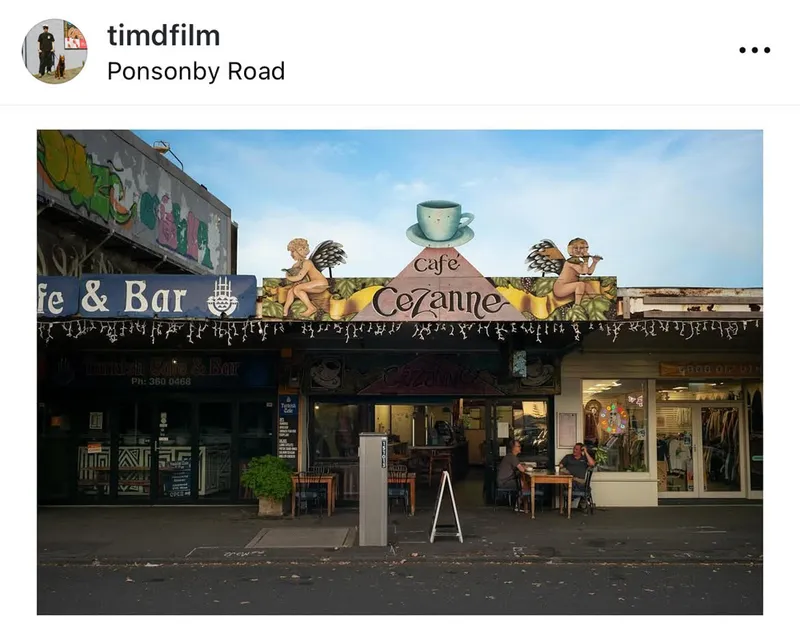
Businesses close, but what happens next? In the case of Lower Hutt’s Eastbourne Fruit Supply and Cafe Cezanne in Three Lamps, the developers move in. Or a shuttered business might be replaced by another; Annabelle’s is now Edie’s, Jacuzzi took over the SPQR spot, Sully’s moved to 30 Ghuznee Street when Kaukau closed. For some, it’s a door-and-window opportunity. Kate Sylvester wrapped up her namesake label, but handed over sibling brand Sylvester to her sons. Benjamin Alexander shuttered his eponymous line in 2024, but recently launched a bridal range, Bones.
“And wait, what’s this?” you ask. “New eateries! Hei! Takapuna Surf Club! Sagrado Cantina!” Uncle Man’s is expanding to Lorne Street, Pie Rollas has several new spots, Auckland’s getting another Lodge bar, and the old Rose’s space on Karangahape Rd is poised for transformation; Burger Wellington is back with 200 entries to munch through; down in Christchurch new cafe Peaches is buzzing, Birria Boss has gone from food truck to permanent premises, Papa Smashies and Grumpys Donuts are getting/have got stores, and Lillies not only survived its first year, but is already considered “ beloved” (according to Alex Casey).
Judging by new labels popping up, like Longform and Pōtiki, the fashion industry isn’t dead and buried either. Eveni Pacific opened a store and Crane Brothers renewed its lease for 25 more years. Fashion week has even arisen, after a hiatus, with more energy than the fastest, strongest foe of 28 Years Later. “How fabulous,” you exclaim, making a mental note to buy a ticket to a show.
“But wait, is everything good or terrible?” Enough doom spiralling – instead you’ll get out of the house, take the dog down Ponsonby Road. Zambesi, in that corner spot for two decades, has been replaced by Sweaty Betty. Ponsonby Road Bistro is Gigi now. Crack Chicken replaced Aigo Noodle Bar (both Namugroup establishments), and you pass the new-ish San Ray and Bodega. Once you get home you wonder what to have for dinner (you forgot to buy tamarind for the pad thai), pull out your phone and tap UberEats.
Update: The Restaurant Association of New Zealand says that the average lifespan of our restaurants, cafes, and bars is usually “between 20 and 24 months”. The figure, which has remained consistent over time, includes changes in ownership. “A report released in February 2024 by the Global Food Institute indicates that 26% of single-location, full-service restaurants fail in the first year. This is somewhat in line with general business failure rates but slightly lower than the broader failure rate for all new businesses,” says Marisa Bidois, CEO of the association. “In New Zealand, around 30% of new businesses fail within their first two years, which would suggest that the restaurant industry’s first-year failure rate is relatively competitive in comparison.”

Emma Gleason
Emma Gleason is a staff writer at The Spinoff and an award-winning fashion journalist. But it’s not just clothes that interest her, you’ll find her exploring tasty cheese, influenza outbreaks and more important things right here. She has experience with some of the country’s leading media outlets as well as the toaster in our kitchen.


