Reserve Bank signals a ‘structural change to the housing market’ in Anna Breman’s debut

New reserve bank governor Anna Breman.
In her first big moment as Reserve Bank governor, Anna Breman made predictions for the New Zealand economy in 2026, and the chief economist argued a big change was under way in real estate.
It’s rare for a public servant to attract as much scrutiny as the new Reserve Bank governor, Anna Breman. Inflation is the defining political issue of the 2020s, so the spotlight on the bank is intense. The Swedish economist is considered a rising star in international central banking, to the point that many are surprised New Zealand was able to secure such a talent. But it has been a rocky start: she drew Winston Peters’ ire for commenting on US president Donald Trump’s treatment of Federal Reserve chair Jerome Powell.
Breman’s first major test came this week, as she delivered the first Official Cash Rate decision of her reign. The decision, revealed at 2pm on Wednesday, was as most observers predicted: no change, staying at 2.25%.
The Reserve Bank’s mandate is to keep inflation between 1% and 3%. The latest figures, from December 2025, put it just outside that band, at 3.1%. Cutting the OCR would risk adding further inflationary pressure. Raising it would threaten a fragile economic recovery and would be an overreaction to such a small miss. The only realistic option was to do nothing.
Breman fronted up to parliament’s finance and expenditure committee this morning alongside the bank’s chief economist Paul Conway, who admitted the result of 3.1% was a “significant miss” from the Reserve Bank’s November forecast of 2.7%.
“We’re not at all comfortable having inflation at that level,” Breman said. Essential items such as food and electricity were much more expensive than a year ago, and the December quarter had seen a price spike for airfares and accommodation.
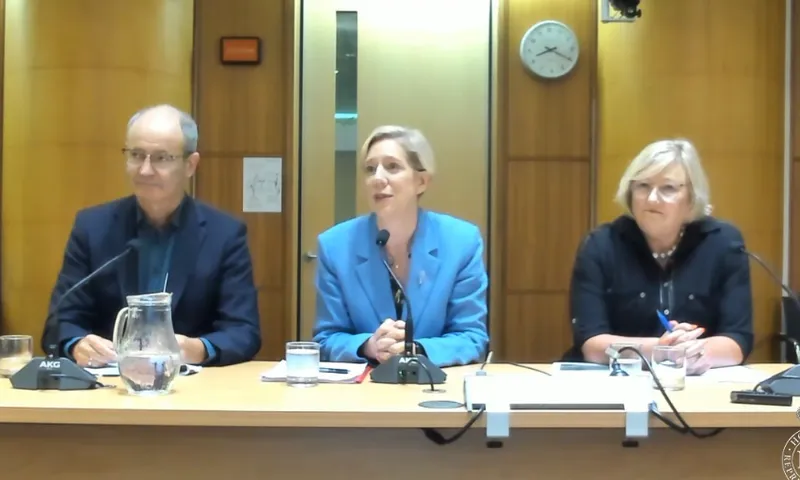
She was “confident inflation will fall this year” but wary of making bold pronouncements of economic growth. “Some people think if we are too confident that we’re going to see an economic recovery, firms might all coordinate and start hiking prices sooner. Other people think other forces will push it back.”
The most notable moment came when Conway suggested “there may have been a structural change in the housing market”. He was responding to Green MP Ricardo Menéndez March, who asked about the Reserve Bank’s earlier advice that the government’s tax changes (rolling back the bright-line test and restoring interest deductibility for landlords) would add inflationary pressure. The bank has since softened that view.
The original advice was based on the “wealth effect”: when house prices rise, homeowners feel richer, spend more and may borrow against their property. In recent decades, that logic has become so entrenched that many assume economic growth depends on ever-rising house prices. As Bernard Hickey put it, New Zealand’s economy is a housing market with bits tacked on.
Conway said that effect appeared to be weakening. “I think we have gotten better at building houses. There have been changes in zoning restrictions, not just recently but over the last decade, particularly in Auckland around intensification. That is having an impact. When we lower interest rates and demand for housing increases, it used to be that because the supply side was so sticky that would just translate into higher house prices and we’d get a wealth kicker through that. Now, if the supply side is more free to respond, an increase in demand for houses will generate more construction activity. And this is a very welcome development. It’s a little bit early to call a structural change, but it may well be the case,” he said.
Labour’s Deborah Russell asked why the negative “reckons and feels” of the general population seemed to be at odds with some of the recent positive signs of economic growth. Breman said this was because it was “an export-led recovery rather than consumption-led”.

The strongest parts of the economy, agriculture and tech, are global-facing. The domestic side is looking worse. Jobs remain scarce, especially in Auckland and Wellington, and households are acting nervously, saving more and spending less.
Act’s Todd Stephenson asked whether cafes and restaurants could expect more sales this year. Breman said it would depend on the unemployment rate, because people spend more money when they feel safe in their job. “The labour market strengthening will boost the domestic economy,” she said.
NZ First’s David Wilson, an MP who apparently exists (he entered parliament off the list in June 2025 after Tanya Unkovich resigned), had a big idea to improve the Reserve Bank’s ability to analyse information. “Have you thought about using AI?” he asked. Breman, straight-faced, replied that they always want more information and would use any resource available to them.
With the final question, National’s Cameron Brewer bowled Breman a pie, asking what New Zealanders could expect from the economy in the year ahead. “They can expect an economy that is recovering. They can expect stronger employment growth. They can expect stronger growth overall in more sectors. It’s going in the right direction in New Zealand,” Breman said.
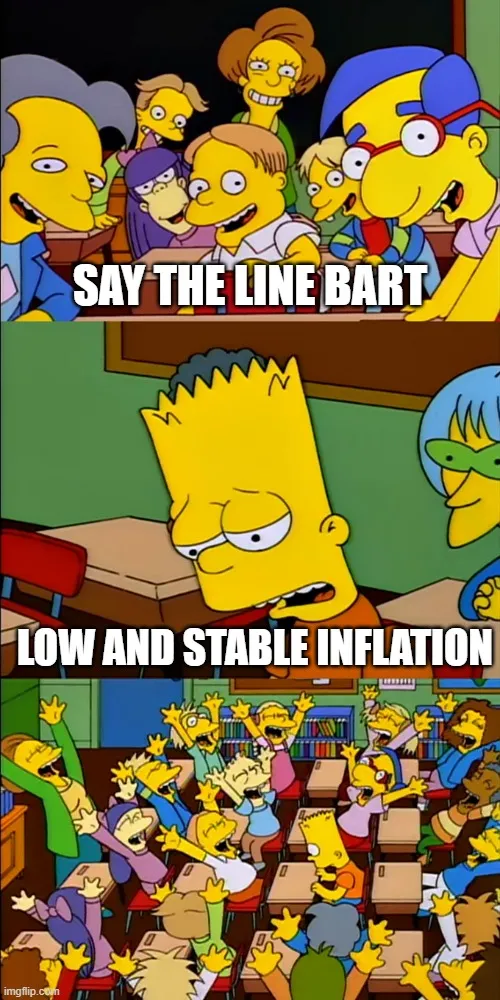
As she wrapped up, MPs kept looking at Breman expectantly. She’d forgotten to say their favourite line. Conway jumped in to save her: “and they can expect low and stable inflation”. “Thank you,” Breman laughed. “Faaantastic,” Brewer purred.

Joel MacManus
Joel MacManus is a senior writer for The Spinoff. He previously worked at RNZ and Stuff, and began his career at Critic Te Ārohi. His writing explores the political, economic and cultural systems that underpin modern New Zealand. He won the 2025 Voyager Media Award for Best Columnist, Opinion or Critique.


