The iwi-run savings scheme giving Ngāi Tahu kids a kick-start

Image: Tina Tiller
In 2006, Ngāi Tahu used part of its landmark treaty settlement to launch Whai Rawa, a reciprocal wealth-building scheme with a particular focus on children. Two decades later, Max Rashbrooke checks in on how it’s going.
Although it was two decades ago, Lisa Tumahai still remembers the day she got her plastic Whai Rawa card in the mail. “That was quite exciting, and a proud moment,” she says.
Back in 2006, Whai Rawa was something new to this country: an iwi-run savings scheme. Its origins lay in discussions within Ngāi Tahu about how to use the $170 million from their landmark 1998 treaty settlement.
Tumahai, who had been elected to the board of Te Rūnanga o Ngāi Tahu in 2003, says Whai Rawa owes much to Tahu Potiki, the rūnanga’s chief executive at the time, and former retirement commissioner Diana Crossan, who had been working on tertiary education savings initiatives.
Whai Rawa is, in essence, a reciprocal wealth-building scheme for Ngāi Tahu members of all ages. For adults, the iwi matches any savings they make dollar for dollar, up to $200 a year. But there’s a particular focus on children, who can be enrolled in the scheme at birth. Then, for every dollar that individuals deposit in the child’s account, the iwi contributes $4 – again up to $200 a year. Children registered before their first birthday also get a $100 kick-start. Members can then withdraw their savings for three wealth-related purposes – tertiary education, home-ownership, and retirement income – as well as in cases of hardship and serious illness.
Tumahai, who went on to chair the Ngāi Tahu board from 2016 to 2023, says Whai Rawa has become “a flagship initiative for the tribe”. Now in its 20th year, it has more than 38,000 members with $200m saved. Some $49 million has already been withdrawn for first-home purchases and the like.
The reciprocal savings partnership is crucial, Tumahai says. It ensures members are connected to Ngāi Tahu, not just “accepting a cheque in the mail”, she adds. “When you have reciprocity, you feel a great level of ownership … and pride.”
Some iwi members might prefer to be directly distributed their share of Ngāi Tahu’s wealth. “[But] I think there are enough schemes in New Zealand, creating enough beneficiaries, that we as a tribe shouldn’t go down that pathway.” Affordability can also be an issue. “I always get a lot of people saying to me, ‘I can’t afford it.’ I think we can all afford $50 a year.” People’s immediate welfare needs, she adds, can be met by the social services provided by Ngāi Tahu’s 18 rūnanga.
Whai Rawa has been “a huge success, in my eyes”, Tumahai says. Her only regret is that fewer than half the iwi’s 85,000 members have signed up. “I would really have liked to think we would be up around 60% by now.”
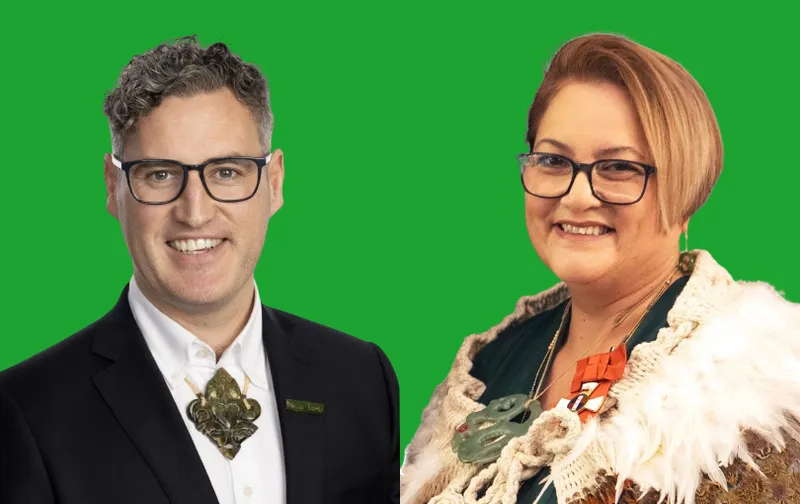
That figure is also on the mind of Renata Davis, a current Whai Rawa board member. Some whānau, he notes, face “intergenerational barriers” to participating in any savings scheme. They may be disconnected from the iwi, or “disaffected” with financial services more generally.
In response, Ngāi Tahu is increasing its communications with iwi members, “trying to provide more of a helping hand than other institutions”, and seeking to lift membership. Sign-up rates for newer, younger members are higher than for older ones, Davis says: half the scheme’s members are under 25.
The scheme’s appeal is partly about “building the matauranga of our tamariki – learning about those [financial] concepts from a young age”. People used to focus on “money in the bank for a rainy day”, he says. “Now, everyone is a little bit more financial – investing in equities and all these types of instruments. This [Whai Rawa] is a doorway into that world for our whānau members.”
As well as boosting individual savings, the scheme has “huge flow-on effects” for the iwi as a whole, Davis says. Being financially secure gives people “freedom and options” about how they use their time – and the ability to contribute more of it to their iwi.
Whai Rawa’s current general manager, Sam Kellar, says the scheme is “trying to build intergenerational wealth”, consistent with a long-term Māori worldview. The iwi “wanted to give our people … a middle-class lifestyle”, lifting aspirations for tertiary education and other achievements.
Whai Rawa is a rare place of work “where we celebrate money going out the door”, Kellar adds. “Success is measured by members going to university, or withdrawing money for their first whare, or retiring a bit more comfortably.”
Kellar says “quite a few” members have made withdrawals for both tertiary education and first home purchases. The scheme hasn’t yet hit the “trifecta” of someone making withdrawals for those two purposes and retirement as well. “But we’ll definitely celebrate that when we get there.”
One of the questions facing Whai Rawa’s managers is what makes their investments distinctively indigenous. In some respects, they have to conform to standard western financial practices. Kellar notes that the scheme is “very regulated”, being subject to anti-money-laundering scrutiny, the need for an Inland Revenue number for membership, and related strictures.
Davis, for his part, notes that some Māori see financial investments as “risky, and inconsistent with te ao Māori values”. But Ngāi Tahu covers the scheme’s administration fees on members’ behalf, and uses only “responsible” funds, run by investment experts Mercer, that have divested from weapons, tobacco and companies that make more than 15% of their revenue from fossil fuels. (Ngāi Tahu wasn’t able to immediately say how much of the scheme is invested domestically.)
The ability to withdraw funds for retirement at 55, recognising lower Māori life expectancy, is also a point of difference. But, Davis says, the “distinctiveness” question is “something we need to continually check in with ourselves about, and make sure we are putting our money where our mouth is. We don’t want to be iwi-washing.”
The Whai Rawa board, he adds, is currently carrying out a “where to from here?” assessment. In future, the scheme could offer withdrawals for tangihanga, and make it easier for members to develop papakāinga and build on Māori land.
The scheme’s managers are also considering whether they should take a more “customised” approach and allocate funds to specific areas, Kellar says. They could even create “a financial services ecosystem” in which the iwi provided KiwiSaver, insurance, debt consolidation, financial advice and other “banking-type products”.
Whatever the future holds, Whai Rawa’s position appears secure. Tumahai certainly remains a fan, having been a contributor to the scheme “ever since it opened” and depositing money into both her children’s and grandchildren’s accounts. Whai Rawa, she says, “has become part of our identity”.

Max Rashbrooke
Max Rashbrooke is a senior research fellow in the School of Government at Victoria University of Wellington. www.maxrashbrooke.net.


