The revolution was painted: how Māori art reshaped Aotearoa

Pūtātara: Revolutions in Māori Art explores the evolution of Māori art from the 1970s to now. (Design: The Spinoff).
From a radical 1973 hui in Te Kaha to the halls of the Met, a new podcast reveals how Māori art didn’t just reflect the Māori renaissance, it drove it.
Art has long been used by Māori as a means of activism, protest and political expression. While this is not unique to Māori, our history of colonisation and the subsequent reckoning with it is. The Māori renaissance of the 1970s wasn’t just seen in protests led by Māori and the resulting progress made, but also within Māori art.
This turning point in the history of Māoridom serves as the beginning of new podcast Pūtātara: Revolutions in Māori Art, with episode one centred around a hui of artists in Te Kaha. The year is 1973, and Ngā Tamatoa has burst onto the scene, Waitangi Day is to become a national holiday, and Māori leaders like Whina Cooper are beginning to spark a revolution.
Produced by Jamie Tahana and Matariki Williams and funded via a Creative New Zealand, NZ On Air and RNZ co-fund, the series of six episodes will traverse the resurgence of Māori art over the last five decades, highlighting just how pivotal art was to the wider renaissance.
From the outset, it’s clear the creators of Pūtātara: Revolutions in Māori Art have delved deep into the expansive RNZ archives for the podcast – it’s a treasure trove of rich audio from our nation’s short yet fraught history. The voice of Robert Muldoon speaking at Waitangi, poem readings from Hone Tuwhare and Whina Cooper’s defiant responses about whether Pākehā will heed her demands place listeners in the centre of the significant political era.
Between spooking taonga puoro melodies from Te Kahureremoa Taumata, interviews with photographer John Miller and writer Patricia Grace help to peel back the layers covering the political realities of the time. Whether through thorough research or plain luck, there are gems scattered throughout the 40-minute episode – a pod of whales gathering in the bay, or mention of Buck Nin bringing his own bed because of his crook back – that add a special touch to the podcast. It’s an invaluable addition of colour and knowledge that I hope continues throughout the series.
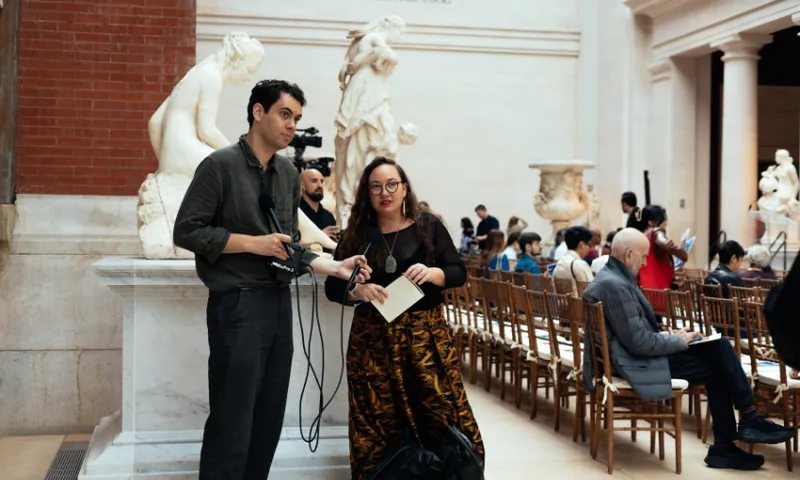
The pacing of the first show feels slow at times – it takes almost half of the episode to arrive at the hui of artists in Te Kaha – but this is perhaps understandable given it’s the first instalment of the series. For a show about Māori art, at times it feels more like a New Zealand political history podcast first, with art being an afterthought tacked on at the end. However, Tahana and Williams do well to tie things together, highlighting that Māori art was “the first visible part of the Māori renaissance”.
What the show does well is illustrate that for Māori, art, protest and politics are intrinsically linked. They feed into each other in ways that can be difficult to explain. For those who, like me, are uninitiated in the role Māori art played in the Māori renaissance, the first episode of Pūtātara: Revolutions in Māori Art is an excellent place to begin.
Beyond Te Kaha, the series widens its lens and geography. Episode two travels to New York for the 1984 opening of Te Māori at the Metropolitan Museum of Art – an exhibition now etched into national memory as both triumph and turning point. Williams and Tahana resist the temptation to canonise it uncritically, tracing the pride, the politics and the pushback that accompanied taonga crossing the Pacific. Episode three brings Te Māori home, charting the profound institutional shifts it triggered within New Zealand’s museums – particularly in the treatment of taonga and the assertion of Māori authority over them. By episode four, we are in the 1990s, where the activism of the previous decades begins to bear fruit and a new generation of artists emerges, less concerned with access and more intent on interrogation – probing identity, commodification and the uneasy space between Māori art and the mainstream.
The final two episodes bring the series to the present. Returning to The Met in 2025 for the opening of its reimagined Oceania galleries, episode five asks what “reimagining” really means four decades on – and whether meaningful change happens in global capitals or in smaller, indigenous-led spaces reshaping the rules from the ground up. The concluding episode, appropriately titled Revolution, looks to a new wave of Māori artists moving confidently across international platforms while questioning the very institutions that host them. It leaves listeners with an unresolved but compelling question: does the future of Māori art sit within museums and galleries – or beyond them?
The show is an education on the vast, rich tapestry of Māori art and protest. I recommend anyone even vaguely interested in New Zealand’s political history or art history listen. Pūtātara is a reminder that toi Māori has never simply been aesthetic – it has been strategic, spiritual and stubbornly political. Williams and Tahana, drawing on deep mātauranga and lived connection, give us not just a chronology but a continuum: ka mua, ka muri. In tracing five decades of revolution, they show that the wairua of resistance has never left the canvas, the carving, or the exhibition hall. It simply keeps finding new forms.
Pūtātara: Revolutions in Māori Art is available here , on podcast apps from Monday February 23 or on Culture 101 on RNZ National from Sunday February 22.

Liam Rātana
Liam Rātana (Ngāti Wairupe/Ngāti Kurī) is editor of The Spinoff's Ātea section. He is passionate about indigenous and minority issues. Liam enjoys cooking, poetry, photography, and exploring the outdoors.


