James Bloodworth’s Lost Boys: ‘A stark warning about how misogyny spreads’

James Bloodworth speaking at TedX Manchester in 2020. (Photo: Herb Kim under CC BY 2.0 License)
Made possible by


Zara Dollie learns more than she ever wanted to know about the manosphere and how it works.
When I first picked up James Bloodworth’s Lost Boys: A Personal Journey Through the Manosphere off the shelf, I didn’t expect it to be so confronting. I thought I understood what “the manosphere” was: an internet subculture made up of angry men and extreme opinions. What Bloodworth reveals in his insightful book is that what happens in the manosphere could happen to anyone.
In Lost Boys, Bloodworth is careful to show that the manosphere is made up of individuals who have, more often than not, experienced the commonplace feeling of loneliness and how, in the wrong hands, that kind of isolation is slowly reorganised into something more extreme. The danger Bloodworth identifies is not male anger on its own, but the ways that anger is validated.
The phrase “personal journey” in the book’s subtitle is important here. Bloodworth draws on his own past immersion in the manosphere before he returned to it, after 12 years away, to go undercover and find out just how men arrive there and what it leads to. The decision to put himself back in the manosphere space is one of the book’s biggest strengths. Bloodworth writes from experience, showing first hand how “pickup” culture and incel ideology is gradually validated by the community. This creates a portrait of radicalisation that is nurtured in increments rather than a sudden out-of-nowhere transformation.
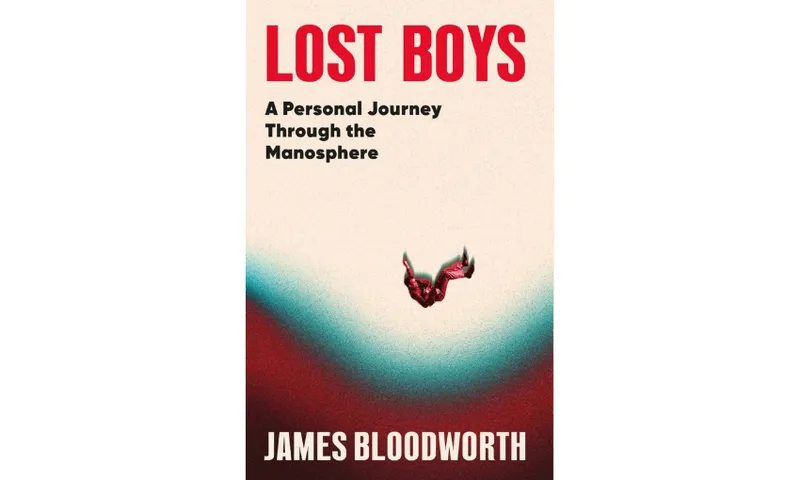
The book initially centres around Bloodworth’s experience in the pick-up world as an “average frustrated chump” (AFC). Pickup art is the act of seducing women using charm or manipulation. The group he joined in 2006 is called “real social dynamics” (RSA), and essentially profits (people pay to join) off of men who experience romantic rejection. This group presents itself as a programme wanting to develop confidence, charisma and sexual success for the hefty price of around $4,000. In reality, it directly profits from anxiety, offering tacky pickup lines and methods of manipulation instead of lessons in emotional literacy.
Bloodworth’s descriptions of the RSA meetings left me cringing as if I had just witnessed cult activity. Dating coach “Tux” leads participants in a chant of “RIGHT HERE, RIGHT NOW” as they exit Starbucks and disperse into the street to “open” women. The action of “opening” in pickup is to begin a discussion with a woman in a public space using a line or rehearsed opener learned from your dating coach. Bloodworth never ridicules. Instead, he allows the language of “optimisation” and “performance” expose how easily “self-improvement” becomes coercion.
One of the book’s strongest points is that, in these spaces, results matter more than ethics. So if something “works”, it is seen as acceptable, even if it isn’t morally or ethically right. Some of the techniques taught by coaches are close to harassment, such as persisting with flirting after a woman has shown disinterest. Lost Boys shows how the push to “improve yourself” can end up justifying abusive behaviour, particularly when empathy is seen as a weakness.
From pickup culture, Bloodworth moves into darker ideological spaces, showing how the manosphere positions male grievance as truth-telling. In part two of the book, titled “The Red Pill”, this logic escalates from entitlement to violence. In 2021, Lyndon McLeod committed a killing spree following the publication of his novel, Sanction, under the pseudonym Roman McClay. The book names two of his victims, Alicia Cardenas and Alyssa Gunn-Maldonado, and became a cult hit with manosphere readers. Just prior to the murders, McLeod was seen with infamous misogynist and 21 Convention founder, Anthony “make men great again” Johnson who invited McLeod to speak at the convention. Bloodworth uses this detail to show how far McLeod’s ideas had already travelled before his shocking act of violence took place. He also points out how McLeod’s novel uses the terms “alpha males” and “tyrannical females”, to show how his ideologies had progressed and developed over a long period of time.
McLeod’s beliefs are heavily intertwined with “militant accelerationism”, which Bloodworth touches on in the chapter “Waiting for Caesar”. The main grift of militant accelerationism is to “accelerate societal collapse through acts of violence, sabotage, and terrorism.” Bloodworth points to the 2019 Christchurch Mosque shooting as a product of militant extremism as well as multiple other terrorist attacks. Bloodworth doesn’t suggest a simple cause and effect relationship between online ideology and violence. Instead, he shows how certain environments, such as the pickup community, attempts to validate violence as a justifiable act: how the manosphere repeats ideas that affirm and reward anger and resentment.
And these ideas are incredibly easy to come across online. Bloodworth quotes popular misogynist Rollo Tomassi describing the sexual revolution as “giving women the impression that they have an indefinite window of time in which to find their optimal alpha male.” It’s not just what is said, but how: such these messages are delivered in calm, reasonable tones, packaged as commonsense advice, which is part of why the messages spread so easily. For parents, Bloodworth insinuates, the danger is not simply what boys are watching, but how they are learning to interpret themselves and others through these “lessons”.
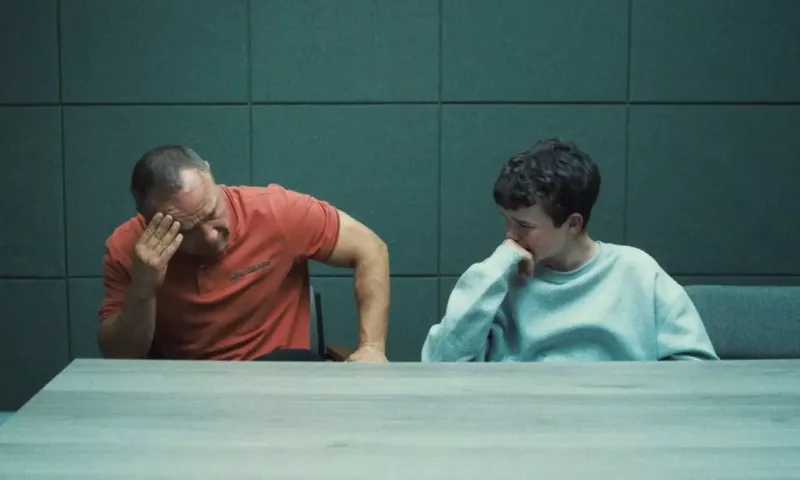
The accessibility Bloodworth describes strongly resonates with cultural media such as the chilling and hugely successful TV show Adolescence, which draws attention to the dangers of online spaces for teenagers. The book highlights how harmful ideas aren’t hidden, but are embedded in the apps adolescents use every day. Similarly, Bloodworth calls out online figures who openly promote these ideologies – such as Andrew Tate, who features in Louis Theroux’s recent Netflix documentary – whose messages find vulnerable audiences without them actively seeking them out.
Lost Boys is a stark warning. Through examples and Bloodworth’s own experiences the book shows how misogyny spreads and so terribly easily. The book suggests that prevention doesn’t directly rely on surveillance or censorship on its own. The work that matters most is critical analysis: learning to recognise the language of grievance when it is promoted as self-improvement, and understanding how emotional illiteracy is quietly validated. What Lost Boys makes clear is how easily this validation becomes dangerous. Lost Boys does not offer solutions, but it sharpens our ability to pay attention to the stories that boys are being persuaded to tell long before those stories harden into belief.
Lost Boys: A Personal Journey Through The Manosphere by James Bloodworth ($38, Atlantic) is available from Unity Books.
The Spinoff Books section is proudly brought to you by Unity Books and Creative New Zealand. Visit Unity Books online today.

Zara Dollie
Zara Dollie is a Year 13 student from Auckland who spends most of her time reading, thinking too hard, and loves the occasional very long Google Doc.


