Books to include in a post-apocalypse library

What books would you include in the last library?
Made possible by

A job ad looking for someone to curate a library for a remote estate in Golden Bay has books editor Claire Mabey’s ‘intellectually curious’ mind working overtime.
Unless you’ve been sheltering in an underground bunker you’ll by now have heard about the job ad calling for “an intellectually curious librarian or curator to help design and build a private, long-term library on a remote coastal estate in New Zealand”.
“The project,” goes the ad, “is to curate a high-conviction, enduring collection – a library that would remain meaningful and useful under extreme long-term scenarios”.
The job is being advertised on the New Zealand Library Association’s website by the owners of the sprawling Westhaven Estate in the remote Whanganui Inlet in Mangarākau, Golden Bay, at the top of the South Island. According to reports on RNZ and Newsroom, the owners are Eva Piëch, founder of medical cannabis clinic CannaPlus+, and her partner Toni Piëch, who co-founded EV manufacturer Piëch Automotive and is the great grandson of Porsche founder Ferdinand Porsche.
More than one person on social media has remarked how the whole situation reads like the premise for a cli-fi thriller: a bookish type is lured into a doomsdayer’s den by the promise of a dream job. As culty as it may sound, the allure of crafting a library to withstand the end times might just prove too compelling to resist. My guess is the email address at the bottom of the job ad has been inundated with earnest applications.
What should a post-apocalypse library do? What should it achieve, how should illuminate and inspire? As a thought exercise this is bloody good fun. The job ad says their focus is on: “essential knowledge; foundational literature; practical survival and technical domains; philosophy, history, and culture”. As soon as you start to try to define each of those words the task explodes and expands until you are deep down the rabbithole of potential.
Responses to my own social media callout for the one book that must be included led to highly charged exchanges that went back and forth for hours. “This is so stressful!” said one. “Maybe I want this job!” said another. Suggestions included Ellie and the Shadow Man by Maurice Gee; The Stand by Stephen King; Potiki by Patricia Grace; Barkskins by Annie Proulx; Jane Austen’s Pride and Prejudice; books by Borges, Marx and Tom Holland.
The below list is 28 books, four books per category, that shouldn’t be left out of a post-apocalypse library. Reader suggestions were taken into account – sorry if yours didn’t make the cut (remember, this is just the start of the library, not, by any means, the whole thing); feel free to argue your case for must-includes in the comments.
Essential knowledge
What is “essential” knowledge? To my mind this is speaking directly to the specific experience of living in a human body, and living inside a human brain: unavoidable facts of our very existence. For this section of the library, therefore, we have to have books that cover medical knowledge as well as psychology.
Essentials of Human Anatomy and Physiology by Elaine Nicpon Marieb and Suzanne Keller
The textbook that medical students pore over to gain essential knowledge of bodies and how they work. Probs going to need to know this stuff if the medical system gets any worse, anyway.
Fundamentals of Nursing: Clinical Skills Workbook by Geraldine Rebeiro, Damian Wilson, Stacey Dix
Chances are that the post-apocalyptic landscape is going to require you to learn how to dress wounds, stitch flesh, administer meds and reassure your fellow remaining humans with a kindly bedside manner.
Being Mortal: Medicine and What Matters in the End by Atul Gawande
One of the wisest and most moving accounts of what it means to take care of precious life.
Weathering by Arline Geronimus
Geronimus is a public health expert and her book looks at the ways in which inequality and prejudice impact bodies. If we get the chance to start again, a new-world medical system must acknowledge, understand and build itself with this lens at the forefront.
Foundational literature
Foundational for who, and when, and where? My approach to this section is to select books that speak to the way that stories can shape how we think and behave. How certain stories can linger in the mind, colouring thereafter how you might view a particular situation.
The Lion in the Meadow by Margaret Mahy
The ultimate story about the power of the imagination. The post-apocalypse library should carry both editions of this story: the original ending and the altered one, because it proves just how impactful even the shortest of stories can be.
the bone people by Keri Hulme
Is there a more moving, original and visionary novel in Aotearoa, and the world’s, bookshelves? Hulme’s masterpiece must be a cornerstone of any library, end-times and otherwise.
Imagining Decolonisation by Bianca Elkington, Moana Jackson, Rebecca Kiddle, Ocean Ripeka Mercier, Mike Ross, Jennie Smeaton and Amanda Thomas
One of the most impactful guides to a better Aotearoa ever published.
No Ordinary Sun by Hone Tuwhare
If there’s no poetry in the post-apocalypse world then I’m not coming.
Practical survival
Those real-world, no-internet, back-to-where-we-started skillz.
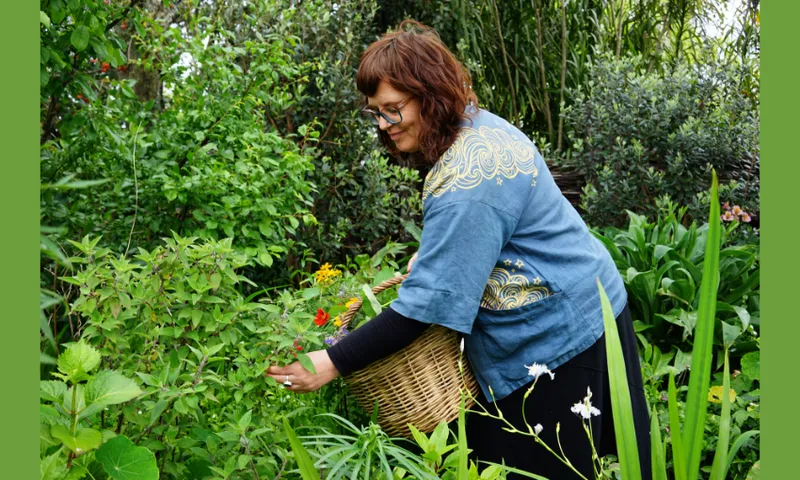
A Forager’s Life by Helen Lehndorf
A comprehensive foraging guide for Aotearoa and one that also discusses care, equity, parenting and marriage, so all useful stuff.
Sapiens: A brief history of Humankind by Yuval Noah Harari
Now, this might be an odd spot for this sweeping history, but to survive I think we’re going to need to know how societies have operated in the past and remember what not to do. Like allow a patriarchy, for example.
Bushcraft: Outdoor skills for the New Zealand bush by New Zealand Mountain Safety Council
Hardcore practical lessons from people who live and breathe survival in the harshest of conditions.
The Edible Backyard by Kath Irvine
Hopefully the post-apocalyptic landscape is going to leave us with soil that can support life. If so, we’re going to need to know how to grow stuff in it.
Technical domains
Let’s just hope that the Flight of the Conchords song ‘The humans are dead‘ isn’t prophetic (as much as it feels like it might be). This part of the library has to educate on green, sustainable tech and warn against the dire combination that is tech bros and late-stage capitalism.
The Empire of AI: Inside the reckless race for total domination by Karen Hao
The AI industry has told us, pretty fucking clearly, that what they’re making is going to take our jobs and lead to a world stuffed with resource-hungry data centres. This book will remind us not to let that happen again. Ever. (See also: The Age of Extraction by Tim Wu.)
Power Up: An engineer’s adventures into sustainable energy by Yasmin Ali
We’re going to need to know how to rebuild right.
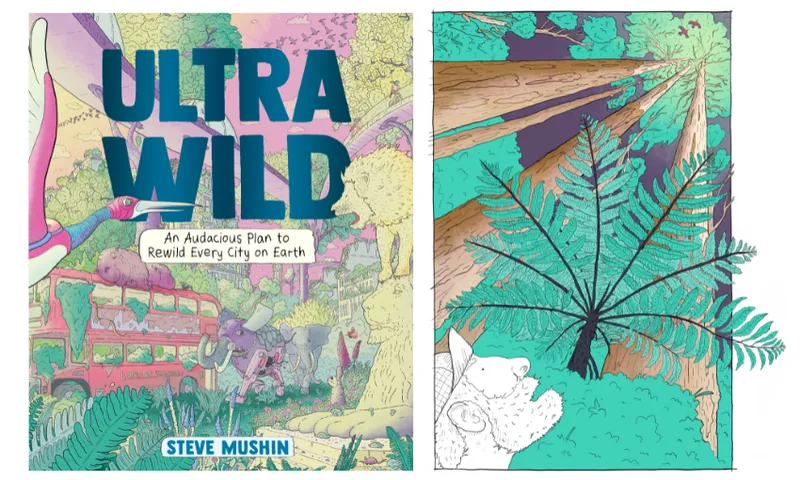
Ultrawild: An audacious plan for rewilding every city on Earth by Steve Mushin
Because we’re also going to need to remember that humans have been blessed with imaginations and instead of allowing capitalism to suppress them we should use them.
Book of Ingenious Devices by the Banū Mūsā brothers
Published in 850, this is a compendium of automata from the medieval Islamic world: valves, levers, cranks, siphons and more.
Philosophy
So we don’t fuck it all up again.
Animal Farm by George Orwell
Sometimes it’s fiction that serves philosophy best and Orwell’s 1945 allegory is an essential.
Middlemarch by George Eliot
There is nothing about the human condition that Middlemarch doesn’t cover.
The History of Philosophy by A C Grayling
The starting point for schooling up on the big picture.
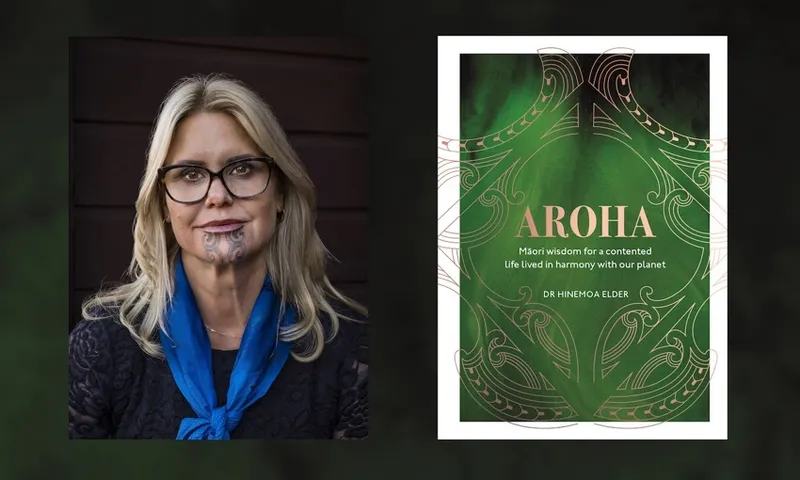
Aroha: Māori Wisdom for a Contented Life Lived in Harmony with Our Planet by Dr Hinemoa Elder
The book to keep on the post-apocalyptic bedside table.
History
To start with, this section has to focus on Aotearoa’s history first and expand from there. We can’t live on land we don’t understand, even if it’s been taken over by data centres.
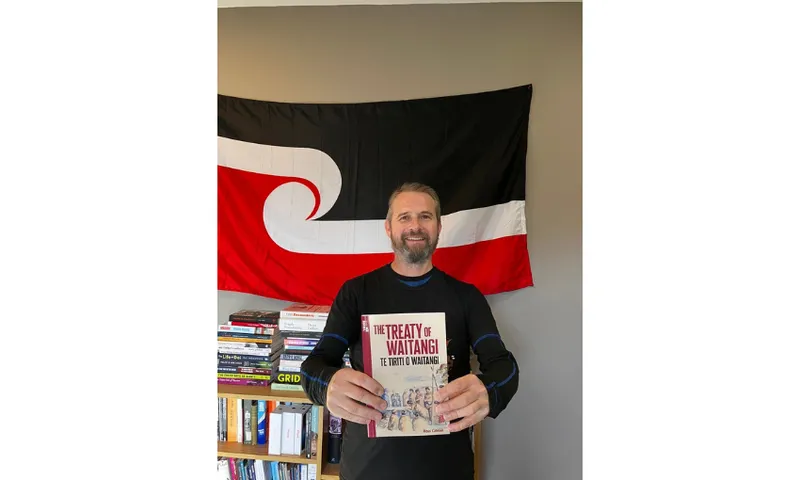
Te Tiriti o Waitangi by Ross Calman
A no-brainer. Calman’s edition is concise, clear and a starting point from which to go on.
Ka Whawhai Tonu Mātou | Struggle Without End by Dr Ranginui Walker
New Zealand history from a Māori perspective: this is a classic, a foundation, an essential.
The New Zealand Wars | Ngā Pakanga o Aotearoa by Vincent O’Malley
Another no-brainer. This is the story of how conflict shaped land and people and needs to be part of living and future memory.
Dominion by Tom Holland
In Dominion one of the great historians and podcasters (The Rest is History) of our time lays out the history and impact of Christianity.
Culture
What is culture in an apocalypse? How profoundly will the end times warp it? What is culture? This has got to be the most fascinating and beguiling of projects, to answer these questions with books.
Potiki by Patricia Grace
Patricia Grace is one of the most-cited authors when it comes to answering the question of who is New Zealand’s greatest writer in The Spinoff’s Books Confessional. Potiki is one of the foundational novels in Aotearoa’s literary history and intersects with every other section above.
The Halfmen of O by Maurice Gee
Gee’s trilogy about totalitarianism, religion, colonisation and faith in ordinary people.
Persuasion by Jane Austen
I’m not sure a library is a library without at least one Austen and Persuasion is obviously the best of her novels.
Toi Te Mana: An Indigenous History of Māori Art
In my fantasy end-times library there’d be a giant art history section led by this ground-breaking, award-winning book.
So there’s a starter pack for you, Westhaven. Readers, feel free to argue in the comments: that’s what a library is all about after all: proper, healthy debate and connection.
The Spinoff Books section is proudly brought to you by Unity Books and Creative New Zealand. Visit Unity Books online today.

Claire Mabey
Claire Mabey is a children's author of The Raven's Eye Runaways, The Raven's Eye Rebellion, and a picture book Cass and the Beast illustrated by Jill Calder. For a long time Claire worked on literary festivals and is the founder of Verb Wellington. She lives in Te Whanganui-a-Tara with her partner and son.


