‘Calamities and care’: Elizabeth Knox’s profoundly moving memoir, reviewed

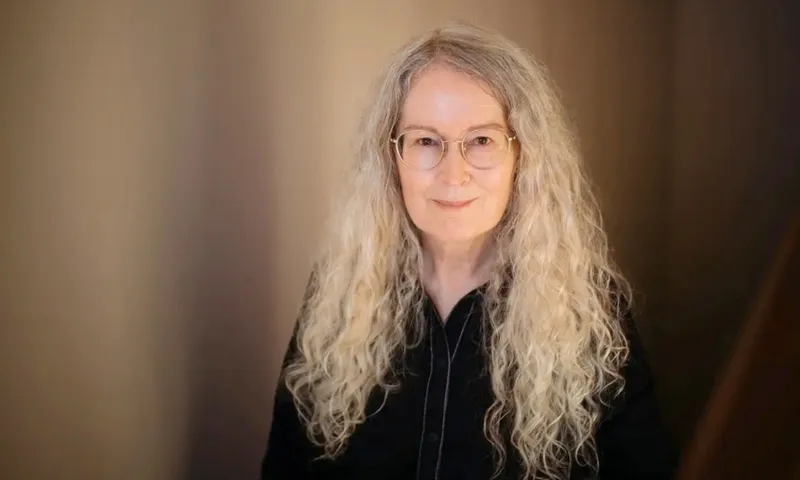
Elizabeth Knox’s new memoir is one of the best books of the year so far. (Photo: Ebony Lamb).
Made possible by

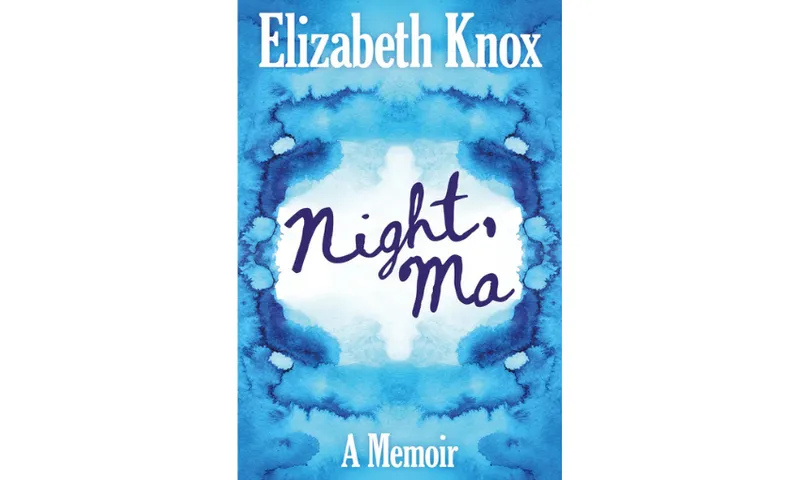
Claire Mabey reviews Night, Ma, the astonishingly honest new memoir from one of New Zealand’s most evocative and insightful writers.
“In 2015 I set out to write a memoir of a three-and-a-half-year period of calamity, in rapid succession, like a maul of rocks in a river gorge. Calamities and care: scrambling around the smashed boat looking for bandages while people lay bleeding in the shingle bank.”
So begins Night, Ma, a profound and profoundly brilliant memoir by Elizabeth Knox, an author most strongly associated with fiction that transcends the boundaries of this world: The Vintner’s Luck, Wake, Dreamquake and Dreamhunter and most recently 2025’s Kings of this World.
And it’s to fiction that Knox will return to just as soon as possible. “That is where I feel I’m allowed to be whole and alive,” she tells me. Night, Ma – a memoir that traverses transformational episodes from childhood to adulthood – is the longest project Knox has ever worked on, and the most difficult. Over a period of three-and-a-half years between 2008 and 2012, Knox’s sister was hospitalised with a psychotic break, her brother-in-law was murdered in Rarotonga and her mother was diagnosed with motor neurone disease. Night, Ma is a shifting chronicle of these “calamities”, these night-mares (the title reads differently after a while), that force the narrator – a time-travelling Knox – to “tunnel back” through her childhood, taking herself apart, to contextualise and humanise one of the most gruelling periods of her, and her family’s, lives.
The first 50 pages of Night, Ma contain a series of shocks nestled between vivid memories of a more comforting kind; like cats. Cats slink, soft-footed, through this book like familiars to good witches. There’s the time Knox’s sister, a “waywardly fanciful and chillingly experimental child”, kidnapped a toddler and made Knox her accomplice, a foreshadowing of increasingly perturbing behaviour; there’s a brief, brutal episode of sexual violence against Knox’s father when he was just a boy. “Dad left his own skin and never got properly back into it.” There’s the revelation that Knox’s other sister, Sara, is a victim of abuse; as is Knox herself.
What emerges from the surfacing of such detail is the mind of a writer, sister and daughter at work on many complex truths. “You have to ask yourself questions,” says Knox of the process of excavating memory. “How do I feel about that? And why do I feel that way? You keep asking the same question, and over time, the answers change as you understand more about what you’ve been through and how it shaped you.”
The prodigious skill of the accomplished and singular prose stylist is married with a scarily good memory and a shimmering humanity that avoids overlaying hindsight and contemporary psychological diagnostics over the past and its people. Night, Ma shifts back and forth through time, assembling some logic from the shock of life’s cruelest and most illogical turns. And yet, Night, Ma consistently manages to convey joy, compassion and humour. It is nothing less than the best of literature about the worst of times.
“To take things seriously is also to put the humour and the glow and the warmth and the beauty and worthwhileness of things,” says Knox when we talk. In the book, Knox’s sister, Jo, is as charismatic and charming as she is troubling. Knox’s mother, too, is as vivid and mischievous as she is unable to protect her daughter (Sara) from abuse by a neighbourhood predator. Even while this is a memoir of tremendous pain, confusion and anguish, it is also an account of love, care and empathy. Nobody is reduced to what they did or didn’t do to the narrator.
What struck me repeatedly is Knox’s tone, which, she says, she chipped away at for years. Tone, we agree, is almost impossible to define but it’s to do with the atmosphere of the writing: the shape of the doorway within which you enter into the material, it’s the lighting and the sound and the temperature, too. Night, Ma is a landscape of tone born from multiple selves collaborating on a plot too twisty and terrible to make up. There’s Elizabeth the child, the teenager, the adult; there’s the Elizabeth of the book – the narrator asking questions, close-reading her own memories. Then there’s excerpts from her parents’, and sister Sara’s, diaries – prose I found both moving and perhaps an indication of where Knox gathered some of her talent. Here is Knox’s father in 1963: “Jo is five this day; will go to school soon. I feel old. Elizabeth, crazy creature, thinks it’s her birthday too. ‘You had one in February,’ I say. But she just fixes me with a stern brown eye and says, definitely, ‘My birthday cake.'”
In a world of increasingly homogenised syntax thanks to generative AI, it is the richest of pleasures to read both Knox, and these brief portals into her parents’ own minds. One of the joys of memoirs, of diaries, is the privilege of access to intensely private worlds – and when the writing is this good the reading of it is in turn transformational.
Knox talks about years of calamity as being in “emotional quarantine”: “You’re just a mass of bad news. You feel pretty helpless. And I know that there are people going through that at any given moment, there are people going through that where they can’t talk about.” For Knox, part of publishing Night, Ma is that hope that it will comfort readers with the knowledge that they’re not alone in their struggles.
When I think of Elizabeth Knox I think of someone who has an ability unlike anyone else I’ve read to make words sit like architecture and air at once on the page; and somehow, in a way I am useless at articulating, infusing our minds with the enchanting and underrated prospect of the “undecided”. What I mean by this is the grace that Knox offers to every person in her non-fiction, every character in her fiction. Another facet of Knox’s “undecidedness” is the reportage of experiences that turn the reader towards the possibility of more. In Night, Ma, this comes in the appearance of what Knox describes as “the green avalanche” at the moment of her mother’s death, which follows years of deteriorating health and a steep decline in quality of life.
Night, Ma, Knox hopes, will offer empathy and comfort for anyone with experience of motor neurone disease. “Motor neurone disease is a horror show,” she writes. “People caring for somebody who has it are just filling sandbags and putting them in place while the water rises.” The slow, cruel changes to Knox’s mother are frightening, heartbreaking, and are rendered in devastating, generous depth: “But within a week or two she had thrush in her mouth and then, as the weeks and months went on, thrust all the way through her oesophagus right down to her stomach. She’d treat the stinging dryness with little lollipop-shaped sponges impregnated with a cooling gel. She’d dip them in water and paint her gums and teeth. And then, when her hand became too weak and shaky, I’d do it for her.”
The “green avalanche” chapter is the final of the memoir and, again, an astonishingly generous moment with which to leave the reader. Knox and her sister, Sara, keep vigil over their dying mother. The cat, Cheeky, aware that the fundamental nature of its owner is shifting, walks to the window “stiffly, mincing, like a cat facing an enemy – and went out.” Soon after, Knox’s mother stops breathing: “Mum was still in the room after her heart stopped. She was everywhere in the room. And then the green outside pushed up to the window and caught fire like everything catches fire whenever the Presence is there. Green light poured in the window.”
I will stop there. The rest ought to be read in full, when the reader has come through all that goes before.
The “green avalanche” is related to what celebrated diarist Helen Garner calls “the mighty force”. Garner’s non-fiction was a crucial influence on Night, Ma – “she provided the model”, Knox says. For Knox, the “green avalanche” is an “it”, a force that, she tells me, “is wild and belongs to the world. It isn’t human and it isn’t a thing: it is an experience. Suddenly your senses widen in a way that you suddenly see it – and the moment you see it, it sees you and you delight it and it is wonderful.”
Night, Ma is a book I’ll return to; to pore over the sentences, the precision and the “undecidedness”. I urge readers to take comfort in its pain, strength in its questions and nourishment from its care.
Night, Ma by Elizabeth Knox ($40, Te Herenga Waka University Press) is available to purchase from Unity Books.
The Spinoff Books section is proudly brought to you by Unity Books and Creative New Zealand. Visit Unity Books online today.

Claire Mabey
Claire Mabey is a children's author of The Raven's Eye Runaways, The Raven's Eye Rebellion, and a picture book Cass and the Beast illustrated by Jill Calder. For a long time Claire worked on literary festivals and is the founder of Verb Wellington. She lives in Te Whanganui-a-Tara with her partner and son.


