What is the ‘fourth article’ of te Tiriti and why is it being debated?

Is there a fourth article of te Tiriti o Waitangi? Does it matter? (Design: Tina Tiller).
A spoken promise at Waitangi to ‘tiaki’ faith and ritenga Māori is now at the centre of a petition to parliament. Was it a binding Crown commitment, or a modern myth stitched onto history?
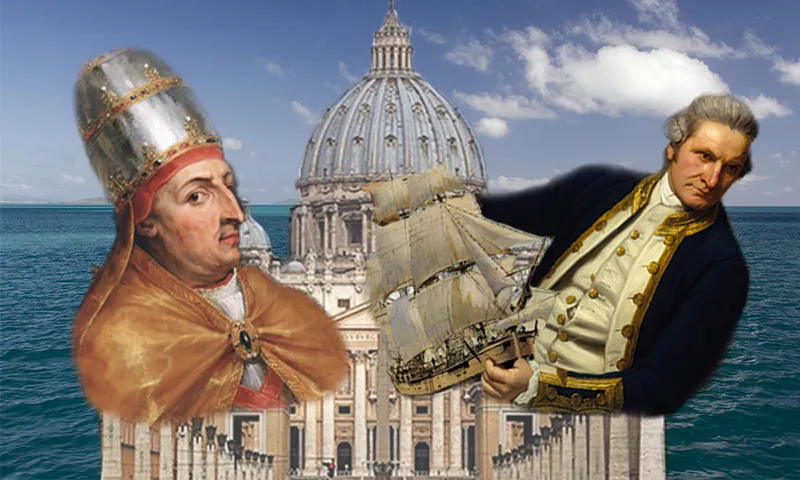
On February 6, 1840, a mixture of Māori rangatira and prominent Pākehā gathered at Waitangi to debate and discuss te Tiriti o Waitangi. Among them was bishop Jean Baptiste Pompallier, who raised concerns about whether Catholics (and by implication other faiths) would be “free” under the new agreement.
William Hobson, who at the time was governor of New Zealand, agreed after conferring with the missionary Henry Williams. A short statement was written later that day in te reo Māori, though not included in the official text of te Tiriti: “E mea ana te Kawana ko nga whakapono katoa o Ingarani, o nga Weteriana, o Roma, me te ritenga Maori hoki e tiakina ngatahitia e ia.” This roughly translates to: “The governor says the several faiths of England, of the Wesleyans, of Rome, and also Māori custom shall be alike protected by him.”
Earlier this month, parliament’s petitions committee released its report on a petition lodged by farmer, theologian and historian Alistair Reese to have the declaration formally recognised by the government as a fourth article of te Tiriti o Waitangi alongside the three articles written into te Tiriti of Waitangi. While noting existing protections for religious freedom and the complexities of legislating such recognition, the committee recommended that the government initiate a formal policy process to consider how the oral agreement might be formally recognised.
The report has irked some who say the sentiments are fine but insist it is wrong to claim it’s an article of the Treaty.
So what exactly is the “fourth article”?
Supporters refer to it as the “oral agreement”, “oral article” or “fourth article” of te Tiriti. It centres on that exchange between Pompallier and Hobson on the morning of February 6.
According to Reese, the key question is simple: “Did the Crown commit to a tiaki of ritenga Māori and the faiths of the land?” If so, he argues that commitment carries moral and constitutional weight.
Reese told the committee the treaty was “an oral covenant before it was a written one”. Rangatira experienced the negotiations primarily through spoken explanation in te reo Māori, he said, and decisions to sign were based on what they heard, not what they personally read.
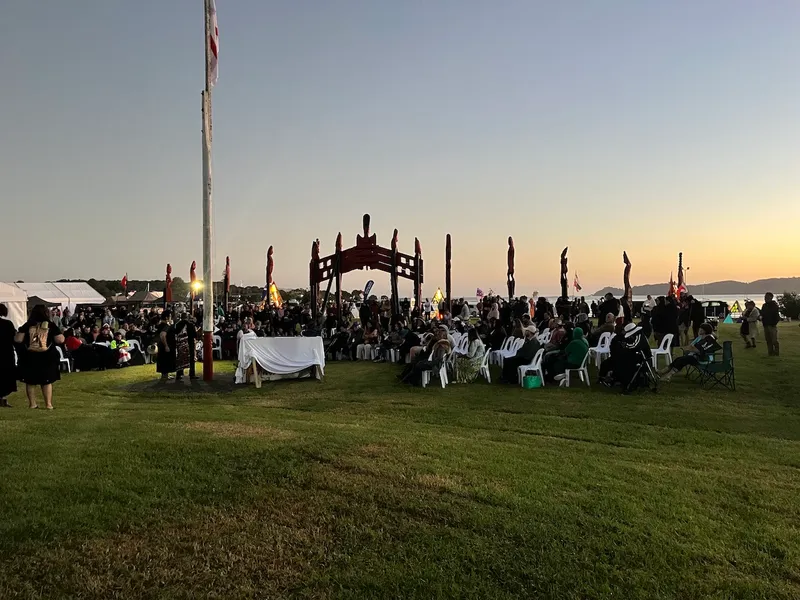
“The oral commitment,” Reese said, “has the same moral, legal and constitutional weight as a written agreement,” particularly given that the treaty was entered into with a largely oral people.
Central to his argument is the word tiaki. While some describe the exchange as a guarantee of “religious freedom”, Reese says that is too narrow. His fundamental question is whether Hobson committed the Crown to “active protection of the fledgling nation’s wairuatanga”.
Recognition, he argued, would not reinterpret the treaty but “honour the treaty as it was explained and signed on 6 February 1840”. To deny the status of an oral commitment, he said, risks privileging Western written traditions over Māori oral culture – something he calls a form of cultural prejudice.
What did the committee actually recommend?
The petition received 503 signatures and was initiated by the late Ngāti Ranginui kaumātua Patrick Nicholas and Huikākahu Kawe, whose work Reese continues.
In its February 2026 report, the petitions committee acknowledged the oral agreement was not included in the written text of te Tiriti and that there is “no written record of it being discussed at treaty signings other than at Waitangi on 6 February 1840”. At the same time, it agreed that this absence alone was not reason to overlook it.
Rather than endorse immediate legislation, the committee recommended that a policy process be initiated that considers ways in which the oral agreement at Waitangi could be formally recognised, and encouraged the use of “deliberative democracy” – such as citizens’ assemblies, structured public wānanga, or a broader constitutional review process – to enable informed, inclusive national discussion before deciding whether and how to formally recognise the oral agreement.
Constitutional expert Geoffrey Palmer told the committee that Reese had made a significant contribution and that the petition raised an important moral point about the treaty as a “sacred compact”. However, he cautioned that legislating the oral agreement on its own would be “a strange thing to do”, given that the three written articles themselves are not enacted as standalone statute law.
According to Palmer, any change would require “deep analysis, development of policy options, interdepartmental consultation, and consultation with Māori”.
Why are some scholars pushing back?
Historian Paul Moon is among those who reject the idea that the exchange amounts to a fourth article of the Treaty. “I absolutely do have an issue with it being called a fourth article,” he told The Spinoff. “It’s a violation of the sanctity of that agreement, and it’s without any historical basis.”
Moon does not dispute that a statement was read out at Waitangi. His objection is to elevating it to the status of a Treaty article. He says most signatories were not present to hear it, that there is no evidence it was repeated at other signings, and that it does not appear in early oral histories about the Treaty.
“The evidence is absolutely clear cut,” Moon says.
Moon says there is a striking absence in the historical record. He argues the idea of a “fourth article” does not appear in published treaty scholarship, tribunal-era oral histories, or tribal histories prior to the early 1990s, which is when a Catholic bishops’ conference first described Pompallier’s exchange as an additional article.
“It never appears in the oral histories that were collected through the 1980s,” he says. “If it were something foundational, you would expect it to surface in hapū discussions, in treaty hui, in tribal accounts of what their ancestors agreed to. It doesn’t.”
For Moon, if rangatira had understood Hobson’s statement as a binding constitutional commitment, it would have appeared in intergenerational kōrero – particularly in the decades when iwi were actively debating and litigating treaty grievances.
According to Moon, the danger lies in retrofitting contemporary values into the past: “You don’t take a current value and stitch it into something that happened a long time ago. That’s corrupting history.”
He also argues that religious freedom is already protected under modern law – through the Bill of Rights Act and Human Rights Act – and that tikanga and rangatiratanga can be grounded in the written articles themselves, without creating a new one.
“If you want to undermine the mana of every single signatory – a way of doing it is by pretending they agreed to something they didn’t,” Moon says.
What would recognition actually change?
There will not be drastic law change or sweeping constitutional reform overnight. The petitions committee stopped short of recommending legislation, and even supporters concede the implications would require careful wānanga. However, formal recognition could reshape how the Crown understands its obligations in the public sphere. If tiaki means more than toleration – if it implies active care – it could influence how government agencies approach karakia in civic settings, Māori spiritual practice in schools, prisons and the military, or the place of wairuatanga in public policy.
Critics argue those protections already exist under the bill of rights act and through the second article’s guarantee of rangatiratanga. Supporters say recognition would do something deeper by affirming that the Crown’s commitment in 1840 extended to the spiritual life of the nation. Whether symbolic or substantive, it would shift the constitutional narrative – and narratives in Treaty politics – having real-world consequences.
So where does it sit now?
The committee’s report does not settle the matter. It acknowledges legal and constitutional uncertainties and accepts that “recognition of the oral agreement… is far from being a settled matter in New Zealand society.”
For Reese, the petition is less about immediate legal effect and more about national conversation. He sees the fourth article as sitting alongside other unfinished constitutional questions about kawanatanga, tino rangatiratanga and the wider meaning of te Tiriti.
For Moon, the line is clearer: honour what was written, don’t embellish it.
The debate over the so-called fourth article reveals something deeper than a technical argument about historical wording. It exposes enduring tensions about how Aotearoa understands its founding compact – written or spoken, secular or spiritual, fixed or evolving.

Liam Rātana
Liam Rātana (Ngāti Wairupe/Ngāti Kurī) is editor of The Spinoff's Ātea section. He is passionate about indigenous and minority issues. Liam enjoys cooking, poetry, photography, and exploring the outdoors.


