The tension at Waitangi showed the Crown isn’t always at the centre

Usually, the Crown is under the microscope at Waitangi. (Photo by Jason Dorday/New Zealand Herald via Getty Images)
This year’s tensions on the ātea weren’t just political theatre. They revealed tikanga is no longer reacting to power – it is shaping the future of it.
Waitangi is always a reliable source of drama. It’s partly because the media go in large numbers and need some drama to report, especially now in the era of constant clickbait. So they turn a puke into a maunga. But there’s also something deep in our collective psyche that doesn’t rest easy on our national day. It’s like we have internalised our unjust past – and its lasting impact on our present – and cannot ignore it, despite the efforts of many. That spiritual turmoil and media circus makes for an eventful occasion.
Attention is normally focused on the Crown, which is appropriate. They are the ones who have claimed power, wealth and control in New Zealand. The Crown should be the focus of protests where Māori take the opportunity to speak truth to power while we have the attention of the nation. Naturally, that was the focus of much of the event, with wānanga, art, waka and other forms of bringing the kōrero to life.
There is a long history of Māori protest in Aotearoa. Since Hōne Heke Pōkai cut down the flagstaff across the water at Kororāreka in the 1840s to the present day, Māori have continually asserted their rights. However, it hasn’t always looked like protests do today. From Ngāi Tahu petitions to the biblically inspired vision of te Tiriti by Tahupotiki Wiremu Ratana that led to Labour holding the Māori seats in parliament for 50 years, Māori protest has come in many forms over many generations.
In 1984, the hīkoi to Waitangi was a major event, being one of Robert Muldoon’s last-gasp reactionary plays. My father was going up with many Māori church leaders to tautoko the kaupapa, and invited two of my uncles along. They were dressed well in their RSA blazers, one from serving in Malaysia and one from the Māori Battalion. But they were soon being jostled aggressively by the police, some of whom held pent-up anger from their work with the Springbok Tour and at Takaparawha (Bastion Point). My uncles had been sceptical of the protest movement. They knew of injustice, but it was a revelation for them to see the Crown manifesting its power in this manner, especially towards kuia and kaumatua. They were also shocked at the behaviour in what they had always believed was a sacred space.
The assumption became that this is the way Waitangi would always be: Māori and the Crown would gather and contest ideas and power, taking the nation… somewhere.
Aotearoa, though, is undergoing a fundamental shift. The Māori and iwi worldview is becoming embedded in this land, despite the best efforts of Seymour and company. From The Warehouse selling out of Matariki and Te Wiki o Te Reo merch to the failure of the treaty principles bill, Pākehā are entering into a phase where te Tiriti and te ao Māori are no longer things to be feared, but celebrated and uplifted.
The New Zealand legal system – the most powerful arbiter of our social norms – is also undergoing significant transformation. It is incorporating tikanga in a real way. We are moving from the standard of common sense being that of the perspective of a man on a Clapham omnibus, to that potentially of someone on a horse in Ruatoria.
Tikanga is being taught in law schools, which will embed this change for generations to come. Although the Paul Goldsmiths of the world might object, it is still happening. There is robust evidence to support this incorporation, including the fact tikanga is anchored in the same legal standards of fairness, reasonableness, good faith and proportionality that underpin all judicial reasoning.
This is not a new development. In 1992, the Anglican church developed a new constitution that incorporated what we now call co-governance. The three main cultural streams at the time – Pākehā, Pasifika and Māori – were given the ability to govern themselves according to their cultural understandings as an expression of te Tiriti.
At first, Māori went to develop a range of written regulations similar to those used by Pākehā Anglicans. Fortunately, the legal adviser at the time was Taihakurei Durie, who was also the chair of the Waitangi Tribunal. He suggested that instead of adopting Pākehā forms, Māori Anglicans should instead use tikanga to govern themselves – so we did.
It has been an interesting experience. At times, it has appeared chaotic, inconsistent and counter-productive. The lack of clear, written and consistent rules has been a challenge to navigate. However, the genius of tikanga is that it is primarily about relationships, and the knowledge that without functional relationships, no form of governance can work. This has also allowed for us to express our culture as Māori at every level, for better or worse.
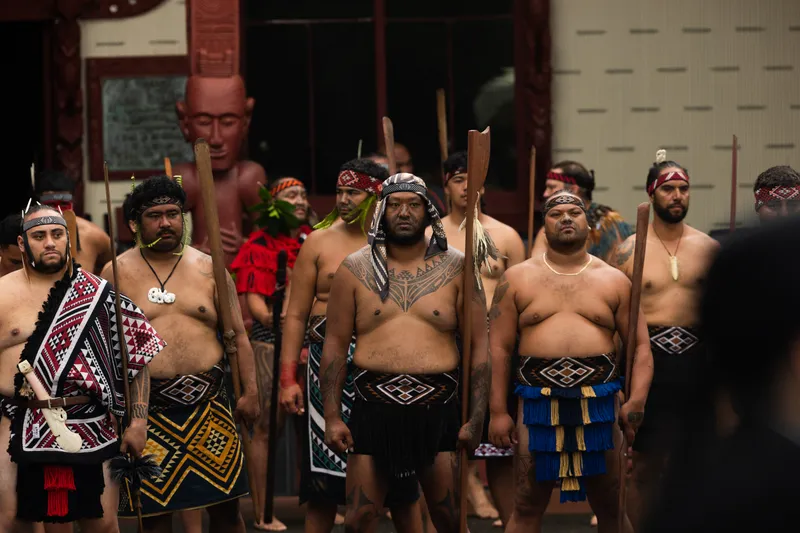
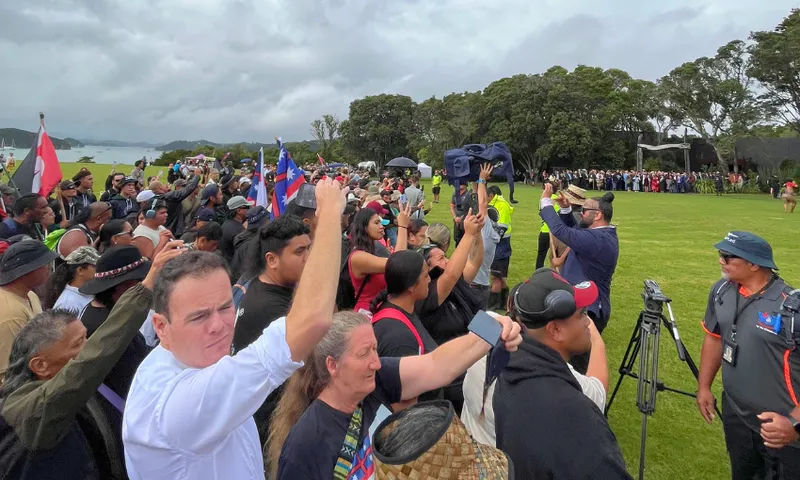
It was fascinating at Waitangi this year that much of the kōrero focused around the use of tikanga between Māori. The tensions between the Kapa-Kingi whānau and the Tamihere-Waititi whānau and their respective supporters spilled onto the ātea, with passionate whaikōrero and a provocative haka. My gut response was that the haka was impolite, performative and relied on Ngāpuhi being polite, modern hosts who wouldn’t react physically to the provocation. I also had admiration for my whanaunga Kiri Tamihere-Waititi and for her spirit.
However, there were a couple of things that caught my attention. Firstly, how tikanga evolves. We have all woven Christianity into our tikanga in a way that privileges aroha and universal manaakitanga. Such a provocative act in the past would have demanded a strong response, as it would have been seen to diminish the mana of the hosts and had to have been addressed. Instead, it relied on tikanga being infused with aroha and the safety that guarantees. This is part of the reason I am worried about the strong call for Christianity to be removed as a decolonisation project.
Secondly, even at Waitangi, we don’t always have to centre the Crown. This is ironic because in February 1840, it was a case of rangatira arguing amongst themselves with the Crown acting as onlookers. Now, we have locked ourselves into a space where the Crown is the alpha and the omega of our challenges. However, the events on the ātea remind us that our tikanga is much bigger than te Tiriti – it is about our relationships not only with one another, but with the environment and all of creation.
Waitangi has been portrayed as a spectacle. But it is a sacred space, a space for reflection, commemoration, vision and healing. It is right that our tikanga should be central to our actions. Let’s just use that with aroha, and for the uplift of our nation.

Hirini Kaa
Dr Hirini Kaa (Ngāti Porou, Ngāti Kahungunu, Rongowhakaata) is Kaiwhakatō (director) of Te Kākano Leadership Initiative. An historian by training, he has worked for his iwi, for social services, as a researcher, for the Anglican Church and his book Te Hāhi Mihinare was a finalist at the Ockham Book Awards.


