If Labour wants the Māori seats back, it needs to win over a new generation

Labour has a chance to win back the Māori seats, but does it have the MPs? (Design: Tina Tiller).
A digitally fluent, politically literate Māori generation is reshaping power in real time – and Labour must decide whether it can keep up.
If you’re like me and anticipating the next election, you might also be asking who is truly fit to lead Māori now. I sit on the cusp of the millennial and gen Z generations – young enough to feel the energy of what’s shifting – but old enough to recognise what is no longer working.
This generation challenges our politicians. We ask harder questions, we do not default to loyalty and we expect accountability. Māori have always been strong alliance-builders and capable partners inside political systems. But partnership without power, or structure without soul, no longer satisfies.
Labour leader Chris Hipkins says his party is aiming to win all seven seats. That’s a big call given its recent history.
At the 2017 general election, Labour won all seven Māori seats, ousting Te Pāti Māori from parliament and solidifying its place as the political voice of Māori. In 2020, incumbent Labour MP Tamati Coffey narrowly lost the Waiariki seat to Te Pāti Māori co-leader Rawiri Waititi, who brought Debbie Ngarewa-Packer into parliament with him through the coat tail rule. In 2023, Labour won only one Māori electorate – Ikaroa-Rāwhiti – while all other Māori seats went to Te Pāti Māori. Just recently, Labour’s Peeni Henare, who held Tāmaki Makaurau for three terms until 2023, announced he would retire from politics.
In other words, Labour is tracking in the wrong direction. If Labour wants to win the seats back and see a change in government, it must understand who it needs to connect with: the new generation.
I recently asked my whānau who they voted for in the last election.“I voted for Te Pāti Māori. They understood my values as a wahine Māori, and they represented grassroots Māori. I used to vote for Labour,” an older relative told me.
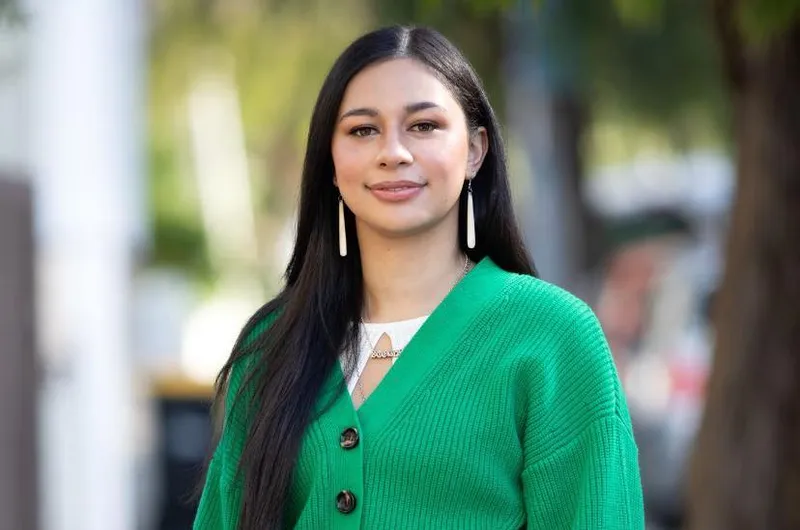
“I voted for the Greens because I really liked the way Tamatha Paul articulated information for people like me to understand,” said a younger relative.
“I didn’t vote for anyone because politicians don’t care about people like me. But when the Treaty principles bill was proposed, social media helped me to understand what was going on and that I had a say,” a friend said.
In the past six years, Māori voters have embraced a different style of political expression, and social media has played a critical role in that change. It’s not only happening here – international research shows that social media plays an important role in political engagement and news, and recent statistics reveal that 79% of Kiwis are active social media users.
Politics is no longer about knock-on-the-door campaigning, but what we see via a tap of our phones.
Since April 2023, almost 31,000 voters have switched to the Māori roll and more than 25,000 first-time voters have chosen the Māori roll when enrolling – marking a significant shift in political engagement. Much of the change was attributed to the Toitū Te Tiriti kaupapa and hīkoi against the Treaty principles bill, which culminated in the largest protest in the country’s history. This movement was largely powered through its strong social media presence.
Hana-Rawhiti Maipi-Clarke has become an international icon for tearing the Treaty principles bill and performing the haka in parliament, a never-before-seen act in that context. Videos of the moment went viral. People of colour and indigenous communities from around the world responded, including hip-hop legend Erykah Badu, and Maipi-Clarke was also criticised by controversial social media figure Andrew Tate.
While contentious to some, one of Maipi-Clarke’s favourite sayings is “the kōhanga reo generation is here”. It might seem like she is referring simply to Māori speakers, given that kōhanga exist to immerse children in te reo Māori, but kōhanga, in te ao Māori, actually refers to the next generation. Her message is a warning to the establishment that the new cohort has arrived.
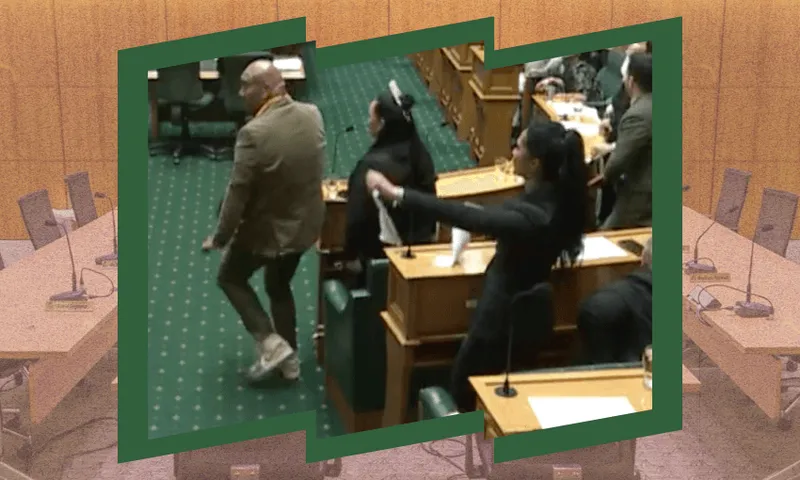
That generational shift has strengthened Te Pāti Māori, who snatched Hauraki-Waikato from Labour’s Nanaia Mahuta in 2020, winning it through Maipi-Clarke.
Te Pāti Māori’s Oriini Kaipara ran her 2025 Tāmaki Makaurau by-election campaign largely online, using social media to amplify her message. She soundly beat Henare, delivering him his second consecutive loss in the electorate. Kaipara was the first news anchor with a moko kauae to present mainstream prime-time television news, reshaping the national narrative about indigenous representation. That achievement continues to circulate internationally today.
Meanwhile, the Green Party has quietly grown influence among Māori voters through visibility in Māori communities, social media and policy fluency in areas that matter to young Māori.
Take Tamatha Paul. She’s a proud urban Māori that understands her policy portfolio. Paul is the Green’s spokesperson on corrections, courts, housing, police, and youth. She identifies systemic problems clearly, argues them unapologetically, and offers solutions. Her politics are not palatable for institutional comfort – and that’s exactly why young urban Māori voters like her. Even her social media reveals good taste in rap music.
Then there is Tania Waikato, a lawyer set to contest the Waiariki seat for the Greens. Through social media, she educated communities on the dangers of the Treaty principles bill, translating complex constitutional matters into practical, accessible language. Waikato even compiled a growing list of schools across Aotearoa that refused to follow the government’s directive to remove te Tiriti o Waitangi education.
Many Māori see the legal system as flawed. To have a lawyer who looks like us, sounds like us, is for Māori, and is deeply committed to making policy and the machinery of parliament easy to understand, is appealing to us.
And in the North, Hūhana Lyndon is traditional, visible, and present. As an uri of Ngāpuhi nui tonu, she is renowned for being at every hui across Te Tai Tokerau. I witnessed it firsthand when Shane Jones proposed a marina berth development on our hapū whenua in Te Rāwhiti. Lyndon took to social media to advocate for the hapū, as she’s done for many others, to raise awareness, and took those matters to parliament.
The Greens and Te Pāti Māori have their own problems. The Greens have had several high-profile departures this term, and Te Pāti Māori’s internal wars have dominated headlines recently. But both understand something fundamental: Māori political capital is now built differently. It is built on accessibility, grassroots literacy, policy confidence, cultural conviction, and direct unfiltered communication.
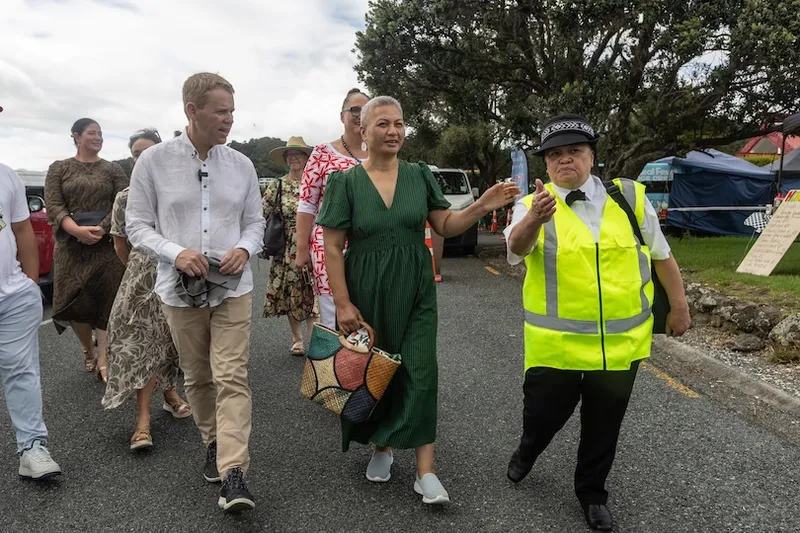
Can we honestly see these same attributes within the Labour Party?
The party needs to learn that younger Māori voters are politically literate, digitally fluent, and unafraid of constitutional language. We are living in an era where we recognise the mamae our grandparents endured – and we want structural change.
It is not solely cultural erasure we contend with. It is land privatisation that has interrupted sustainable kai systems, deepening poverty. It is an economic model built on Māori dispossession. When politicians speak of a healthy economy, what does that mean for everyday whānau? Who translates those abstractions into lived impact?
Who explains why first-home ownership feels unattainable? Who addresses how two or three-bedroom homes in Glen Innes close to decile one schools are now worth $1 million? Who ensures economic literacy is shared, rather than gatekept?
There is also structural tension. Labour, with its long history, is an intrinsic part of the country’s political structure. But if the system itself is being fundamentally challenged, what space remains for a party whose strength has always been its fluency within it?
Labour has a history of warriors and partnership – that’s undeniable – and it’s also something to stand strong on. What it needs now is to focus on connecting with the future. A new generation is emerging – one less burdened by the trauma and memory of past political compromises, and more fearless in challenging the status quo.
We elect people who are people. The ones who know their rohe, who translate policies into grassroots understanding, leaders who show up and remember that politics is not performance but a service to better the lives of all New Zealanders.
It’s because of this shift that Māori communities can now comprehend a political system that felt inaccessible in the past.
The new generation is not waiting to be invited in. The kōhanga reo generation is here.

Te Rina Ruka-Triponel
Te Rina Ruka-Triponel (Ngāpuhi, Ngāti Hine, Te Ātiawa, Hauiti, Apanui, and Ha’apiti in Mo’orea (Tahiti)), is the senior Māori media adviser at the University of Auckland, specialist in Māori and Pacific development, with a focus on transdisciplinary research engagement.


