Why the word ‘tribe’ makes some Māori uneasy

Image: Tina Tiller
It might sound harmless, but for many indigenous people the term ‘tribe’ carries a colonial history of hierarchy and misunderstanding. So why do we still use it – and what changes when we say iwi instead?
For better or worse, every culture defines human relationships by grouping people together in some way and naming them: nations, peoples, confederations, tribes.
As we all go about grouping each other, we apply our own perceptions and attitudes to that group of people. One of the ways Māori people were grouped by British arrivals to Aotearoa was by tribe.
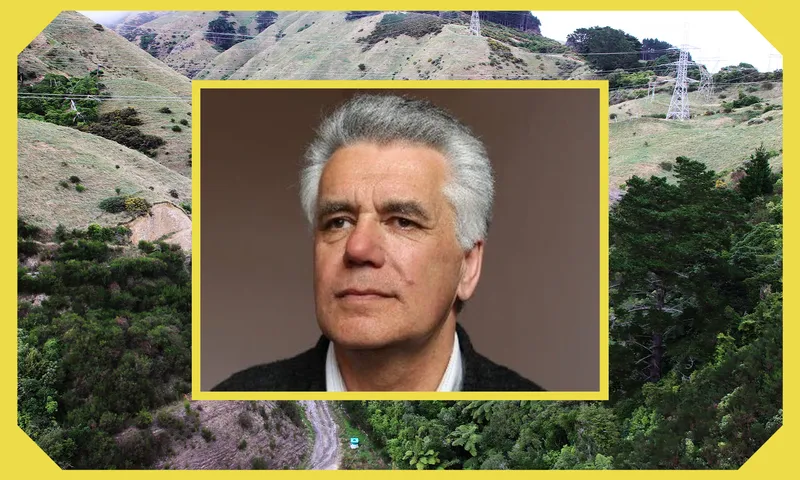
I remember going to a hui at Tapu Te Ranga Marae in Wellington and a regal Māori man with perfect English was there, discussing his dislike for the word tribe. At the time, I remember thinking: “I don’t care Unc – it’s just a word.” Later, I came to realise that koroua was Māori lawyer Moana Jackson, and he was trying to impart on us the same idea Kenyan scholar and human rights activist Ngũgĩ wa Thiong’o had raised: we should critique the language used to describe us.
Ngũgĩ wa Thiong’o is widely credited with leading a conversation about the English word tribe. His criticism was that in English, the word people is used to describe those who are modern people – we talk about English people, French people or Chinese people – but when it comes to Africa, it’s tribes. Ngũgĩ wa Thiong’o questioned why the Yoruba people, with a population of 40 million, are referred to as an ethnic group or tribe, while a non-African country with four million is a nation.
The word tribe has an uncomfortable connotation for many indigenous people. British explorers used it to define the peoples they encountered. Jackson once wrote there was a hierarchy of colour where “white Europeans were ensconced in splendid isolation at the top and other colour-coded peoples were placed at lower levels in a kind of inferiority rainbow”. The way British settlers named the parts of the rainbow is what matters here.
Colonial settlers didn’t call themselves a collection of tribes. This gives us some insight into what the word meant, and maybe still means, to descendants of those settlers. Like many westerners, the British tended to refer to themselves as a race or nation, often qualifying it with adjectives like civilised and superior.
The only example I’ve seen of a settler referring to themselves as being part of a tribe was when the word was used to complain that Māori were thinking of the settlers as an equal tribe and not a race to revere: “We are now in the position of an uncordial and envied tribe amongst them, instead of being regarded, as at first, an essentially different and superior race,” read a letter to the editor of the Nelson Examiner in 1845.
Early settlers to Aotearoa described Māori communities as “barbarous and savage tribes” or “petty tribes, who possess few political relations to each other, and are incompetent to act or even to deliberate in concert”. Settlers also used the word tribes to group animals.
There has been a noticeable reduction in the use of the word tribe in New Zealand English, with the word iwi taking its place. I suspect Jackson, who died in 2022, would have enjoyed seeing that. I support it too, because all incremental usages of Māori in New Zealand English bring us closer to what both Ngũgĩ wa Thiong’o and Jackson wanted for us.
The use of the word tribe in anti-Māori contexts persists, often under the umbrella of a sister term, tribalism. Some people capitalise on the fact different people treat words differently across languages to create misinformation, misunderstanding or play to understandable yet misguided fears.
Tribalism is one of those, but the best example is the word Pākehā. I recently used the word Pākehā on social media and received a response from someone who took issue with my use of it, because it offended them. They referred to themselves as “Tangata Tiriti”. Despite the obvious fail in allyship, this illustrates how the word Pākehā is plagued with debunked negative connotations in English. In te reo Māori, however, it’s a pedestrian word.
I’ve never heard a Māori speaker critique the word iwi negatively in te reo Māori. We often ignore the fact that what happens in English is an English-only problem – even when words of Māori origin are concerned – and we do decolonisation a disservice by ignoring the reality of speakers who use the Māori language every day, instead demanding that English carries the only linguistic reality.
But some Māori don’t like the word iwi, believing it to have similar connotations to the word tribe. For them, they attach it to what both Ngũgĩ wa Thiong’o and Jackson have raised about the idea of a tribe. I understand this, because some believe we didn’t coordinate ourselves by iwi in pre-colonial Māori society, as much as we grouped ourselves by hapū. So, for them, iwi and tribe go hand-in-hand.
I don’t agree that iwi is a post-colonial concept. I also don’t agree that iwi is a harmful word just because it appears next to tribe in the dictionary – that is not decolonial thinking. Critiquing a Māori word for its relationship to an English one means privileging English to the detriment of Māori. Decolonial thinking, rightly, doesn’t allow for that.
Many people – even those adept in decolonisation and decolonial thinking – won’t care about the use of the word tribe at all. Some of us try not to spend too much time thinking about coloniser tools – if they’re occupying our minds too much, they’re still winning. If I hear the word tribe, I don’t cast judgement on the speaker at that point. I reserve that for when I ascertain the quality of the thought and the intent behind it. If the thought process is bigoted, that is when I’ll consider the word problematic.
My iwi are my bones – the ones I share DNA with. The Anglosphere will likely continue to raise pop-culture pushes to find your tribe and that will annoy those of us involved in decolonisation because of the word’s harmful history. It won’t change the fact, though, that I’m already found. Arā, kei tōku iwi, kei Ngā Pōtiki a Tamapahore.

Vincent Olsen-Reeder
Dr Vincent Ieni Olsen-Reeder is the Director of ReoPol Limited, a newly established pakihi Māori that believes in quality Māori language policy for the nation, removing government-imposed barriers and reestablishing te reo Māori as a functioning and flourishing language across the nation.


