The life-changing power of blaming everything on road cones

I’ve finally found inner peace.
The government isn’t being misleading about transport spending – it’s pioneering a transformative new mindfulness tool.
At a press conference in the Beehive theatrette earlier this year, a journalist asked prime minister Chris Luxon how much, exactly, the government was spending on road cones. After checking his notes, Luxon confidently responded: $768 million.
There was an involuntary reaction in the room – a burst of laughter at such an obviously ridiculous number. Luxon’s face grew pink, but he insisted he was right. Another round of chortles, this time even louder.
Parliamentary press conferences can be unruly places, and sometimes questions from the media verge on disrespectful. But an entire room of journalists openly laughing in the prime minister’s face is almost unprecedented.
How did this happen? Who had misled the prime minister so severely that he thought the government’s road cone budget was more than twice the size of the entire national wool industry?
It turns out, it was his most loyal servant, Simeon Brown. In November, then transport minister Brown triumphantly announced that he’d discovered an egregious example of wasteful spending: Over the previous three years, NZTA Waka Kotahi contractors had spent $768m on “road cones and temporary traffic management”.
“And temporary traffic management” is a masterpiece of political communication from Brown. It’s so versatile. The average New Zealand household spends $238 a week on butter and other groceries. Simeon Brown spends $40,000 a year on custom hard hats and mortgage payments.
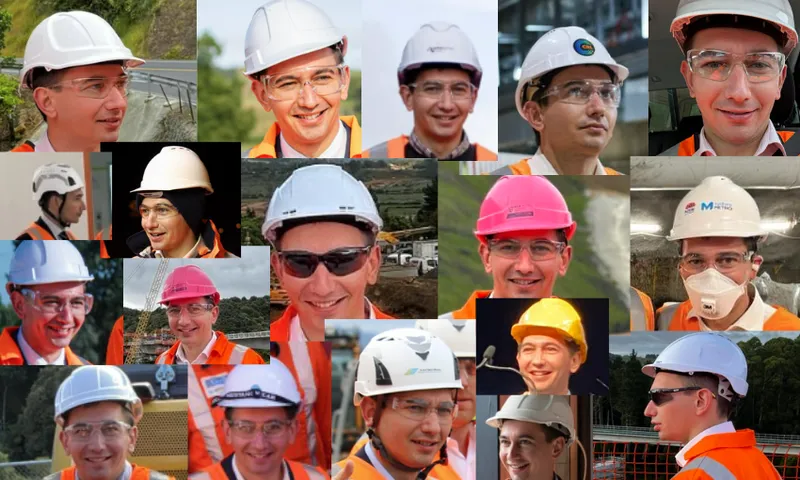
How much of the $768m was actually spent on road cones? We don’t know. The government has never released the figures, if they even have them (and many journalists have asked). But we do know that temporary traffic management involves far more than just road cones. There are all the other signs and lights, the offices full of professionals writing compliance reports and user applications, the people at NZTA HQ monitoring roads on a video feed, and most importantly, the teams of brave heroes standing out on the roads at all hours holding lollipop signs.
My only criticism is that Brown didn’t go further. Over the past three years, NZTA spent $22 billion on road cones and transport infrastructure. Over the past three years, the New Zealand government spent $529 billion on road cones and operating expenses.
That’s not to say Brown and Luxon were intentionally trying to mislead voters. They were simply utilising a new government-endorsed mindfulness technique: blame everything on road cones.
Sometimes, life throws things at you that are simply too much to handle. In those moments, worrying about it doesn’t do any good. It only makes you more anxious. The healthiest thing you can do is to take all those bad feelings and project them onto an external force. Like a road cone.
Road cones are tough. They’re resilient. You can punch them, kick them, chuck them on top of a tree or throw them off a bridge, and they’ll bounce back unharmed, just as pointy and orange as ever. They’re the perfect vessel for all of life’s burdens.
Imagine you’re the transport minister, sitting in your office while some egghead from NZTA presents you with piles of spreadsheets and complicated maths. You’re trying to grapple with the implications of decades of underinvestment in infrastructure and the increasingly unrealistic demands of the electorate. The oil’s running out, roads are collapsing, and the entire country grinds to a halt every time it rains or someone forgets how to merge.
That’s way too much pressure for any one person to carry. The only rational outlet is to rhetorically knee a road cone in the balls.
That’s why, amidst its famed “laser focus on the economy”, this government has made nine official announcements about road cones, beating the previous record of any government by 900%.
It’s why, last weekend, after new data revealed that inflation is up, employment is down, and the economy is sinking into stagflation, Chris Bishop made a largely redundant announcement that he would require councils to use fewer road cones – sent out at the very normal time of 7.16pm on a Saturday.
Auckland mayor Wayne Brown is a long-time practitioner of blaming everything on road cones, which has helped him become the vision of tranquillity we know today.

New Zealand motorists have known the power of blaming road cones for years. While stuck in traffic at road works, trapped by forces outside their control, they focus their rage on the quantity of cones they can see. Of course, if there were fewer road cones, it wouldn’t make their journey any quicker. They’d still have to stop for construction. It also wouldn’t change the position of their hairline, make their kids love them, or negate the need for that little blue pill. But in that moment, the road cones carry the weight of the world.
I’ve been adopting the government’s blame-a-road-cone technique in my personal life, and it’s been transformative. I was late for work? There was a road cone on the footpath. That girl never called me back? The road cone hotline must be clogging the network. I’m beset with an unshakeable fear that I might be fundamentally unlovable because, deep down, there’s something broken in me that I can’t name, can’t change, and am terrified others will one day discover and run from? AAAARRGGHH ROAD CONES.
Now that I have adopted the government’s strategy of releasing all my fears and frustrations onto a pointy tube of polyvinyl chloride, I’m experiencing profound levels of inner peace. It’s not my fault. Nothing is my fault. It’s the road cones.

Joel MacManus
Joel MacManus is a senior writer for The Spinoff. He previously worked at RNZ and Stuff, and began his career at Critic Te Ārohi. His writing explores the political, economic and cultural systems that underpin modern New Zealand. He won the 2025 Voyager Media Award for Best Columnist, Opinion or Critique.


