The National Library still hasn’t paid hundreds of authors. It has ‘no definitive timeframe’ for a fix

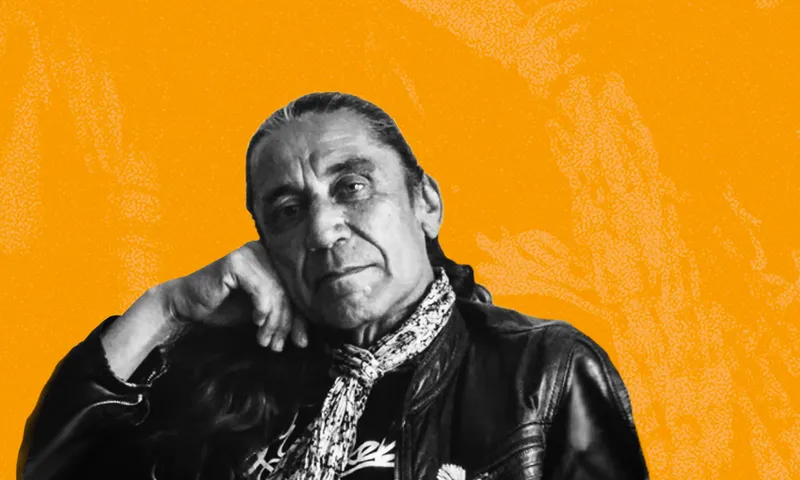
Dominic Hoey received an email on Christmas Eve saying he would receive a public lending right payment.
Made possible by

In what’s being referred to as ‘a fucking saga’, hundreds of writers have been told they won’t receive public lending right money, even though they were sent emails saying they were registered for the annual payment. The National Library has committed to sorting things out with ‘no definitive timeframe’.
At midday on Christmas Eve last year, writer Dominic Hoey received an email from Peter McKinney, the acting director of strategy at the National Library. The same email was eventually sent to 318 writers who had been informed in July that they had successfully registered for the public lending right (PLR), an annual payment from the Department of Internal Affairs and administered by the National Library that compensates authors for their works held in libraries around the country. The email told the recipients that they had, in fact, not registered correctly and would not be receiving the payments they’d spent months expecting. “I replied straight away, but his out-of-office was already on,” says Hoey.
He was anticipating a payment of $2000 – $3000 – money he was relying on to help pay rent while he worked on his fourth novel – his third, 1985, sold even better than his previous two. Emma Hislop, author of the 2023 short story collection Ruin, was only expecting a few hundred dollars, but the principle stung just as hard. For veteran author Ben Brown, it was a significant financial hit – he estimates the annual PLR payment makes up between a quarter and a third of his reliable annual income, nearly half of his year’s rent. In 2021, Brown served as the inaugural reading ambassador, working closely with the library. “In my experience, the people in that environment are legit – they know what they’re doing,” he says. “But this is a fucking saga.”
The PLR is a compensatory scheme, acknowledging that while libraries buy the books they lend out, those books are read by many more people than each retail copy. Authors are paid the PLR to make up for some of what they may have lost in sales from readers borrowing instead of buying. The PLR operates as a fixed annual pool of $2.4m, regardless of how many authors apply each year. To determine payouts, the National Library conducts a survey of library holdings to count the copies of every registered book; authors are only eligible for a title if it has a minimum of 50 copies in the system. The total fund is divided by the eligible copies to create an annual ‘book rate’ that fluctuates based on the year’s total volume.
Because the fund is a fixed pool, writers suspect the mistake cannot be easily undone. “They’ve already paid out that money,” Hoey says. “My understanding is that those who got paid got more than they would have if everyone had been paid.” He’s worried the library may want to get out of paying anyone else because the money is gone.
The source of the problem appears to be a botched transition to a new digital registration portal. For years, the process was antiquated but straightforward. “Last year, it all became an online thing through RealMe,” Brown explains. “You go through the process, but as you’re finishing, the site just disappears. There’s no closing screen saying ‘Thank you.’ I have a theory: there are two steps, and people might not have realised they needed to check a specific box. But if the system tells you you’re done, you should be done.”
The confusion was compounded by what the library now calls an “administration error”. In July, hundreds of authors received an email confirming their registration. For writers like Hislop, that was the green light to stop worrying. “I got an email in July saying, ‘Thank you for submitting a registration,’ so I assumed all was good. That is the email they now claim was sent out in error. I only found out I wasn’t receiving money a couple of weeks ago.”
For a department tasked with managing “Internal Affairs,” the failure to manage its own portal has left many wondering why the burden of proof is being placed on the authors. As Brown points out, the library already has the data. “Every year, the library knows our tallies anyway,” Brown says. “They know who is eligible and who isn’t.”
When asked when impacted authors could expect a decision or a payment date, Helen Jamison, the National Libraries’ current director strategy, regulatory and support, stated that the department is “not able to give a definitive timeframe at this point,” though she insisted that “resolving this remains a priority for the library”.
The question of where the money will come from also remains unanswered. Jamison clarified that “any potential remedy would come from existing sources of funding,” suggesting the DIA will not be seeking an emergency appropriation from Treasury, but would pay out of the National Library’s existing, already strained budget. Whether these impacted authors will be paid at the same per-copy rate as their peers remains “under assessment,” with details to be shared “at the appropriate time”.
The technical explanation for the July confirmation emails – the ones that gave authors a false sense of security for five months – is surprisingly mundane. Jamison admits that “the email was due to human error; a filter to exclude unregistered authors was not ticked”. This admission raises questions about the integrity of the data itself. If the email confirmation was an error, Brown says, how can we trust the error in recording the registrations wasn’t also the fault of the library’s systems, whether human or digital?
Jamison would only say that the “review of our public lending right administrative process, and the scheme’s usability, continues”.
The fallout from this error has sparked a wider conversation about the state of the arts in Aotearoa and the perceived lack of respect for professional writers. Hislop points out that under the current government, writers feel increasingly marginalised. “The arts aren’t valued,” she says. “The current rules don’t even allow for payments for electronic copies or school libraries. We are way behind Australia – one report showed New Zealand was 20 years behind.”
This is echoed by Hoey, who sees the incident as symptomatic of a broader cultural dismissiveness. “What really fucks me off is the complete lack of respect. Because we’re artists, they feel like they can treat us like shit and no one’s going to do anything about it. If we were lawyers or doctors, imagine the uproar.”
For the authors spoken to, the vague promises of investigations and future remedies only exacerbate the feeling that the creative sector is a low priority. Brown’s experience with the follow-up communications mirrors Hoey’s: “I wrote to them on the 19th of December. I got a reassurance saying they’d get it sorted, but then I got a funny little email that just said lots of nothing.”
As the National Library continues its review and manual acknowledgment of 2026 registrations, the writers of 2025 are left in a state of uncertainty. They are waiting for a government department to find “existing sources of funding” to rectify a mistake that they haven’t fully explained to them. The question is no longer just about a missing payment; it is about whether the system meant to support New Zealand’s storytellers is fit for purpose. For Dominic Hoey, Emma Hislop, and Ben Brown, the answer seems increasingly clear. They don’t just want to get paid (though they definitely do), they want their work to be valued and respected. But until a definitive decision is made and the funds are actually paid, the saga continues.
The Spinoff Books section is proudly brought to you by Unity Books and Creative New Zealand. Visit Unity Books online today.

Henry Oliver
Henry Oliver writes The Bulletin. He was previously The Spinoff's music editor, the editor of Metro, a bar owner, intellectual property lawyer, and bass player.


