Covid-19 inquiry makes final findings on spending, mandates and lockdowns

Photos: Getty Images
Phase two of the royal commission of inquiry, with new commissioners and broader terms of reference, has just released its report. Here’s what you need to know.
Ugh, what is this? I don’t want to think about those pandemic times ever again.
Mate, I hear you. But if not quite neatly tying a bow on the whole episode, the release of this final (final) report of the Royal Commission of Inquiry into Covid-19 Lessons Learned symbolises a pretty big step in the road towards moving on.
Wait, didn’t they already release a report?
Yep, back in November 2024. But in keeping with promises made in National’s coalition agreements with both Act and New Zealand First, a second phase of inquiry was launched just as the first one concluded, with a total budgeted cost of just over $14m.
What was wrong with the first one again?
According to internal affairs minister Brooke van Velden, quoted in a press release when the final report was presented to the government late last month, “New Zealanders told us they weren’t satisfied with the narrow terms of the first phase of the Royal Commission’s inquiry – terms set by the same government that made the decisions the commission was investigating. It was important that we expand the inquiry’s terms of reference to focus on the use of lockdowns and vaccine mandates, in particular inquiring into whether the government considered the impact these decisions would have on society, our health and education, and on our economy.”
So new commissioners (Grant Illingworth, Judy Kavanagh and Anthony Hill) were appointed, and given a specific time period of February 2021 to October 2022 on which to focus. Four key areas were looked at: vaccine approval and safety, vaccine mandates, lockdowns, and testing and tracing. The commissioners have spent the last 15 months travelling up and down the country talking to various affected parties, reviewing 31,000 submissions and 8,000 relevant documents from government agencies, and holding 29 interviews with former ministers and senior public servants.
Righto, so what does this new report have to say?
Quite a lot: comprising two volumes plus bonus “by the numbers” and “pandemic perspectives” sections, it totals more than 1,000 pages. The overarching vibe, for want of a better word, is broadly in line with the findings of phase one – the report acknowledges the pain and anger expressed by many of the people they heard from regarding the impacts of the pandemic and response, and notes there are lessons to be learned from those experiences. “It is clear, however, that ministers and officials were facing a series of complex, high-stakes decisions in a rapidly changing environment and were doing the best they could at the time. Evidence shows New Zealand had among one of the best pandemic responses in the world.”
Boring – I want to hear about the controversial stuff like vaccines.
Fair enough. The report goes into detail about how vaccines are developed, tested and approved, and details the processes followed for each of the different Covid vaccines approved during the time period in question. “Safety and effectiveness of vaccines underpinned the design and delivery of the government’s vaccine strategy and immunisation programme,” it concludes. “Medsafe was agile and adaptive in its regulation of Covid-19 vaccines during the pandemic. This allowed rapid approval of a vaccine without taking short cuts.” What’s more, “the system to monitor the safety of Covid-19 vaccines was comprehensive and responsive”.
It can’t all be bouquets though, surely?
No sir. While those in power knew that public acceptance of the vaccine strategy was crucial, “they did not anticipate the extent to which concerns about vaccine safety would emerge and seize attention”. So while communication about risks were “extensive and followed established procedures”, “shortfalls in clarity and effectiveness existed in terms of what providers heard about risks and, in turn, communicated to consumers”.
OK, let’s move on to mandates – what does it have to say about those?
The findings of this new report on mandates are similar in many ways to those of the phase one report, which found that “some workplace, occupational and other vaccine requirements were applied too broadly and remained in place for too long, which caused harm to individuals and families and contributed to loss of social capital… vaccine mandates had substantial, long-lasting impacts that would need to be taken into account in any future decisions around their use in a pandemic response.”
The new report broadly agrees, saying, “Vaccination requirements are a valid intervention that should be kept in the toolbox for future pandemic responses. However, the scale of their intrusion on fundamental rights and freedoms and their potential for severely negative impacts on those who choose not to be vaccinated means they should be used with great care.”
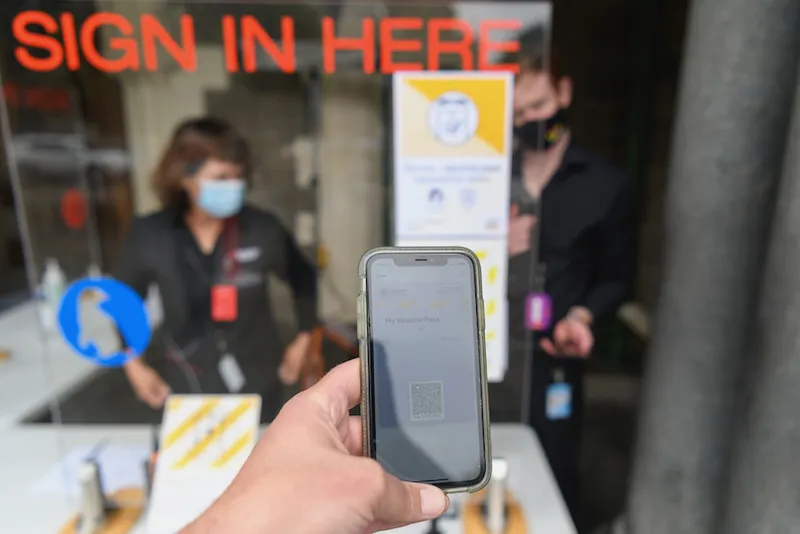
In terms of whether the government considered the potential impact of its decisions or could have foreseen them, the report says “the decisions on vaccine requirements reflected the advice given and paid significant attention to experience in comparable jurisdictions. While advice on the vaccine pass system included an assessment of the potential impacts on social cohesion, the labour market implications could have been explored further.”
Labour market implications?
Yep, specifically the significant employment and “wage scarring” impacts of mandates: for people who lost their jobs for not complying, the negative effects persisted beyond the lifting of the mandates – many didn’t return to their industries and remained unemployed or earning less than they used to. “By July 2024, almost 25% of education workers who declined vaccination were not in employment, compared to 11% of education workers who got vaccinated early,” is one statistic presented.
The report is particularly critical of the lack of attention paid to these “intermediate impacts” and of a “striking” absence of monitoring. These aspects were foreseeable and should have been considered, but advice around continuing or removing mandates “was not well informed by data”. “Ministers did not expect that some people who left their jobs because of the occupational mandates would not return to their original professions. For example, Rt Hon. Dame Jacinda Ardern told us that there was ‘an assumption…that anyone who withdrew from the labour market may be inclined once a mandate was lifted, to re-enter’.”
Given the eventual broad reach of the vaccination requirements, including via employer-led mandates facilitated by the vaccine assessment tool, a large share of the workforce was ultimately affected – but the report concludes “it is impossible to precisely determine the number because no data was collected about the number and breadth of employer-led mandates”.
Any other mandate reckons?
Yep: the vaccine mandates for border workers should’ve been brought in more quickly and revoked more quickly too. Delays between decisions being made to lift mandates in healthcare and these actually coming into effect also comes in for criticism. There were also “clear cases where the span of mandates went too far, such as the inclusion of family carers”, finds the report, noting that the high court also found this to be unlawful.
Another “significant failure” came in respect to a group of 12-17-year-olds who were subject to mandated vaccination if they “carr[ied] out work at or for an affected education service (including as a volunteer or an unpaid worker)”. The government’s vaccine technical advisory group had advised “that the risks of the spread of Covid-19 among those aged under 18 were ‘insufficient to justify mandating a 2 dose schedule of the Pfizer vaccine prior to working in any environment’”, but this advice never made it in front of ministers or, indeed, to those 12-17-year-olds who were subject to the mandate.
What about that other tense topic, lockdowns?
The report goes into great detail on the advice received and decision-making processes relating to the 107-day Auckland lockdown of 2021, noting the government was facing an “extremely difficult situation”. It concludes that “the key decisions on lockdowns during the period 17 August to 2 December 2021 were sufficiently informed as to the main impacts of those decisions”.
In line with the findings of phase one, it notes there was a “strong focus in Cabinet papers on health impacts and weaker attention to economic and social impacts”. Treasury advice became more cautious from September, beginning to “increasingly emphasise the uncertainty as to the duration of the lockdown and its impacts, but this was not fully reflected in Cabinet papers”. Treasury advice itself was also lacking, though, in that it didn’t provide regional-level data that showed the economic impacts of regional lockdowns.
So tell me: did the Auckland lockdown need to drag on for so long?
It could probably have ended a bit sooner had a shift from an elimination strategy to a suppression strategy been prepared for earlier and signalled to the public in advance. The report notes that the phase one report pinpoints the reason why this had not happened: “Everyone was on the dance floor and there was no one on the balcony, looking down at what was happening.” When the decision was made to end the Auckland lockdown and transition to the Covid-19 Protection Framework (AKA the traffic light system – remember that?), there was a delay because the framework wasn’t ready.
However, the report continues: “That said, there would also have been harmful economic and social impacts if the delta variant had spread widely through the country without any lockdown. It may be that decisions would therefore have been the same, or not significantly different overall, if decision-makers had reassessed their strategy, changed their decision-making process or had been provided with additional data.
“It is difficult to attribute overall outcomes to a four- to six-week period in October/November 2021 when restrictions in Auckland might have been lower,” the report says. “However, we acknowledge the view of some submitters that significantly different outcomes could have occurred for some people and businesses if restrictions had lifted sooner.”
Tests, what about tests?
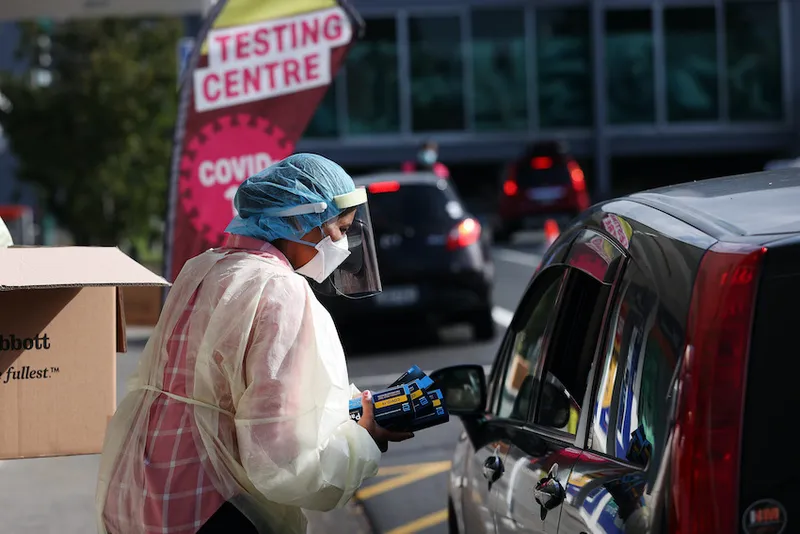
We were too slow in getting RATs, and “the official PCR testing system was ultimately overwhelmed in early 2022”. “Officials and other commentators foresaw problems and consequences arising from the government’s conservative approach to testing technology and strategy and urged changes, but these calls were either not heeded or were picked up too late.”
What about spending? Didn’t Nicola Willis say the government of the time ignored advice, instead opting for ‘undisciplined spending that pushed up inflation, eroded New Zealand’s previously low public debt position, and fuelled a cost-of-living crisis’?
She did say that, responding to a 2025 Treasury briefing that suggested its advice to rein in spending from August 2021 wasn’t followed. Chris Hipkins dismissed it as “Treasury spin”, while Grant Robertson said it was a “rewriting of history”.
They would say that though wouldn’t they. What did the royal commission find?
“We have not seen any obvious signs of decline in high-level economic indicators that decision-makers should have been concerned about when making key lockdown decisions in the second half of 2021,” finds the report.
And also: “The Treasury’s advice throughout the second half of 2021 noted the risk of inflation, often in the context of international economic conditions and supply chain disruption. However, although the Treasury and Ministry of Social Development flagged that providing financial supports risked compounding inflationary pressures, their advice nevertheless was that, on balance, it was appropriate to ‘stay the course’. Decision-makers followed that advice.”
And then there’s: “Ministers were aware that the fiscal response to Covid-19 was causing net government debt to increase. Even so, Treasury advice was supportive of the economic measures that were in place, noting on more than one occasion that there were not any strong macroeconomic or fiscal reasons for reducing the level of fiscal support, given the benefits of maintaining certainty for businesses and individuals, and minimising hardship.”
There must have been some criticism of spending, though?
Definitely. The shovel-ready programme cops some flak. Designed to “help kick-start the post-Covid rebuild by creating more than 20,000 jobs and unlocking more than $5 billion of projects up and down New Zealand”, it ended up as the fourth-largest component of the $60 million Covid-19 Response and Recovery Fund. The report notes it was “not targeted to costs arising from the pandemic. Also, shovel-ready projects are not by nature timely or temporary. Despite the name, they cannot be started immediately; they take time to ramp up, are difficult to stop, and typically run over many years. These constraints played out in 2021 and beyond.”
And in 2021, there was time to reconsider some of the measures put in place under urgency in 2020 – such as the wage subsidy scheme – but this didn’t occur. “We are not aware of any sizeable component of the fiscal stimulus programme that was reviewed or cancelled to lessen the stimulus once the undesirability of further stimulus became clear.”
The actions of the Reserve Bank are also criticised, specifically its large scale asset purchase programme (AKA quantitative easing or “money printing”. “Quantitative easing and other unconventional monetary policies used during the pandemic had significant costs,” reads the report. Stimulatory measures did go too far and for too long, the report rules, which led to inflation. “Looking back, the extent of the surge in house prices provides a reasonably clear indication that macroeconomic support – fiscal and monetary policy combined – was greater, and continued for longer, than was needed to maintain macroeconomic stability.”
So does this report make any recommendations?
It does: 24, in fact, grouped under four overarching lessons. The first is about “systems that promote good government decision-making”, and covers stuff like making sure decisions made in times of urgency have suitable safeguards, improving data availability and modelling, and developing a framework for structuring advice to decision-makers. There’s also a recommendation that in the event of a future pandemic, elimination strategies should be presented as temporary from the outset.
The second lesson is about putting in place a “clear and enduring legal framework for managing future pandemics” via primary legislation, which would set out “the most significant powers and tools available to government in a pandemic response, including restrictions on movement and vaccine requirements”. This should clearly define the scope and limits of emergency powers and embed strong safeguards that would ensure decision-makers have to think about stuff like human rights, proportionality and social and economic considerations. It should be developed via the usual transparent process and in future pandemics, the use of bespoke legislation passed under urgency should be avoided.
Important but kinda dull, I have to say. What’s lesson three?
Agile and robust economic policy, of course. Basically, “if fiscal stimulus is considered necessary in a future pandemic, measures should be timely, temporary and targeted”. Not all decisions need to be made swiftly, and those made at speed should be reviewed as circumstances change. As for right now, “there is a pressing need to reduce public debt to provide a buffer for future pandemics or other economic shocks. The best approach to reducing debt involves economic growth driven by productivity improvements, accompanied by disciplined fiscal management.”
Roger that. Lesson four?
That’s “readiness for social impacts and post-pandemic recovery”, and the recommendations include researching the health, social and educational impacts of the Covid-19 response and looking into ways to increase trust and social cohesion.
What has the response been to this report?
Unsurprisingly, it’s being interpreted in different ways. In a press release, Simeon Brown, minister for health and for Auckland, said, “The Royal Commission has now confirmed that Chris Hipkins kept Auckland locked down longer than required, despite receiving advice that restrictions could end sooner.”
He’s referring here to Auckland staying at level four for five days longer than what was recommended by the director general of health before moving to alert level three, to be more confident that there was no undetected community transmission.
Act’s David Seymour, meanwhile, said the final report “delivers the balanced account Labour tried to cover up”.
Labour leader Chris Hipkins, meanwhile, said the report confirmed New Zealand’s response was robust, “with decisions that were considered, appropriate, and guided by the best evidence available at the time”. He alleged the government had “cut public health capability while commissioning multiple reviews that repeat the same conclusions”.
Responses from those in the science community have been largely positive, with microbiologist Siouxsie Wiles welcoming the recommendation of an agency to monitor evidence of trust and social cohesion. “Part of this should include tracking misinformation and disinformation which is one of the ways social cohesion and trust are eroded,” she said. Modeller Michael Plank, meanwhile, said the recommendation for the establishment of a strategic function within government to provide timely data and modelling of health, social and economic impacts was “sensible”.
What happens next?
Nothing much for a while. Brown’s press release says, “The government is carefully reviewing the commission’s findings and expects to outline its response to the recommendations by July, ensuring any future decisions balance the health and economic needs of all New Zealanders.” That’s a couple of months before a review of Covid-19 monetary policy is due to be released.

Alice Neville
Alice Neville is The Spinoff's deputy editor. Her interests include politics, food and data-driven deep dives of all kinds.


