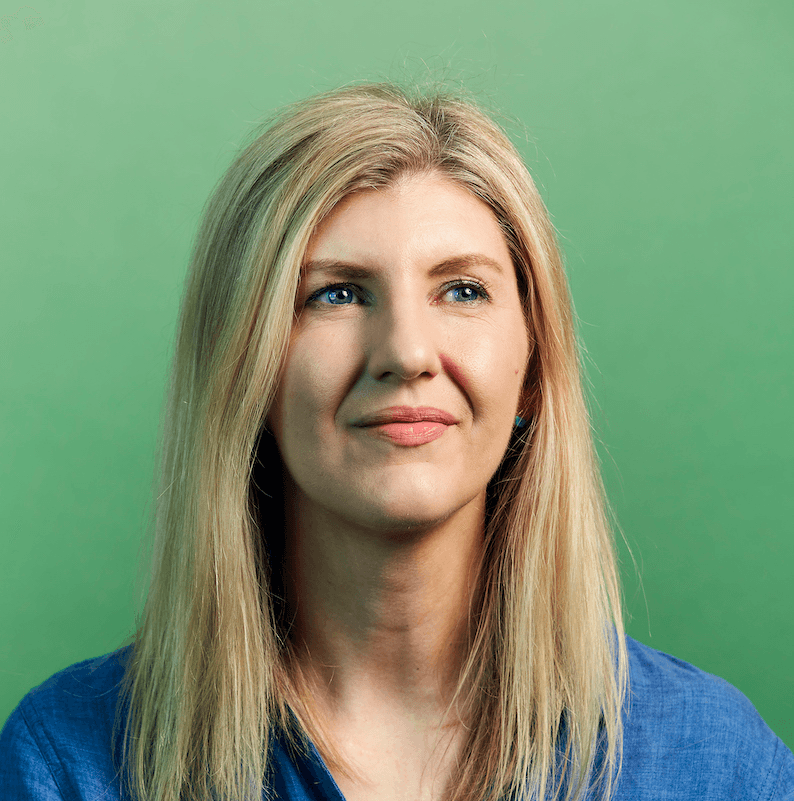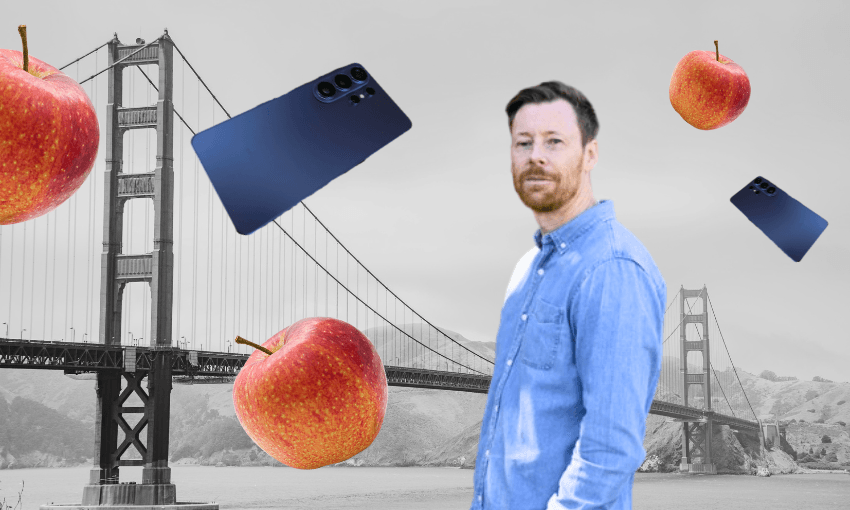


Greg Bruce, multi-media journalist and former iPhone user, visits the home of Apple and a large percentage of the earth’s tech bros: San Francisco. Will this place tempt him back?
From the moment I got my first iPhone in the late 2000s, it made itself at home in my pocket and convinced me there was no alternative.
I would probably still believe this, were it not for the emergence of AI and more precisely my unhealthy obsession with it. When Samsung sent me an invitation to the launch of their Galaxy S24, two years ago, they mentioned the phone’s extensive AI capabilities, and I could not RSVP fast enough. When I saw it in the flesh, I was deeply moved. The scales fell from my eyes and I knew I would never again think there was no alternative.
A few months later, by sheer coincidence, I inherited a Samsung phone from a family member. It wasn’t the model I’d seen being demonstrated, but a recent software upgrade meant it was able to do most of the same things. Switching from my iPhone was as easy as pushing a button, and by the next day I was a Samsung user. It was all the things I wished I could be: smart, fast and at the cutting edge of AI.
It didn’t take me long to fall in love with it and I have hardly thought of my old phone since, but I did think of it when I got an invitation from Samsung to attend the launch of their brand new S26 in San Francisco, spiritual home of Apple and home to a disproportionately large percentage of earth’s tech bros.

The city had played an important part in my own smartphone journey. It had been like a second home to me at the time I got my first iPhone, when I was working for Air New Zealand and flying into and out of the city constantly.
But the last time I’d been to San Fran was 15 years ago. Back then, I’d mostly wandered, confused, for hours at a time, looking for cafes that were cool enough to make me feel cool but not so cool as to make me feel old. Now, with the brand new Galaxy S26 Ultra in my pocket, I had a guide who was able to answer all my questions and deliver me to where I wanted to be.
I wondered what it would be like to be back in the city with this new companion in my pocket. Would I be tempted to go into the Apple store, tell them I had strayed, allow them to place some VR goggles over my head, then play me their extravagant sci-fi ads on loop until I relented and returned to the fold?
I was staying in Union Square, both the city’s retail heart and home of Apple’s flagship store. Only minutes after leaving the hotel for the first time, I found myself walking past it, but as I looked in at the staff and customers and devices, I felt no pull. None at all. I was shocked how easily I walked past without so much as a backward glance at the store’s excessive minimalism.
Next, I asked Gemini to find me a cool coffee place nearby and the place it found was so cool I almost turned myself away at the door, pushing through only because I understood that Gemini knew better than me what was right for me – and the first sip of that latte and bite of that pistachio-berry-twice-baked croissant proved it.

Later, I walked down Market Street to the Ferry Building, a place I knew well from my time with Air New Zealand. Out front was a landmark I’d never seen before, a giant sculpture of a woman. I pulled out my S26 Ultra, drew a circle around the image on my camera screen, typed “what?” and learned it’s a 14 metre high sculpture called R-Evolution intended to symbolise feminine strength, presence and liberation while challenging the objectification of women. It has engines inside the chest to make it look like she’s breathing. I snapped a photo and was impressed by my (the phone’s) professional level shot.

I loved all this stuff and I loved the way it made San Francisco new to me. I circled-to-search my way around the city. It remade San Francisco in my mind. So many stories! So much possibility! While looking at the sea lions at Pier 39, which I had seen many times before, without accumulating any knowledge besides the fact that they’re smelly, I heard someone ask why they don’t leave. I circled and typed “Why don’t they leave?” and instantly learned that Pier 39 offers them abundant food, safety from predators and an ideal resting spot, but far more important than this knowledge was the feeling it gave me, which was the smugness of someone who knows more than at least one other person. Even better, thanks to the new Privacy Display feature, I knew that person couldn’t see what I’d just done.

At the launch event for the Galaxy S26 Series, a Samsung exec talked about the power of AI in these new phones. He described a scenario that sounded straight out of the future, but which is now reality: he’s leaving the office when his family group chat goes berserk with pizza orders: pepperoni here, no onions there, a whole range of drinks, something called garlic knots and so on. Normally, he said, he would spend 10 minutes in the carpark going through the messages to put the order together. Instead, with the S26, he can ask Gemini to look at the chat, figure out the order and place it on his favourite delivery app.
Like any good student of behavioural psychology, this new phone uses AI generated “nudges” – dubbed Now Nudge – to make your life easier. Say you’re texting someone who asks if you’ve got the photos of your recent family trip to Katikati, the phone will automatically offer you a button that will open your photo gallery and take you straight to the ones of Katikati. Or, if you’re arranging a meeting with one of your family members to conduct a performance review of their behaviour on the trip to Katikati, it will create a calendar entry for you to accept and send to them, presumably with a terse message.
During a leadership panel discussion, Samsung president TM Roh said: “The real promise of AI isn’t about adding more features. It’s about making life easier.” I felt the truth of that statement as I hooned around the city with the phone, auto-creating route maps and circling-to-search and asking Gemini – mostly about which restaurants had the most awards and lowest incidences of food poisoning. I found fascinating facts which I used to convince my companions to go along with my recommendations they weren’t interested in, including Francis Ford Coppola’s restaurant, the City Lights Bookshop and Coit Tower.
Among the tech bros of San Francisco and their iPhones, I didn’t feel daunted. I felt superior. Yes, they were everywhere, and in most of my photos, but thanks to Galaxy’s AI Object Eraser, they were only there temporarily.