


After years of false starts, a bill requiring companies to investigate their supply chains for risks of forced labour is finally likely to become law.
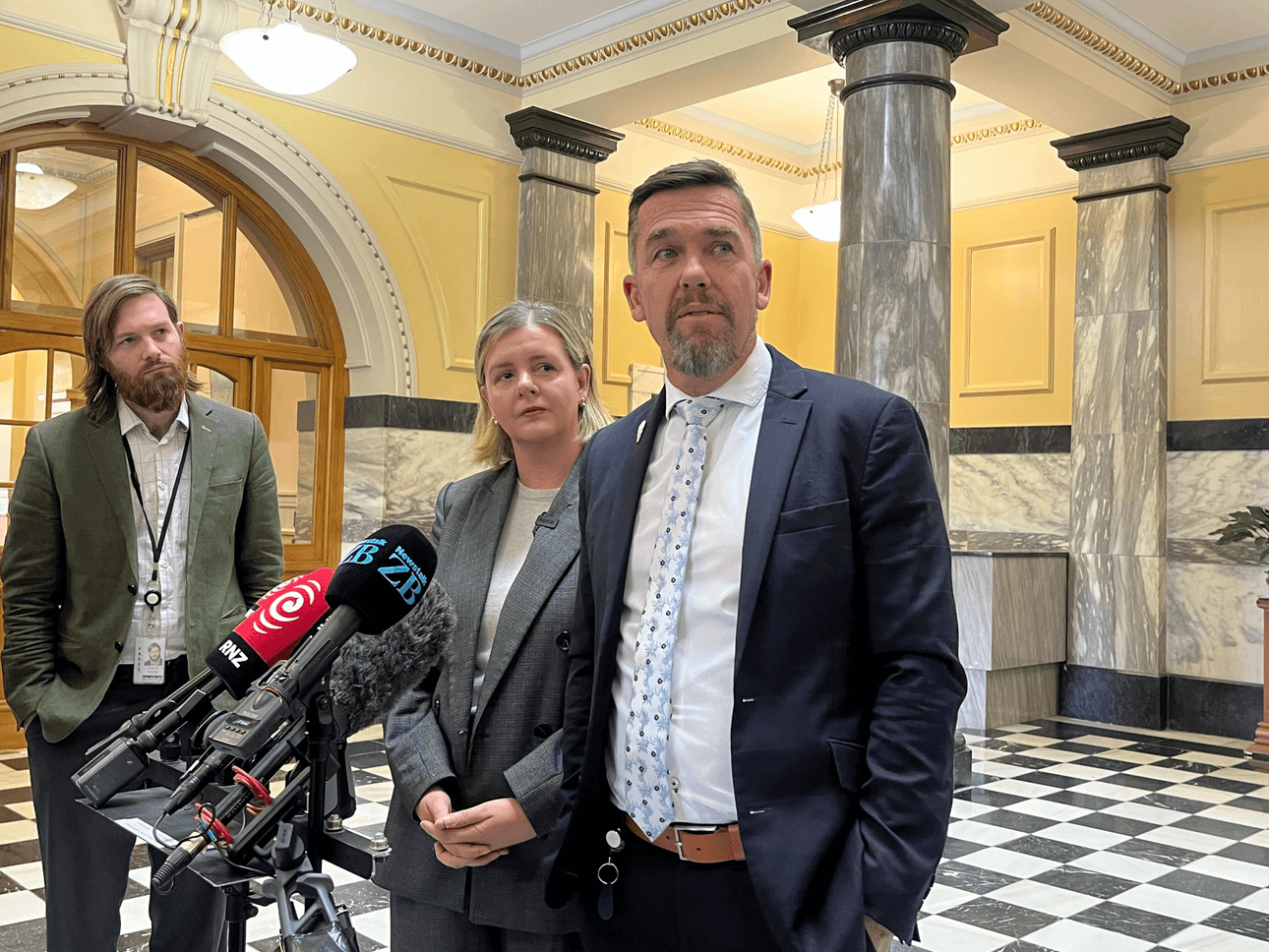
On Thursday last week, National MP Greg Fleming and Labour MP Camilla Belich announced they were co-sponsoring a member’s bill to combat modern-day slavery. Here’s what you need to know.
How long have advocates been asking for a modern-day slavery law?
“It’s been at least four years in the making,” said Rebekah Armstrong, head of advocacy at World Vision; 100 businesses signed a letter asking for legislation in March 2021. The organisation has been among those pushing for changes, particularly because of the number of children involved in forced labour around the world.
A previous version of the bill was announced by then deputy prime minister Carmel Sepuloni in July 2023 in her role as workplace relations and safety minister. A modern-day slavery working group had been established to work on the issue. But when National, Act and New Zealand First were elected later that year, progress stalled, and new workplace relations minister Brooke van Velden, an Act MP, disestablished the group in 2024.
That’s a lot of false starts – will the bill be successful now?
It looks like it: this is the first time standing order 288 is being used, which allows member’s bills to bypass the biscuit tin ballot selection process if 61 non-executive MPs (not ministers) support the proposed law. As coalition partner Act refused to support the modern-slavery legislation, it couldn’t be introduced as a government bill, but because the two largest parties in parliament will vote for it, it’s likely the bill will pass.

There aren’t that many issues that parties on both sides of parliament agree on. What does it mean that both Labour and National support this area?
The bipartisan approach to the bill is significant, Armstrong said. “On an issue as grave as modern-day slavery, cross-party consensus is important.” It also means that regardless of who is in power in the future, the law is less likely to be rescinded by future governments.
Yet the fact that it is a member’s bill, rather than a government bill, may demonstrate the government’s priorities. “We’ve seen from the Act Party a complete disregard of workers’ rights… we’ve found a way to move past the fact that that particular political party is not willing to take steps to stop modern slavery,” Belich said.
Fleming was more circumspect. “We got there with really strong support from the prime minister. I’m proud we can utilise this standing order.” Luxon said in 2022 that modern slavery was an issue he would “march in the streets” for.
In his remarks, Fleming hinted at behind-the-scenes disagreements about the bill. “I mean, there were differing views around the extent of the bill, and so you’ll see that coming through in the different details and thresholds that we’ve gone for, which will be further explored at select committee,” he said.
Act leader David Seymour has said his party didn’t support the bill because it would put added compliance costs on businesses and was “virtue signalling”.

How will the law work?
The legislation will apply only to big companies, those with revenue of $100m a year or more. These companies will have to do full audits of their supply chain for any risks of modern-day slavery, in New Zealand or overseas. There is also the potential for a specific anti-slavery commissioner, although much of the work will be done through the Human Rights Commission. Companies that don’t comply will face criminal fines of up to $200,000 along with civil penalties of up to $600,000. The reports will be public, so anyone can see if a company is doing due diligence for risks in its supply chain.
Armstrong said that the fines, penalties and public shaming will be key to the law’s success. “What we’ve seen in other jurisdictions is that the law doesn’t have teeth if it doesn’t have penalties,” she said. The $100m threshold is similar to other countries – versions of modern-day slavery laws targeting supply chains have existed for over a decade – but there is a risk of it becoming a “tick-box exercise” if companies don’t have a stake in performing checks.
Does this only apply to companies with international supply chains?
The proposed legislation also has provisions around funding for support for New Zealand-based victims of modern slavery. “There are an estimated 8,000 people in New Zealand suffering in modern day-slavery,” said Belich in a press conference announcing the bill. She cited the case of Joseph Matamata, who was convicted in 2020 of human trafficking and slavery offences for forcing horticultural workers to work without pay and clean his house.
Fleming said there would be funding through the Human Rights Commission and a dedicated officer liaising with companies, likely in MBIE, but further details would be worked out in select committee.
$100m is big business – will this apply to many companies in New Zealand?
Because of international reporting requirements, an estimated 300 New Zealand companies were already doing due diligence for labour exploitation in their supply chain, Fleming said. He expected another 700 to be affected by the law. Many major companies, as well as members of the public, have been asking for this legislation to reinforce work they’re already doing. Armstrong would like to see more companies eventually included. “If the threshold is $50m, that’s 1,500 companies. In the context of New Zealand being 97% small and medium enterprises, there are a lot of companies not covered.” A World Vision report estimated that in 2019, 5% of imports to New Zealand were linked to child labour or forced labour, and that small businesses were most at risk.
When will the legislation come into effect?
The modern day slavery legislation is expected to be introduced to parliament on February 10, the next sitting day, and Belich and Fleming said they were aiming to have the law passed before the election on November 7. Fleming said the legislation would be effective immediately, so companies earning over $100m of revenue should start preparing their supply chain evaluations now.