New Zealand’s immigration debate is like something out of the 1870s

Try to guess which MPs are from the 5th parliament and which are from the 54th. (Image: Tina Tiller)
History doesn’t repeat itself but it often rhymes.
It was one of New Zealand’s most tumultuous parliamentary terms. After a brief boom, the economy had been stagnant for four years. No one seemed to know how to get it going again.
Rising unemployment led to record numbers of people begging on city centre streets. A housing shortage, caused by previous years of high immigration and slow construction, forced people to live in cold, mouldy and overcrowded homes.
Parliament was chaotic. The three most powerful leaders were constantly undermining each other and manoeuvring for power. The issue that most divided them was immigration: they all broadly agreed with the direction but disagreed about how strongly they should act.
I’m referring, if it’s not obvious already, to New Zealand’s fifth parliament, which sat from 1871-75 and changed prime minister five times in a single term. Though I suppose if you squint really hard you could see some parallels to 2026.
The biggest difference between the fifth parliament and the 54th is that Edward Stafford, William Fox and Julius Vogel were arguing about how to attract more immigrants, while National, Act and New Zealand First are arguing about how to restrict them.
New Zealand First is riding high in the polls on the winds of nationalism. The free trade agreement with India has given Shane Jones ample opportunity for his classic repertoire of bombastic, anti-immigrant, race-baiting, attention-grabbing rhetoric. The party hasn’t released its election policy on immigration yet but Winston Peters has signalled a major reduction in immigration numbers and a requirement for immigrants to “abide by New Zealand values”.
Act is a historically pro-immigration party but it released a policy last weekend utilising several tools to restrict immigration numbers, especially among low-paid workers. These include a $6-a-day fee on temporary work visas, stricter English language requirements, a ban on new residents accessing welfare for five years, and a dedicated unit to pursue overstayers.
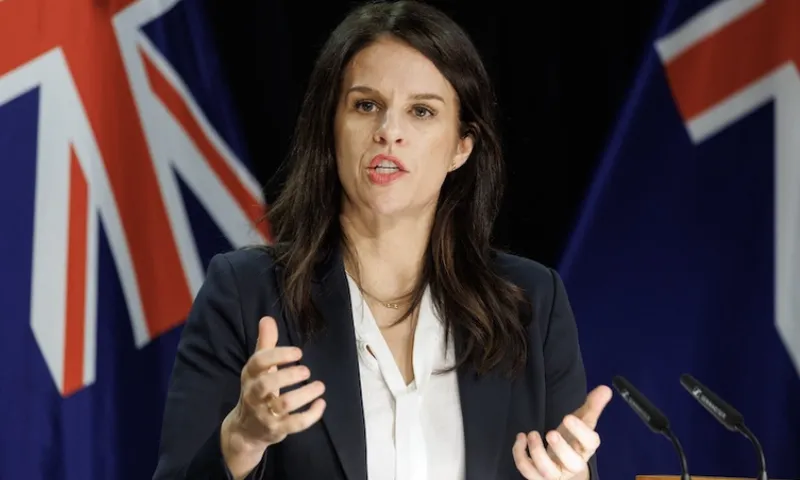
National’s Erica Stanford has accused Act of trying to match the anti-immigration policies of NZ First, but she too has shifted position. In 2022 she said Labour’s “failure to deliver the critical workers needed” had created the worst labour shortage in 50 years. In 2024, after becoming immigration minister, Stanford tightened the immigration setting and said Labour’s decisions were “both irresponsible and unsustainable”. National’s current policy would restrict low-skill migrant visas and prioritise high-skill or high-net worth migrants.
The Greens want simpler pathways to residency, easier family reunification, and an increase in the refugee quota to 5,000 a year. Labour mostly tries to avoid talking about immigration.
The fifth parliament shows us that the current pivot to anti-immigration politics isn’t an automatic reflex. The rationale for different immigration policies can change based on economic conditions.
Throughout New Zealand’s history, periods of high immigration are generally associated with economic growth. Immigrants provide additional skills, labour or capital which assist in the larger goal of turning an isolated southern landmass into a productive first world economy.
However, high immigration can erode living standards for existing residents by increasing competition for jobs and housing, which is what makes anti-immigration policy such a powerful political reflex.
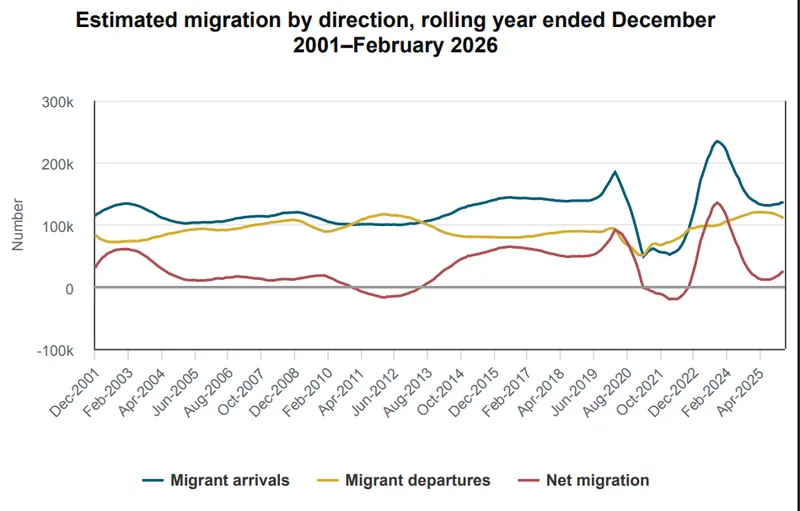
Immigrants who are skilled workers are usually more politically palatable – most people are happy to let a qualified surgeon move to New Zealand. National and Act’s policies are mostly targeted at unskilled workers, who are often scapegoated for taking local jobs or being a burden on the system. But in periods of growth, migrant workers make the economy more efficient, because they take the lowest paying jobs and allow people who have been in New Zealand longer to do jobs that are better suited to their skills.
In other words: if fruit orchards were forced to only hire local workers, they would have to offer higher wages to incentivise enough people to do such a hard, hot, boring job. That would destroy the orchard’s margins and would take employees away from other industries where they can contribute more value.
High immigration at times of economic decline or stagnation is not a fun time, so it makes sense that the three parties in the coalition all want to pull back. It’s a defensive move to reduce downside risk. But it can only be temporary. Ultimately, the only solution to a lack of growth is more growth.
Economic growth has been at the top of the coalitionm government’s agenda, which it has primarily pursued through various forms of deregulation in the hopes of unlocking private capital. In the 1870s, the government took a vastly different approach.
After the tumultuous fifth parliament, Julius Vogel emerged victorious at the 1876 election. He pitched the boldest plan of the three contenders. He would take out enormous loans from the UK, enough to double New Zealand’s already considerable national debt, and spend it on a nationwide network of railways, ports, telegraph lines and, importantly, a massive investment in an assisted immigration scheme that would encourage more people to move to New Zealand. Because Vogel knew that immigration and economic growth go hand in hand.

Joel MacManus
Joel MacManus is a senior writer for The Spinoff. He previously worked at RNZ and Stuff, and began his career at Critic Te Ārohi. His writing explores the political, economic and cultural systems that underpin modern New Zealand. He won the 2025 Voyager Media Award for Best Columnist, Opinion or Critique.


