Echo Chamber: The week’s biggest losers were probably adult human biological public servants

Paul Goldsmith and Nicola Willis.
Contentious bills ruled the week in parliament.
It’s overwhelming how much has happened this week in parliament and around it. For the last two months, the House has either sat in extended sittings or under urgency as the government tries to get through the last of its workload ahead of November’s election. Add next week’s budget day into the mix, and you’ve got MPs working over-over time – but working harder doesn’t always mean working smarter.
With Nicola Willis in Auckland to announce 8,700 job cuts in the public service, her colleague Chris Bishop wore the finance minister hat during Tuesday’s question time. He faced up to Labour’s whip-smart finance spokesperson Barbara Edmonds, but it ended in someone else serving the House a lesson in economics.
Edmonds questioned whether cuts to frontline services were being used to “help save [Willis’s] budget after giving tax breaks for landlords and tobacco companies”. She was referencing the reinstatement of full interest deductions for residential property, and the repeal of smokefree legislation enacted by the last Labour government, part of the coalition agreement between National and NZ First. Willis had previously predicted the latter would retain the government a cool $1bn from ongoing cigarette sales. The government also halved the tax rate on heated tobacco products, sold by Phillip Morris, which some use instead of cigarettes.
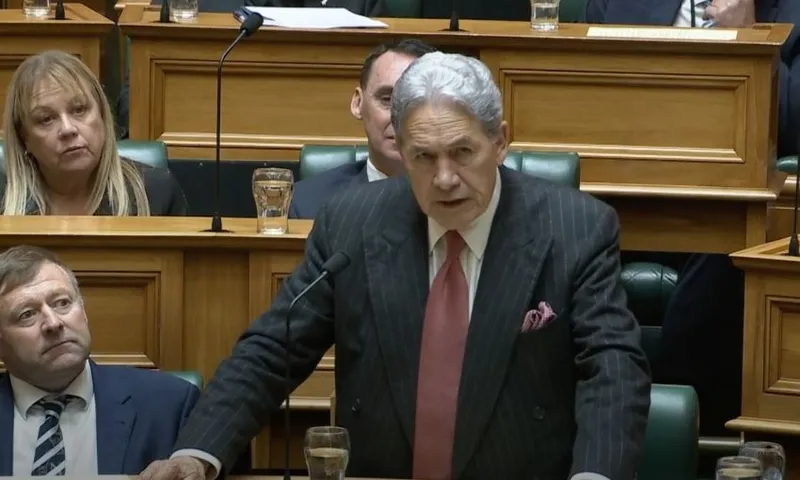
Gruff as ever, NZ First leader Winston Peters rose for a point of order. It was a “total lie” to suggest any tax break had been applied, Peters said. “If less cigarettes are sold, there’s less tax to collect.”
“You’re saying that if someone’s not charged a tax that they were previously being charged, that’s not a tax cut?” asked Labour leader Chris Hipkins.
“No, you idiot,” Peters grumbled
So, after some back and forth, Edmonds changed her wording to “excise levy breaks for heated tobacco companies that are only applicable to one tobacco company”.
Later, when it was Labour’s jobs and income spokesperson Ginny Anderson’s turn to question Bishop, the minister went for a different line. Sacking nearly 9,000 workers shouldn’t hurt, he argued, because “in the private sector, people lose their jobs and go for new jobs every day of the week”.
Wednesday saw a marathon reading of members’ bills. Act MP Laura McClure closed off the first reading of her deepfakes bill and sent it on its way to select committee with the support of the whole House. Other bills headed to the select committee include Labour MP Lemauga Lydia Sosene’s amendments to the Local Government Act, National MP Rima Nakhle’s bill to prohibit Crown funding to gang-affiliated organisations and National MP Tim Costley’s bill to match regional boundaries between government agencies and services.
Also read and voted through, despite raising the ire of the entire opposition, was NZ First MP Jenny Marcroft’s bill to define a woman as “an adult human biological female”, and a man as “an adult human biological male”. Perhaps it will provide emotional stability to those who feel their world falling apart at the suggestion that not everyone who menstruates is a woman.
Possibly receiving a vision of JK Rowling dressed in Kate Sheppard’s clothing, Marcroft said she was “hearing the words of our suffragist forebearers”. She talked about the need to protect women from the threat of gender ideology, to protect the country from becoming a “laughing stock”, to protect common sense. “Social cohesion is destroyed when a minority tries to use social engineering to redefine reality for the quiet majority.” Who knows if she considered the irony that she spoke as a member of NZ First, the smallest, but arguably loudest, party in the coalition.
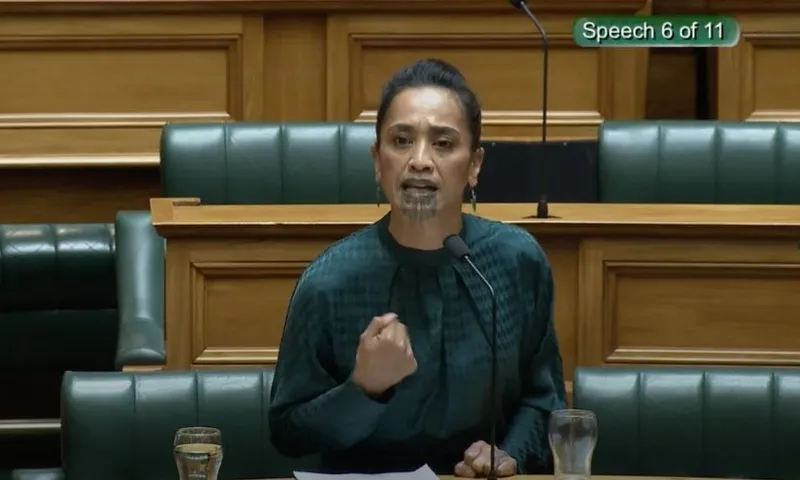
Te Pāti Māori MP Oriini Kaipara offered a less colonial perspective. There is no definition of man or woman in te ao Māori, Kaipara told the House – it’s just “tangata”. Kaipara remembered her first kōhanga reo teacher, a trans person who taught her her reo and identity.
“I am a woman,” Kaipara said. “The architect of this bill does not speak for me, does not speak for Māori communities who safeguard our trans whānau, who are trans themselves.” There were a few tears shed by opposition MPs after the reading ended.
On Thursday, six new members’ bills were pulled from the biscuit tin. NZ First withdrew its Māori seats referendum bill that morning, replacing it with a bill concerned with free speech instead. But watch this space – it’s not like NZ First to refrain from playing swapsies in the biscuit tin.
After question time, filibustering from Labour and the Greens prolonged the first reading of disability minister Louise Upston’s Disability Support Services Bill. The bill comes after a supreme court decision in December which ruled that two parents who are caring for their disabled children full-time should be considered government employees, and afforded an employee’s protections and relief. Upston’s bill, set to pass with the support of the coalition, makes clear that the Crown is not an employer in these cases, thus removing any fiscal responsibilities for the government.
To a large audience – the public gallery was almost full – justice minister Paul Goldsmith read yet another contentious bill. His amendment to the Summary Offences Act will give police the ability to “move on… people displaying disorderly behaviour in public places”. Goldsmith includes “rough sleeping” in disorderly behaviour, so some will have to find a new curb to call home, and those “begging” will have to find a new method to pay off the fine they could be slapped with.
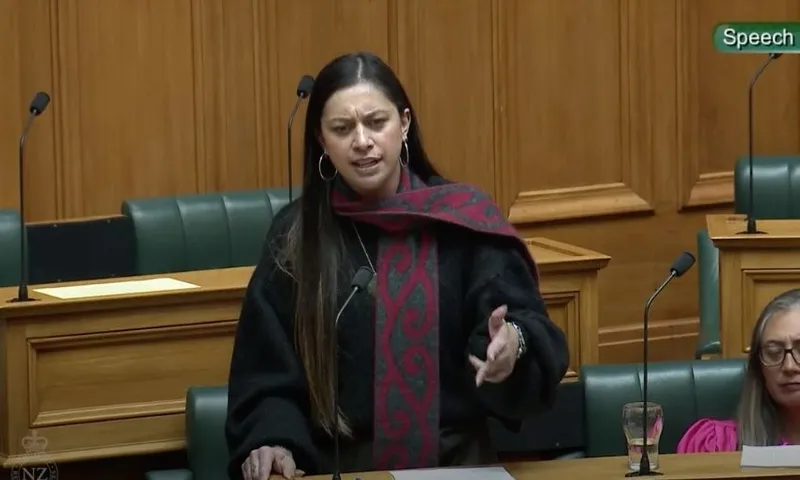
Green Party justice spokesperson Tamatha Paul, whose social media campaigning was the reason for the packed public gallery, had things to say on this later. It was a “cruel injustice to arrest and move on” homeless, especially homeless youth, and especially with such a broad view of what can actually be considered intimidation or disorderly behaviour.
“When, in our justice system, could you punish someone before they’ve even broken the law because someone looks at them and makes an assessment that they are probably going to cause harm?” she asked. The applause she received drowned out the next speaker, Act’s Simon Court, and caused assistant speaker Maureen Pugh to urge the public to “respect the process”.
After a week of copping heat, government MPs had a chance to schmooze and sip drinks on Thursday at the launch event for veteran broadcaster Barry Soper’s book, One Last Question, Prime Minister, which brought out the old boys and current big guns of parliament. With free wine swilled and Thorndon-style canapés on offer, you couldn’t help but feel that, for the most part, being an MP is a lot like winning the Lotto.

Lyric Waiwiri-Smith
Lyric is an award-nominated politics reporter at The Spinoff. She covers parliament from the press gallery, pens the weekly column One MP, One Pint and is endlessly curious about what makes our decision-makers tick. Off the clock, Lyric loves a live gig, a cold brew, and being a Wellingtonian (on a good day).


