Mission impossible? Labour tries to announce a policy without a screw up or scandal

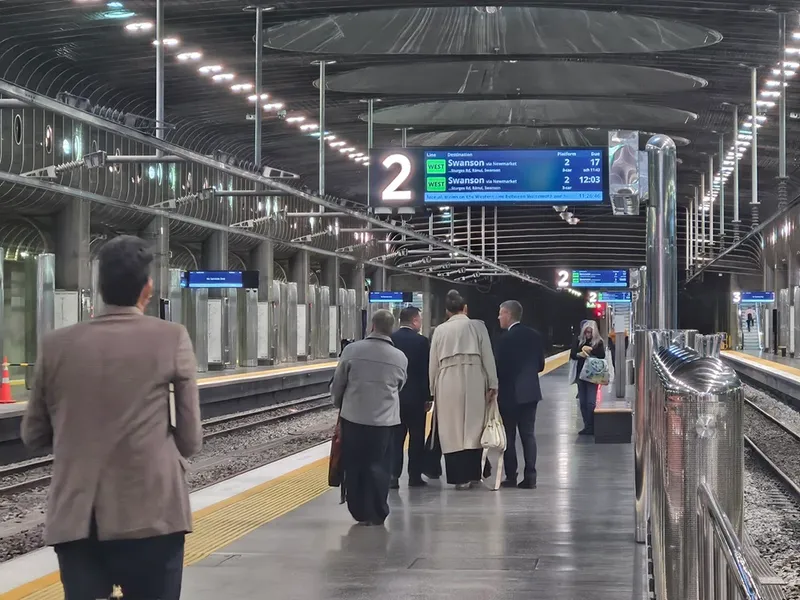
The announcement was at Waitematā Station.
Chris Hipkins so very nearly managed to unveil the party’s public transport policy without a problem. But then things went… off the rails.
Ever since Labour started making announcements, it’s become easier to understand why it doesn’t like making announcements. Almost every tidbit of news emerging from the party has come accompanied by a side of trouble. Sometimes the pain has been self-inflicted. Back in October, leader Chris Hipkins forgot his health spokesperson had announced a new pricing structure for GPs and told reporters asking questions about the policy to wait for the announcement. A few days later he was back in front of the media threatening to expel whichever party member it was that leaked their Capital Gains Tax policy to reporters at RNZ ahead of its official unveiling.
Candidate announcements haven’t been smooth sailing either. Newcomer Kingi Kiriona decided to use his introductory press conference to inform the media that Labour was going to announce some tax relief measures, which wouldn’t have been as much of a problem if it was true. Its recruitment of police superintendent Rakesh Naidoo might have been a coup if it didn’t result in days of news stories pitting the party against police commissioner Richard Chambers.
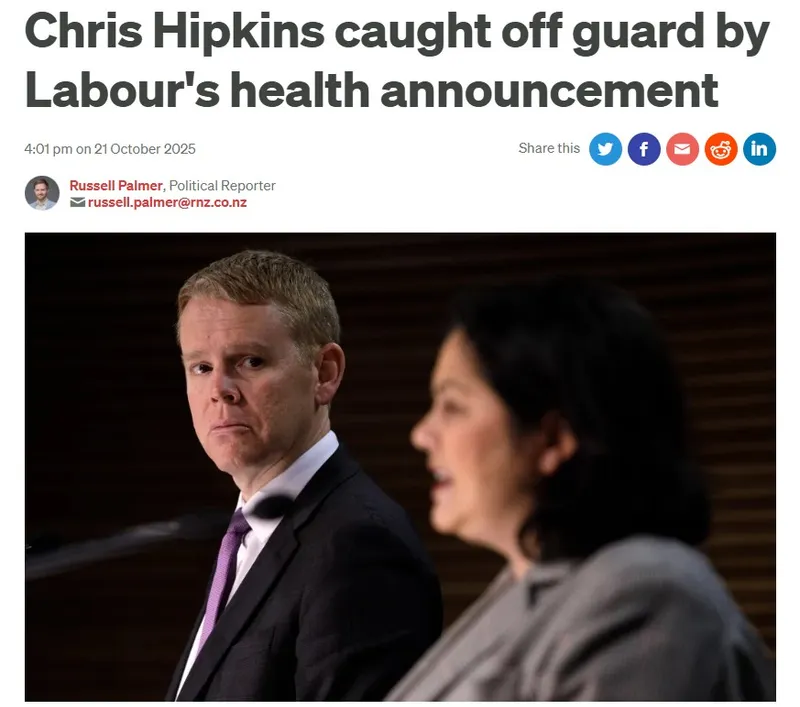
All of which is to say that when Hipkins, deputy leader Carmel Sepuloni and transport spokesman Tangi Utikere fronted the media at Waitematā Station in Auckland to announce some policy yesterda morning, it represented a shot at redemption. They were there to reveal Labour will offer a $20 weekly fare cap on public transport in Auckland, Christchurch and Wellington and a $10 cap everywhere else.
On the face of it, it’s a classic Labour policy. The fare cap disproportionately helps poorer people who tend to live further away from city centres while still offering something to almost everyone. It also costs just $65m according to the party’s potentially ambitious costings, allowing it to deliver cost of living relief while still wearing its financial hair shirt and professing fiscal rectitude.
Hipkins was keen to make those points when he could be heard above the noise of the trains coming in and out of Auckland’s busiest station. He seemed unruffled despite his recent lack of practice at these sorts of announcements. Pressed on the policy’s affordability, he responded that it would use up less than 1% of the National Land Transport Fund. Asked whether it was fair to rural voters to subsidise public transport users in towns and cities, he said that was the nature of government. “Everybody contributes for the National Land Transport Fund, and everybody benefits from the National Land Transport Fund, but we all benefit in different ways.”
Hipkins has repeatedly used an eight-word mantra to describe Labour’s priorities: jobs, health, homes and the cost of living. This was squarely focused on those last four words. “Kiwis are reasonable,” he dubiously insisted. “They don’t expect the government to wave a magic wand and make all of the cost of living challenges disappear overnight, but there are practical things that the government can do that will make a real difference.” Utikere added that the fare cap was an opportunity to provide cost of living relief to households who “continue to do it tough”.
The message seemed well-calibrated. In the press conference, the questions weren’t around whether National would use the policy as a bludgeon, but rather whether it might steal the idea. Its election campaign manager Simeon Brown quickly put paid to that notion, issuing a press release accusing Labour of raiding the “already oversubscribed” National Land Transport Fund, while carefully omitting who oversubscribed that fund and what they had spent the money on.
Labour might have got away from the announcement scot-free if it wasn’t for that dastardly Ginny Anderson. The party’s police spokesperson had spent the morning intimating dark misdeeds by our top cop, Richard Chambers, and her government opposite. In an interview on Newstalk ZB, she rejected Chambers’ accusation that Rakesh Naidoo hadn’t followed protocol while joining Labour, telling police minister Mark Mitchell that “just because you make the commissioner say something doesn’t mean it’s true”.
It sounded like she was accusing the police commissioner of not being independent. That’s a serious allegation. Unfortunately for the Labour brass hoping to talk fare caps, the evidence base for it was scant. In keeping with the public transport theme, their press conference went a little bit off the rails toward the end as Hipkins was peppered with questions on what Anderson meant. He tried to reframe her words in more innocent terms, arguing Mitchell had made public comments which Chambers could easily have taken as instructions. “Do you think the police commissioner doesn’t read the paper?” he asked. Then he tried to move to solid ground, saying he was surprised Chambers had let an employment matter play out publicly.
As things reached a crescendo, a particularly loud train entered the station, emitting an at least minute-long shriek that stopped Hipkins and the press conference – that’s right – in their tracks. Hipkins and his crew shut things down soon after and headed down the elevators. They had some social media content to film on board a train. Unfortunately for them though, the next one was still 17 minutes away. The announcement had almost gone perfectly. But that’s the thing about Auckland’s transport system. Even when it’s working well, it can be a little dicey at times.

Hayden Donnell
Hayden Donnell is a senior writer for The Spinoff. He previously worked at RNZ, TVNZ and the New Zealand Herald, alongside other media companies that have since closed down or been renamed. His primary passions are local politics and the Big Fresh animatronic fruit and veggies.


