The Labour Party has finally arrived. What took so long?

Guess who’s back?
A fresh list ranking and a new policy have provided hints of a glow-up for a party that has at times seemed stuck in an identity crisis.
Labour arrived this week not with the haste of someone aware they’re late to the party, but with the gusto of someone who knows it can’t start without them. First came the list ranking. Then a long-awaited policy announcement. Soon, they promise, there will be “plenty” more cost of living announcements to inspire our increasingly wet, whiny and inward-looking country.
They caught the late train, but without Labour, there’d be no campaign track to ride along at all. And now that they’re here, there’s only one thing left to ask: what took you so long?
For the past few years, the image of the Labour Party has largely been that of a person standing next to a dumpster fire sparked by an exploding school lunch or a broken-down ferry and saying, “would you get a load of this guy?” But once you stand next to enough fires, the public starts to ask why you haven’t tried to wield an extinguisher. Criticism alone can’t win an election.
While Labour MPs have continued to monotonously mumble “jobs, health, homes” into the policy void, other parties have put their proposals on the table. NZ First is leaning into economic nostalgia with a billion-dollar buy-back of BNZ. National still wants to play the managerial role by changing KiwiSaver settings. The Act Party is trying to play to populism by making school uniforms cheaper. Te Pāti Māori and the Greens are still hoping, perhaps in vain, that there’s an appetite for a wealth tax.
Labour, meanwhile, has taken the time to decide who exactly they wanted to show up to the conversation as. This week, voters found out.
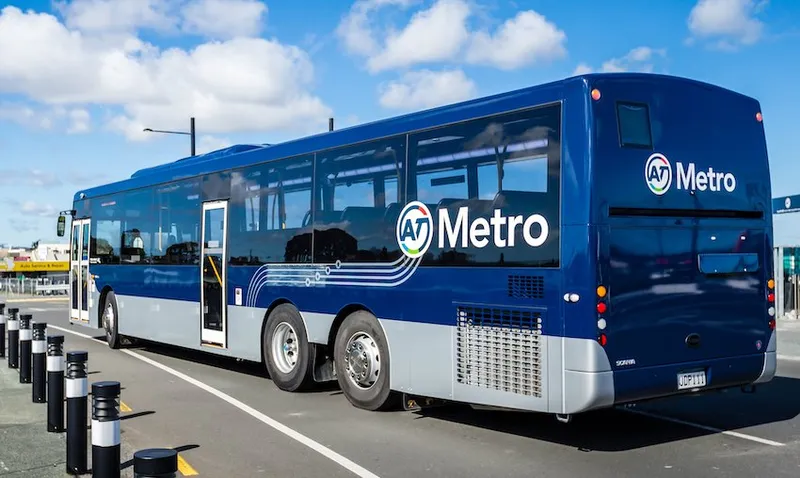
On Wednesday, the party announced that if it won the election, it would institute public transport fare caps at $20 a week in main cities like Auckland and Wellington, and $10 for the rest of the country. The party’s costing estimates predict the policy would be relatively cheap to roll out, using $65m in yearly funding from the National Land Transport Fund. That figure, Labour says, is less than 1% of the entire fund.
As well as it being the party’s first policy in six months, its most notable feature is how meticulously moderate it is. A cap like this could provide some modest cost-of-living relief without scaring away potential swing voters by being too radical. It won’t radically change the transport system, but it gives certainty to commuters while also lightly encouraging more public transport use (Hipkins predicts a 6% increase in patronage in Auckland alone).
It’s softer than the approach of the Greens, who have called for free public transport across the board. And harder than that of the National Party, who have chosen not to play a heavy hand in terms of state intervention in cost-of-living pressures. Nobody is forced into changing their behaviour, but nobody is entirely left to their own devices, either. It’s not nanny state Labour, but more distant aunt Labour: happy to watch the kids every now and then, but not too keen on doing much to raise them.
Should it have taken Labour so long to come up with something so brilliantly basic? Take leader Chris Hipkins at his word, and you’ll appreciate that the party saw an opportunity in the lack of sugar hits and cost-of-living relief in Budget 2026. More likely, Labour just needed time to decide what kind of opposition it wanted to be.
Which brings us back to that new party list. Pair it with the transport policy, and you can appreciate that Labour’s road to Damascus is paved with caution. There is salvation in moderation. The post-Ardern Labour Party isn’t trying to reinvent the wheel, just keep it steady. And it needs the right drivers to do that.
There’s been plenty of criticism of a perceived lack of talent in the party pool. Labour’s MPs are highly capable, but they lack the star power you find in the Green and Te Pāti Māori caucuses, or that seen in Labour cohorts of days gone by. Here, Labour has nabbed a few respectable names, hopefully without the baggage that sometimes comes with high-profile left-bloc MPs.
If the election was held tomorrow, based on current polling, Labour could bring in a slew of fresh talent. There’s a nice blend of climate activism, justice expertise, business leadership and left-of-left representation. Together, they form more of an institution than a centre-left movement. If National MPs are convinced their party truly represents a broad church, then Labour wants to be the whole denomination.
But as with many things Labour does, there’s a hitch. Their policy costs veer to the side of optimism (a trend in other policies announced by the party since last year) and concerns over new high-ranking candidate Rakesh Naidoo’s access to sensitive police information will only partially tarnish the party’s comeback.
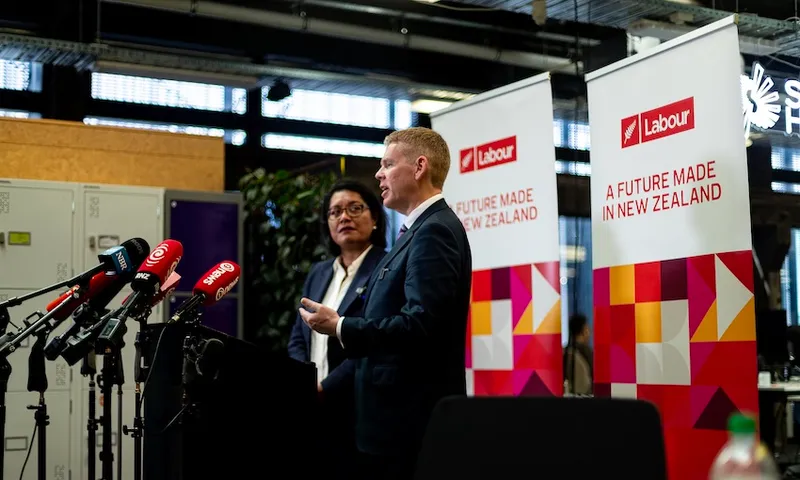
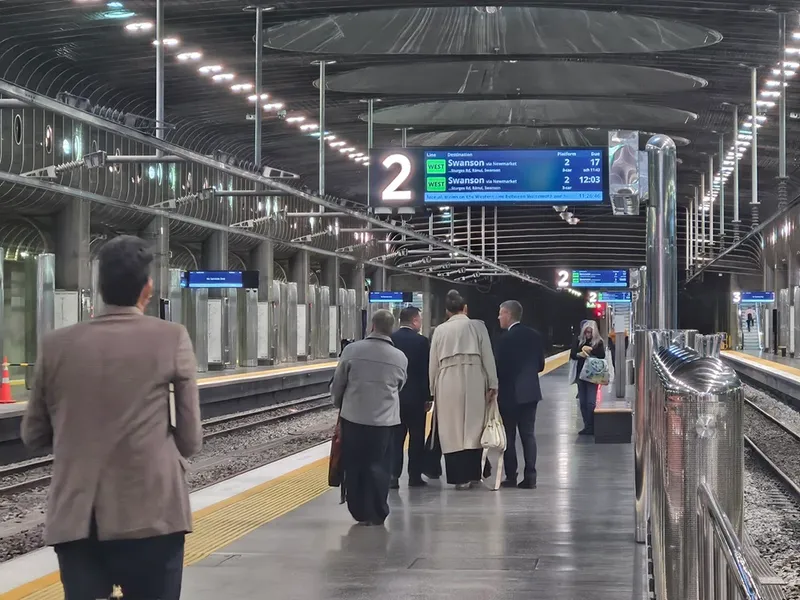
When Hipkins and his colleagues were pressed on these matters during their policy announcement on Wednesday morning, concerns from journalists were drowned out by the screeching down the railway lines at Waitematā Station. “I’ll wait for the train to pass by,” Hipkins remarked with a smile, giving himself a few more seconds to come back with an answer. It’s hard not to hear the line as a summary of the party’s last few years.
At least now, the train has arrived. Destination? Middle of the road.

Lyric Waiwiri-Smith
Lyric is an award-nominated politics reporter at The Spinoff. She covers parliament from the press gallery, pens the weekly column One MP, One Pint and is endlessly curious about what makes our decision-makers tick. Off the clock, Lyric loves a live gig, a cold brew, and being a Wellingtonian (on a good day).


