Government spending $300k per year on unused limos for former PMs

Some of the former PMs who are eligible for lifetime use of Crown cars (Image: The Spinoff)
Taxpayers spent $298,359 keeping the chauffeured cars on standby last year. They were used for just $10,921 worth of trips.
The government has been spending around $300,000 per year to provide Crown limousines to former prime ministers and their spouses – even though the service goes mostly unused.
Former prime ministers and governors-general are entitled to lifetime 24/7 access to chauffeur-driven cars from the Crown fleet for any travel “related to his or her role as a former prime minister”. The perk is managed by the government’s VIP Transport Service, part of the Department of Internal Affairs (DIA).
The government spent a total of $340,646 providing this service in 2025, according to the DIA annual report. That’s despite the 15 eligible former prime ministers, governors-general and their spouses barely using the service. The entire cohort claimed just $10,921 towards land transport, which includes the use of chauffeur-driven cars charged out at an hourly rate.
Jenny Shipley was the largest individual claimant in 2025 with $3,877, followed by Helen Clark with $2,567. By contrast, many former prime ministers do not use the service at all. John Key has claimed just $56 in the last two years, while Jacinda Ardern has not claimed anything since she has been out of the country during that time.
The difference between the relatively small amount of actual use and the high total cost of the service is categorised entirely as an “availability fee”. In 2025 this fee was $298,359, up from $265,919 in 2024. DIA documents state that the availability fee is “designed to ensure that a fit-for-purpose on-call service is available to entitled customers”.
Briget Ridden, DIA’s general manager of ministerial services, said the annual fee “covers all other costs associated with providing the service. This includes fixed costs such as depreciation, capital charges, allocated overheads, and vehicle costs. It also covers other costs incurred to make the 24/7 chauffeur drive service available to users such as administration, transport coordination, an online booking portal, staffing, property and overheads.”
Technically, DIA considers the service to be “user-funded” because there is no direct Crown appropriation to run the vehicle fleet. However, former prime ministers don’t pay anything out of their own pocket. The cost of using the service and the cost of running the service are both ultimately paid by the taxpayer.
On top of access to chauffeur-driven cars, former prime ministers are also entitled to free transport on any plane, train, ferry, bus or taxi for travel “related to his or her role as a former prime minister”. They also have the option of using other luxury taxis and driver services that have similarly high charge-out rates but don’t require the taxpayer to fund the back-end services.
Outside of the chauffeur-driven cars, airfares are the most significant travel perks claimed by former prime ministers, at a combined cost of $32,147 in 2025. Again, Jenny Shipley was the largest claimant with $9,296.
Other benefits available to former prime ministers include lifelong use of a government-owned car with all fuel and maintenance costs covered, and an annual annuity of up to $64,000 per year ($12,800 for each year they served as prime minister).
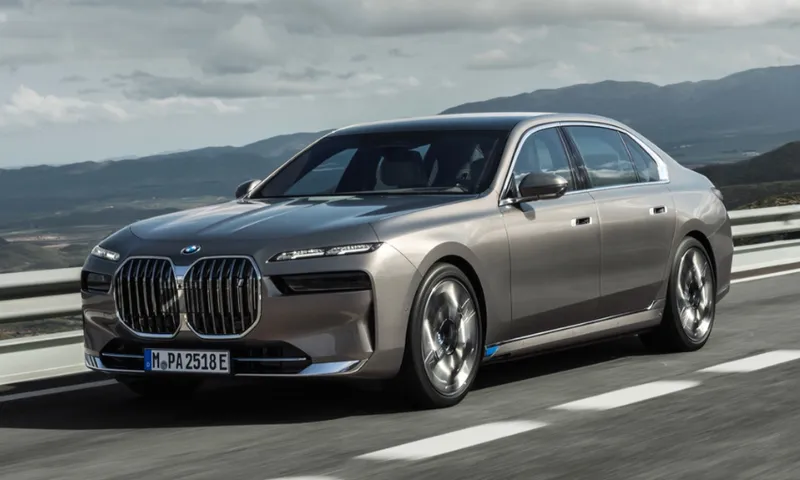
In December 2025, the government announced a $5.7m purchase of 10 BMW i7 xDrive60 luxury sedans, which retail for about $300,000 each, as well as 19 smaller, more economical vehicles.
Crown fleet vehicles are also available to all current ministers, the leader of the opposition, senior judges and diplomatic guests. These other users are funded through different departments and agencies.
MPs’ entitlements have been in the headlines in recent weeks, particularly after social development minister Louise Upston was revealed to have claimed a $1,000-per-week accommodation allowance on a house she owned outright.
Since then, The Spinoff has revealed further instances of MPs making questionable entitlement claims. These include: NZ First MP and former Wellington mayor Andy Foster, who claimed the accommodation allowance for non-Wellington MPs despite owning a house in Wellington for 26 years, and Labour MP Jenny Salesa and National MP Melissa Lee, who both claimed the allowance on houses that were paid for through their generous taxpayer-funded superannuation schemes. Labour leader Chris Hipkins also owns a house through the superannuation scheme, though he hasn’t claimed any further allowances against it.
A particularly notable case, which had been previously reported, was prime minister Christopher Luxon’s decision to buy his electorate office and rent it back to the taxpayer at a cost of $45,000 per year.
In response to questions by The Spinoff, the Taxpayers’ Union called on Luxon to sell the office. “On Christopher Luxon’s electorate office: MPs should not be their own landlord. Even if Parliamentary Service obtains a market valuation, it is still an obvious conflict for an MP to own the property and rent it back to taxpayers. Electorate offices should be leased independently, not used as a taxpayer-funded income stream,” said spokesperson Tory Relf.
Luxon has generally declined to comment on matters of MPs’ pay and entitlements. “Our terms and conditions and remuneration are set by an independent remuneration authority. That’s the right way to do it,” he told reporters in parliament last week. The outgoing Remuneration Authority chair Geoff Summers told RNZ the authority only decides the level of salaries and benefits, it doesn’t make rules about what can be claimed. Specific rules about entitlements are set out in legislation and fall under the responsibility of Christopher Luxon as the minister responsible for ministerial services.

Joel MacManus
Joel MacManus is a senior writer for The Spinoff. He previously worked at RNZ and Stuff, and began his career at Critic Te Ārohi. His writing explores the political, economic and cultural systems that underpin modern New Zealand. He won the 2025 Voyager Media Award for Best Columnist, Opinion or Critique.


