John Key, Jacinda Ardern and the Election 2026 reunion tour

John Key Jacinda Ardern as Mick Jagger and Keith Richards of The Rolling Stones. (Photo: Gary Miller/Getty Images. Composite image: The Spinoff)
A campaign launch, a plea for donations and a leaders’ debate jab show that our most popular former prime ministers are never far from the fray.
In the last couple of weeks, the election campaign has become a stage for the political reunion tour. This weekend, two weeks after John Key opened National’s campaign launch by calling those wanting to engineer a right-bloc overhang “the opposite of clever”, Jacinda Ardern broke her relative silence to record a video urging supporters to donate to the Labour Party. Two former prime ministers of the two struggling major parties share a similar strategy: when your current leader can’t get cut-through, bring back the one who once did.
Ardern’s re-emergence this weekend was both intimate and carefully calibrated. “It’s been such a long time since I have popped into your inbox,” she says in the video (she did also ask supporters to donate to Labour in April 2023, months before the election campaign). “But I couldn’t think of a better time.” While she does make sure to endorse Chris Hipkins “wholeheartedly”, she is only there to win over Labour supporters and get them to give money; any undecided voters won over by her video are secondary.
With a little under a month until the election, Labour has declared only $890,000 in large donations (over $20,000) this year, compared to National’s $2.3 million and Act’s $2.4 million. So Ardern’s appeal is less about her popularity among the general public – where she remains a divisive character, disliked by the centre right and downright hated by those further to the fringes – and more about converting Labour supporters’ nostalgia into small-dollar donations. She is very much a fundraising asset rather than a political one.
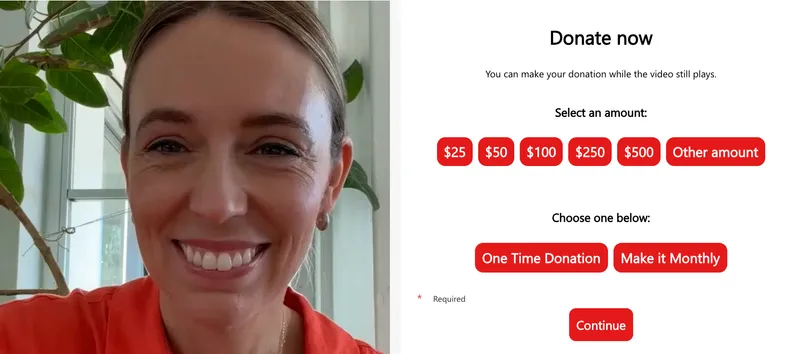
Ardern’s video is softer and less confrontational than Key’s appearances. She doesn’t attack National or Luxon. She doesn’t warn of electoral doom. She simply says she supports Labour and believes in Hipkins. It’s a deliberate choice. A full-throated Ardern campaign return could energise opposition as much as support. By keeping her intervention brief, personal and donation-focused, Labour gets its plea for donations into the headlines without opening up old wounds.
John Key is a cleaner and easier deployment for National. While he’s been out of office for nearly 10 years, Key’s brand has barely faded. He remains a known quantity, a useful centre-right talking-point source for the media (like his PM predecessor, Helen Clark, he’s never been one to keep his opinions to himself), and a reference point for “competent National government” in the minds of voters, so much so that in the three years since the 2023 election he has been promoted from social media surrogate to headline act. He is there not just to rally the base, but to win back some of those previous National faithful who have been leaked to Act and NZ First, and to appeal to those in the soft middle, the commonsense centrist New Zealanders who voted Clark-Key-Ardern, and may have felt a bit lost ever since.
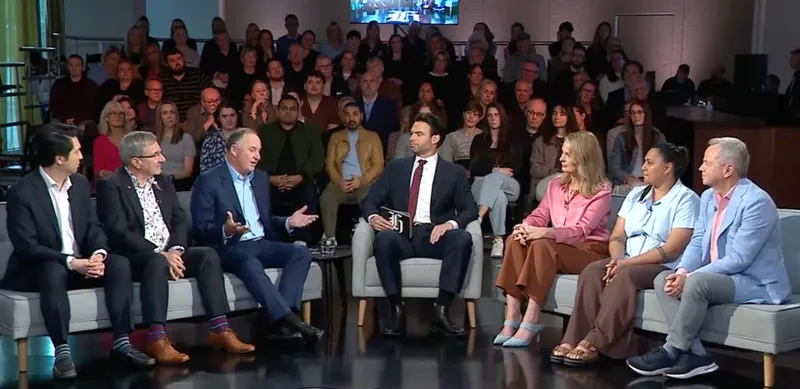
The first major leaders’ debate of the campaign, held on October 7, showed just how much the shadows of past leaders loom over the current contest. As Toby Manhire wrote on The Spinoff the next morning, the funniest moment came when Hipkins accused Luxon of breaking a promise not to increase GST.
“You’re not debating John Key,” said Christopher Luxon. “You’re debating Chris Luxon.”
“You're definitely not John Key,” said Hipkins.
“You,” countered Luxon. “You’re no Helen Clark.”
“It was a snappy exchange,” Mahnire wrote. “We all laughed, but like much good comedy it contained a nugget of melancholy. This is not Key. This is not Clark. And they know it.”
If the debate ended up a narrow win for Hipkins, the Herald’s Future of New Zealand debate two nights later showed what a more confident, more National-as-we-once-knew-it campaign might look like – with, of course, Key at its centre. As the Herald’s Thomas Coughlan noted the next day, Key “was relaxed, but nonetheless demonstrated an acuity in debating each issue... He made his points so calmly and convincingly that he appeared to win a debate he wasn't actually contesting. At times, he did better than either of the Chrises at their debate.”
Key seized on a section of the leaders’ debate that pondered whether it was morally acceptable to be a billionaire. “What sort of wowsers have we become?” he asked, comparing celebrating successful businesspeople to celebrating sportspeople and artists. “If you’re Graeme Hart and built the best packaging business in the world, that’s morally offensive? That is nuts!”
His performance was a reminder of what National wants to be understood to stand for – economic competence and wealth creation. Unfettered by the constraints of current polling or future coalition negotiations, as Coughlan observed, Key “made sure he said what he wanted the debate to say – even if he wasn't actually answering the question he'd been asked”. It was, in effect, a masterclass in political communication from a man who has not lost his touch.
But it’s not just a local phenomenon. This political nostalgia is sweeping the western world. In the United States, Barack Obama is scheduled to campaign for Democratic candidates ahead of the November 2026 midterms, with a 57% favourability rating making him the most popular living president. Nearly half of voters said his endorsement would make them more likely to support a candidate. In Canada, 91-year-old Jean Chrétien campaigned for the Liberals in the final weekend of the 2025 election. Not that it always works – in the UK, Boris Johnson made a last-minute rally speech for the Conservatives in 2024, and they suffered their worst-ever defeat.
In an era of low trust in institutions and high voter volatility, a familiar face can provide comfort. Former leaders also carry the scent of “the good old days” (or, at least, “the known old days”), which is valuable when the current leaders, despite both having been prime minister, aren’t as instantly recognisable as political brands as the previous ones.
For Key, personal trust ratings on economic issues remained slightly positive (+2) in a September poll from The Post and Freshwater Strategy (which asked “To what extent do you trust or distrust each of the following to make the right decisions about the New Zealand economy?”), making him one of the few politicians (albeit retired) with a net positive score, and the highest rated one from the right-leaning bloc but behind Chris Hipkins and the Reserve Bank. That credibility is an asset, especially when Luxon and finance minister Nicola Willis scored -16 and -14 respectively. And his performance at the Future of New Zealand debate demonstrated that he can still command a room and frame a debate. But his 2023 involvement did not deliver National an outright majority; the party needed coalition partners. And NZ First leader Winston Peters dismissed Key’s 2026 campaign launch speech as “suicidal”.
For Ardern, the calculus is different. Her video is not about persuading swing voters; it is about activating the Labour base. If it succeeds in driving small donations, it’s done its job. If it reignites the Covid (and Covid-era spending) fight, it could backfire.
In both cases, the greatest hits of the past could risk overshadowing the actual candidates they are trying to help. As the leaders’ debate exchange captured so perfectly, this is not Key. This is not Clark. And it’s not Ardern either. Both Luxon and Hipkins know it. The question is whether voters will care.

Henry Oliver
Henry Oliver writes The Bulletin. He was previously The Spinoff's music editor, the editor of Metro, a bar owner, intellectual property lawyer, and bass player.
Sign up to Two Ticks, delivered straight to your inbox.


