Eight things we learned from The Great Mt Albert Debate

Inside The Spinoff HQ for The Great Mt Albert Debate. (Photo: Jinki Cambronero/The Spinoff)
The biggest revelations shared and sharpest shots fired as the candidates vying for this battleground electorate went head to head.
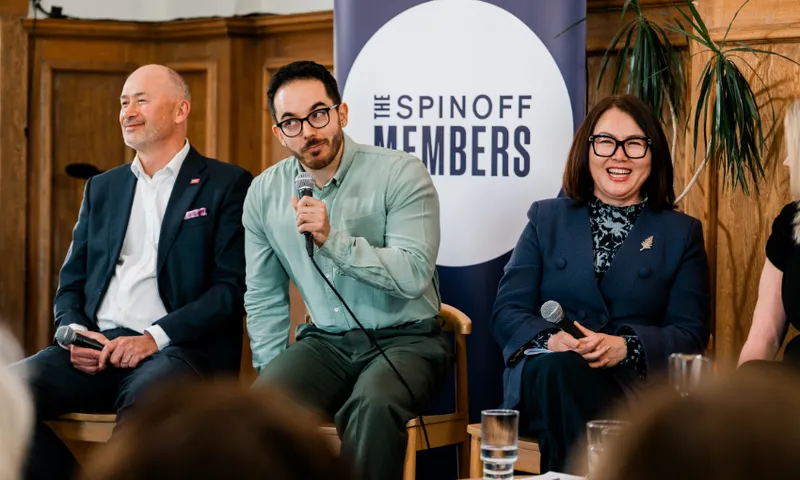
Sparks flew, the mojo was measured and gay bread was shared as Mt Albert candidates went head to head at The Spinoff HQ on Wednesday night. The six party hopefuls running in the inner-west Auckland electorate – incumbent Labour MP Helen White, list MPs Melissa Lee of National and Ricardo Menéndez March of the Greens, Opportunity leader Qiulae Wong, NZ First’s Sheldon Eden-Whaitiri and Act’s Alex Price – faced off in a debate moderated by The Spinoff’s editor-at-large Toby Manhire. So as they pitched themselves and their parties to voters, shared their hopes for the area, and reminded each other of just how competitive this seat really is, what did we learn?
Who’s leading, who’s trailing
Sound the new poll klaxon: The Spinoff commissioned Curia to survey 400 locals in the Mt Albert area, and the results have yet again put the race on a knife’s edge. Leading by a whisker is White, only a single percentage point ahead of Lee at 33% to 32%. This will likely be giving both candidates serious war flashbacks to 2023, which White won by only 18 votes.
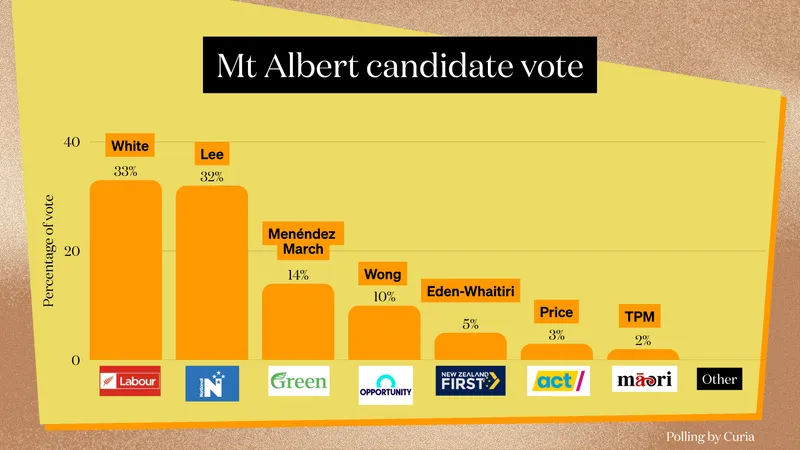
Menéndez March saw his support drop, from 23.7% in 2023 to 14%. Wong's presence makes this a “four-horse race”, but polling puts her in last place at 10%. Eden-Whaitiri and Price are both seeking only the party vote, with the former saying it was “up to the good people of Mt Albert” to decide who was worthy of the electorate vote.
The party vote is tied between the red and blue teams – both at 32% – with the Greens coming third at 19%, Opportunity and NZ First at 6% and Act on 3%. This is truly a race between the major parties – or as Eden-Whaitiri so eloquently described them, the “two cheeks of the same arse”.
Qiulae Wong wants to be your prime minister
The electorate is an “incubator for future prime ministers”, as moderator Toby Manhire noted – Helen Clark, Jacinda Ardern and Michael Joseph Savage have ruled this roost before (in Savage's case it was actually Mt Albert's predecessor, Auckland West). But only one candidate was brave enough to admit they wanted the premiership: Wong.
It’s believed to be the first time the Opportunity leader has made that admission publicly.
No one here is an Olivia Dean fan?
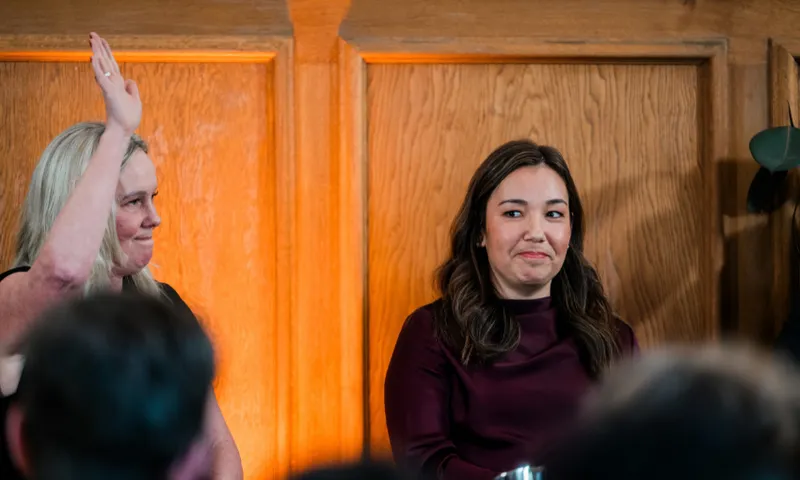
One of the quickfire questions put to candidates on local lore was which act would be first to play at the newly transformed Western Springs Bowl. Several unbearable seconds of millennial and gen Xer silence ensued before Eden-Whaitiri offered the correct answer and won a lovely chocolate fish: Olivia Dean. Who would have predicted that NZ First should have its finger on the pulse of youth issues?
Greens want gay bread
With the cost of living being a core election issue, candidates offered their party solutions to the crisis. Eden-Whaitiri mentioning NZ First’s planned BNZ buy-back raised the eyebrows of Menéndez March, who couldn’t help but note that party’s rhetoric that “introducing a third supermarket is communism, but nationalising a bank isn’t".
“It’s not a nationalisation, it’s a buy-back,” Eden Whaitiri replied, earning him the laugh of the night. “There’s a clear difference.”
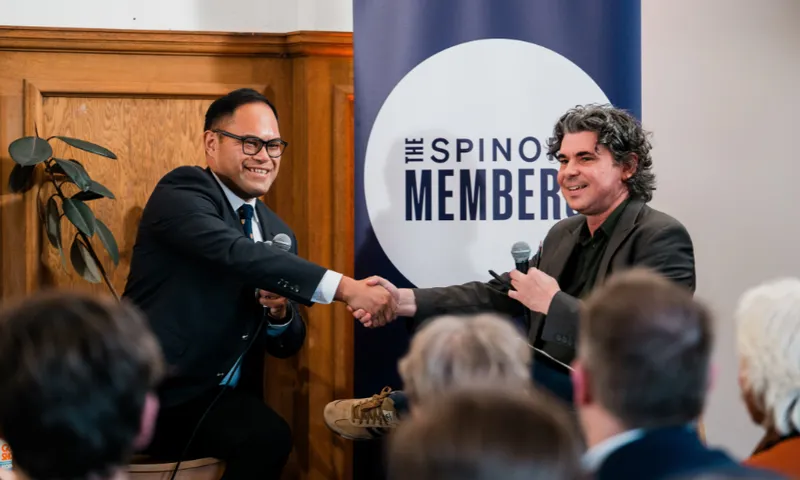
Eden-Whaitiri seemed to receive a vision of the commie future. “Make Ricardo Menéndez March the minister of Pak’nSave, and he’s deciding what bread – if it’s got the Rainbow Tick or it’s honouring the treaty – goes on the shelves.” Gay-approved bread? Don’t threaten us with a good time.
Debating chamber habits die hard
Act MP Simon Court – helpfully wearing a name tag lest anyone fail to recognise the “intellectual” behind the Resource Management Act reforms (as Price put it) – was one of the celebrity guests of the night. He made his presence known by heckling from the back of the crowd in support of good mate Price. And Opportunity’s general manager, former Labour minister Iain Lees-Galloway, relived his question time days by offering a few quips, like burning Lee for using her allotted time to share a message of hope to trash the left bloc.
Winston Peters' presence is always felt
Eden-Whaitiri tried to bring the debate back to his beloved party leader at every opportunity. "Obviously he's the most experienced, most knowledgable politician in that place," he gushed. "Don't we just love him on the world stage, travelling around the Pacific Islands and southeast Asia as our foreign minister... the pinstriped suits... he sets our standards in more ways than one. He's just provided the backbone for this coalition."
A question from Mount Albert Grammar headmaster Patrick Drumm as to what the parties would do to ease the population pressure on local schools took the debate down a strange road when Eden-Whaitiri pointed to immigration as the key issue, leading every other candidate to think, WTF?
Wong pushed back strongly, saying his rhetoric was "not helpful for the political debate”. Lee recalled being told to “go back home to Korea” and reminded White of a colleague’s infamous “Chinese-sounding names” gaffe. Asked by Manhire what he made of his leader’s racist tirade against Chinese-born Green MP Lawrence Xu-Nan, which took place only a month ago, Eden-Whaitiri offered that it “takes two to tango".
Poor Menéndez March sat there with his lips pursed, until White reminded the room he has also been a regular victim of one Winston Peters. Menéndez March criticised the government “playing to Trump-style politics”, saying the only way to achieve a progressive Aotearoa is to “lock Winston out of government”.
Chris Hipkins was the worst-rated party leader
When Manhire asked every candidate to rate their leader out of 10, most realised it would be absolute political suicide to give the boss any score lower than the best so that’s what they all did.
Apart from one brave and honest soul. Hipkins scored a humble 9/10 from White, who said the score was a mark of her leader’s humility. “He can always reflect on what he can do better,” said White, not talking about anything in particular. “We have a leader who listens and talks to their caucus and collaborates.”
The mojo meter never lies
As is tradition with The Spinoff, we deployed the most scientific measurement of our nation’s growth to get a sense of just how truly grim everything is. Every candidate was asked to give the country a mojo rating out of 10, and most were in alignment.
Eden-Whaitiri and Menéndez March both put the score at six – the latter saying that was only a recent rise thanks to the opening of the City Rail Link. Wong and White agreed on a five, both telling the crowd that many New Zealanders were feeling “lost” in a country lacking aspiration.
Lee reckoned seven, while Price was the last to give his measure, and thank God we could land on a high note. “Eight out of 10,” he declared. Nothing to worry about here, then.

Lyric Waiwiri-Smith
Lyric is an award-nominated politics reporter at The Spinoff. She covers parliament from the press gallery, pens the weekly column One MP, One Pint and is endlessly curious about what makes our decision-makers tick. Off the clock, Lyric loves a live gig, a cold brew, and being a Wellingtonian (on a good day).


