Robyn Malcolm wants us to change how we think about menopause

Robyn Malcolm (Photo: TVNZ)
In a new documentary, actor Robyn Malcolm opens up about her own difficult experience with menopause, and finds out if we can change things for future generations.
When Robyn Malcolm was in her late 40s, she started to feel “broken”. The acclaimed New Zealand actor was used to managing big feelings during her illustrious career, having played fierce, flawed women like Ellen Crozier, Cheryl West and Penny Wilding through four decades on screen. Suddenly, Malcolm found herself unable to control her own emotions. She swung between inexplicable fury at home and weepy toilet visits at work, without understanding why. “I was in a state of profound despair,” she remembers.
When Malcolm eventually went to her GP, she was diagnosed with menopause. Malcolm couldn’t believe that something that affects over half of the population had sideswiped her so brutally. “Why didn’t I recognise the signs?”
It’s this important question that led Malcolm to make the engaging Menopause and Us, the latest documentary in TVNZ’s Documentary New Zealand series. Now in her early 60s, Malcolm is on a mission to find out more about perimenopause and menopause in New Zealand, and why she had such a brutal time of it. It’s a far more personal and revealing experience for Malcolm than her usual television roles, but it’s one that many women will relate to. Guided by her own suffering and confusion, Malcolm travels across the motu to speak to a variety of menopause experts, curious to find out how we can reframe the negative messaging around this stage of a woman’s life and transform it into something positive and powerful.

Malcolm isn’t claiming to be an expert herself, but she’s passionate and curious about what’s really happening to menopausal women. She talks to Lynda Dear, a doctor who missed her own menopausal symptoms and became determined not to miss them in her patients. Health writer Niki Bezzant discusses the historic confusion around hormone replacement therapy, which led to many women being left untreated for menopause (“It’s a scandal,” Bezzant says). Malcolm travels to Melbourne to meet psychiatrist Jayashri Kulkarni, who speaks about the vital connection between hormones and mental health, while mātauranga Māori practitioner Hera Cotter explains that in Māori culture, this transitional stage of a woman’s life is all about stepping into power.
Many of these conversations are an infuriating reminder that women’s health has been pushed to the sidelines for too long, and that women have often been ignored, misunderstood and misinformed about their bodies. The documentary reinforces this with some astonishing facts: 64% of women don’t recognise their menopausal symptoms when they begin, and 10% of menopausal women leave or are pushed out of work due to their symptoms becoming too difficult to manage.
In her efforts to shift how we view menopause, Malcolm also talks with women who are facing these life-changing challenges with power and triumph, rather than grief and shame. She meets an angry rock band and explores the impact of menopause on sex and sexuality. There’s even a death meditation, because to Malcolm, menopause brings you closer to your own mortality and makes you consider how you want to live the rest of your life. And throughout the documentary, Malcolm is busy and active – swimming, strength training – in another reminder that life does not need to stop because of menopause.
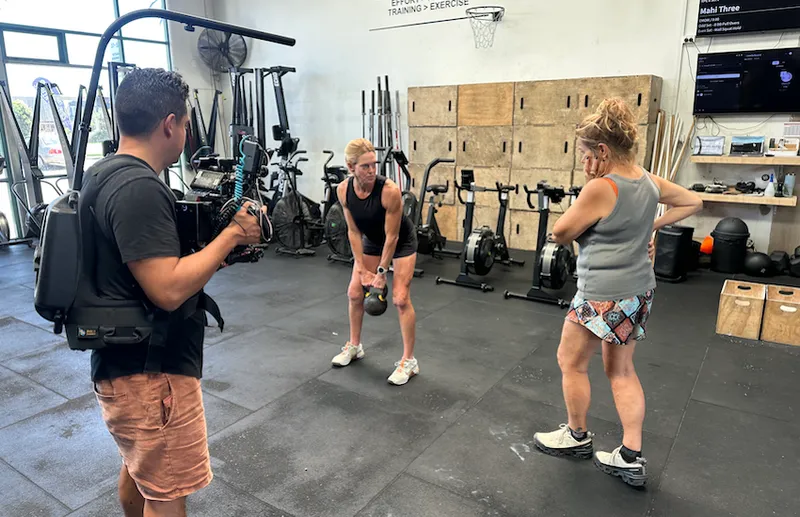
Throughout the documentary, Malcolm is open about her own experience in ways that are both gutsy and refreshing. By being so honest – letting us into her home, her emotions, her medical history – Malcolm strips away any allure of stardom and simply presents herself as a woman who was crushed by her symptoms and the lack of support she encountered. She’s looking for understanding, both of her own experience and for the generations of women to come, who deserve to know more about the changes happening in their own bodies.
But it’s ironic that while menopause has never been spoken about so openly as it is now, the topic still only gets a one-hour-long documentary. There’s so much more to be said about menopause and what it means for women and their whānau, workplaces and communities. In that regard, Menopause and Us only scratches the surface, as every topic Malcolm considers – particularly the impact of menopause on mental health – deserves a deeper hour-long exploration of its own. Malcolm’s candour in speaking about her own experience will resonate with many, many women, and while menopause certainly isn’t going anywhere, this documentary will certainly help the conversations flow a lot easier.
Robyn Malcolm: Menopause and Us streams on TVNZ+.

Tara Ward
Tara Ward has written about television and culture for The Spinoff for several years. She lives in Ōtepoti Dunedin, where she tries to avoid walking up hills.


