Why Fonotī Pati Umaga doesn’t want to be your inspiration

Pati Umaga says putting his life on stage is “surreal”. (Photo: Lou Hatton)
With his genre-bending new show debuting at Auckland Arts Festival in March, artist and advocate Fonotī Pati Umaga talks to The Spinoff about music, stereotypes and what people still don’t understand about disabilities.
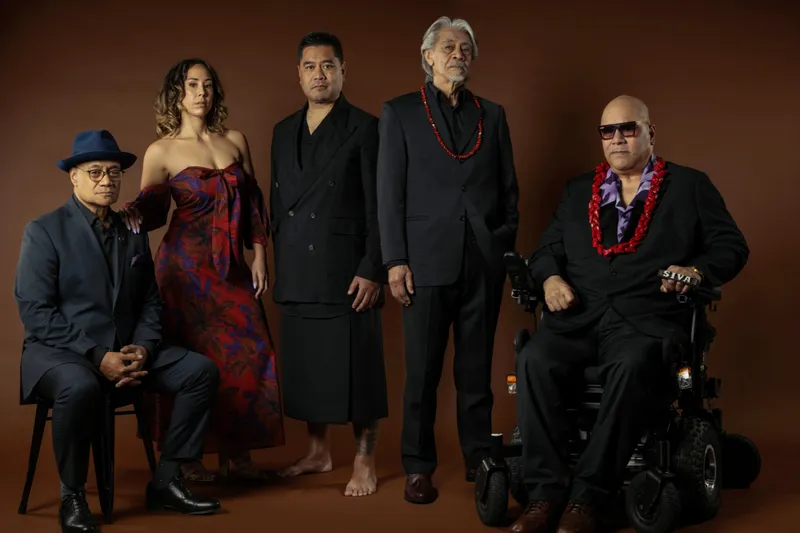
Fonotī Pati Umaga is gearing up for the stage. Come March he’ll be performing at Auckland’s Q Theatre in the world premiere of Music Portrait of a Humble Disabled Samoan. Directed by Maiava Nathaniel Lees and written by Oscar Kightley – who created the work with Umaga, Neil Ieremia and Sasha Gibb – it’s part of Te Ahurei Toi o Tāmaki Auckland Arts Festival and based on Umaga’s life. He composed original music for the show, which will follow its Auckland run with a stint in Wellington as part of the Aotearoa New Zealand Festival of the Arts.
“The story really was about my journey from what I refer to as ‘back in my walking days’, up until my fall in 2005 and then becoming disabled,” he explains. Just don’t call it a biography; this is billed as a music portrait, one that sees his life story delivered with humour, grace and live music. “I’m just really hoping that people will enjoy it.”
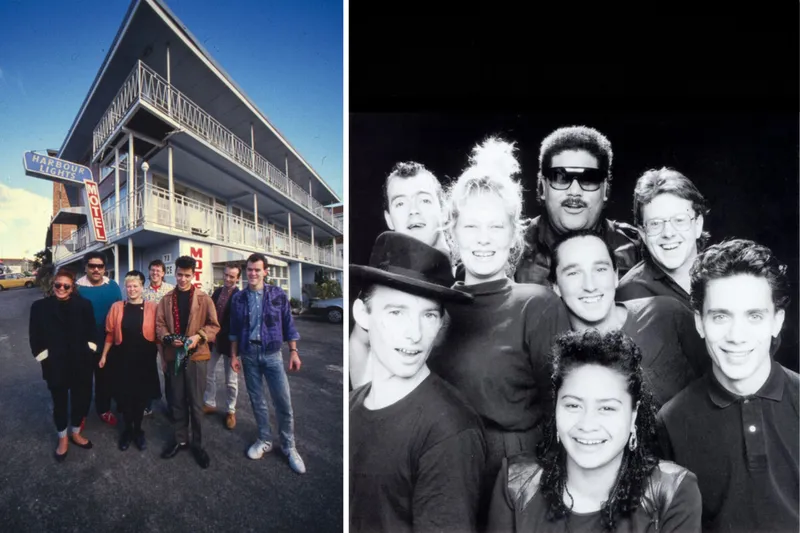
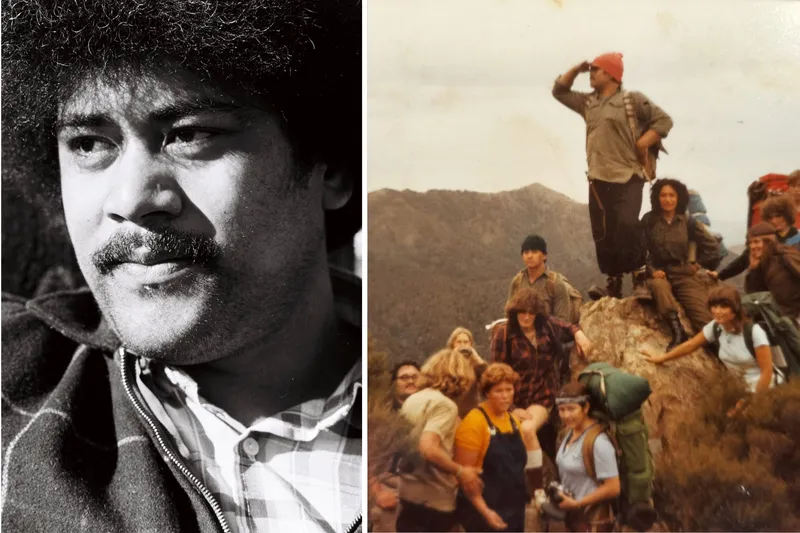
It’s a story worth telling. Now 67 and living in Te Whanganui-a-Tara, Wellington, Umaga was the boy from Wainuiomata who had a number-one single with Wellington band Holidaymakers in 1988, went on to chaperone Nelson Mandela during his 1995 appearance at Auckland Domain, ran the record label Pacific Nation Records and helped establish the Whitireia Community Polytechnic contemporary music programme. Then, while living in Auckland in 2005, he became a wheelchair user after slipping on a shower mat and breaking his neck. In 2012, he received the Queen’s Service Medal for services to the Pacific community.
“Music has been a big journey for myself and my family,” he explains. His grandfather composed a well-known Samoan song about Black Saturday, when 11 people marching for Samoan independence were shot dead by New Zealand military police. Umaga and his brothers followed tradition when their father made them quit sports to focus on music. “[It] put me on my journey to music and I’ve used it as a way to bring people together.”
His aim for the new show’s music was “to add to the dialogue about the times of the past”. The show traverses the era of the Dawn Raids, the Springbok Tour and anti-nuclear protests, the women’s movement and the renaissance of te ao Māori. “They were times of revolution.”
The show could be called revolutionary too. Just don’t call Umaga an inspiration. It’s a common frustration in the disability community, he explains. “I’m not wanting to inspire people.”
Instead, he hopes it will challenge how disabled people are portrayed and viewed, breaking down the barriers, stereotypes and stigma that are “prevalent within an ableist society”.
He’s witnessed distinct prejudices within Samoan culture. “There’s always been this thing of seeing disability as a curse on you and your family. Your family had done some wrong, and so that’s the reason why you’re disabled.”
Conditions like tetraplegia and paraplegia are more than just misunderstood, he explains – the labels often fail to represent people’s lived experience. “We’re all different in our own disabilities and how we handle [it]. Sometimes with the labels, it’s like a blanket description for everyone.”
Umaga was diagnosed with tetraplegia (also known as quadriplegia), which is defined as neck-down paralysis. However, after retaining movement in his hands – which he credits to remaining active and refusing to accept “top-down” paralysis – he’s now categorised as paraplegic, paralysed in the lower half of his body.
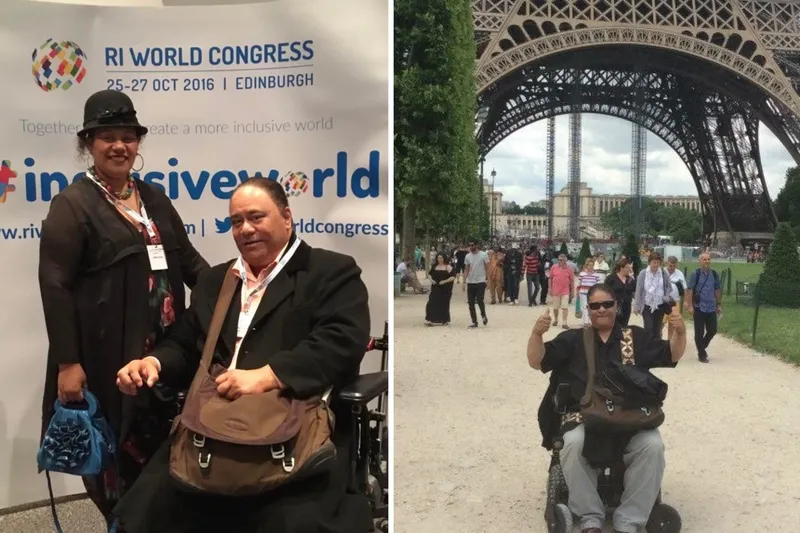
The effects of a spinal cord injury can vary, as do support networks and resources. While in the spinal unit in the early days following his injury, he was shocked at the discrepancies among some patients. “I had to ask my occupational therapist, how come those people have got secondhand equipment and we’re burning around in all the latest kind of technology?” She explained that because it was caused by an accident, his injury was covered by ACC, so funding was different to those being treated under the Ministry of Health. “It just blew my mind and I thought, ‘that is so wrong’.” (Whaikaha, the Ministry of Disabled People, acknowledges the “considerable disparities” in support between ACC and the Ministry of Health, alongside “problematic” disability policies.)
The 20 years since his accident have been a “rollercoaster ride”, says Umaga. At first he felt like he could change the world. “In the spinal unit you have access to all these services: a button that you could push 24 hours a day, a gymnasium where you can go and get supervised to do all your physical rehab, you’ve got a kitchen built for a wheelchair.” It helped him feel independent.
“Then you come back to your home after six months, you’ve got no button, you’ve got nobody on call, and suddenly your house isn’t really made for you to be able to access the oven or do any kind of basics, and so you’re relying on your caregivers to come in and do all that for you. That’s when it really hits you.”
He went through some “really dark” years. “There was addiction, a lot of reckless thinking and behaviour, depression… wanting to lock yourself away from the world and just not give a damn,” Umaga explains. “I didn’t want to do anything. I didn’t want to go out. I didn’t want to see people or [play] music, because my hands were still struggling.”
It took a visit from his friend Pos Mavaega, of the arts collective Pacific Underground, while he was in the Christchurch spinal unit to reignite Umaga’s love of music. Mavaega had brought a bass guitar with him and left it in the corner, just in case. “After a day I picked it up and I just started playing. I felt so good.”
Umaga describes the moment as a personal crossroads, and he made the decision to harness music and his background in community work.
He also had to confront prejudices of his own.
Well before his own injury, Umaga had crossed paths with an old school friend, now in his 30s and in a wheelchair. “As soon as I saw him, I just didn’t know how to approach him. I felt almost embarrassed, so I just turned around and walked the other way,” he recalls. “After my accident he comes to my house, knocks on the door and he comes and he starts supporting me.”
Umaga’s attitude changed. Society has too, with awareness and compassion becoming more common. “I’ve seen it through my own culture, and Pacific peoples, that there is a lot more understanding now.”
Disabled people became entitled to equal employment rights in 2007, New Zealand ratified the United Nations Convention on the Rights of Persons with Disabilities in 2008, and Whaikaha, the Ministry of Disabled People, was established in 2022.
“There have been improvements, but not as much as we’d like.” Whaikaha was downsized in 2024 and disability support services were reassigned to the Ministry of Social Development. And there are “always changes” being made to the New Zealand Disability Strategy, which proves challenging too. “It just keeps changing, and so it becomes harder to access those services.”
He thinks the onus should be placed more on wider society than disabled people, who according to the 2023 Stats NZ Household Disability Survey accounted for 17% of New Zealanders – a number expected to increase as the population ages. Disabled people report worse health and more financial insecurity, with 53% struggling to meet basic needs. The average income of people with disabilities living in emergency housing is $22,519 a year, according to new research.
Umaga says advocates have to “rock up and bang at the table” to have their voices heard – especially at governance and strategic levels – for issues like social housing, urban design and community access.
“There are lots of frustrations. In the end, you have to level that frustration for yourself and say ‘that’s just the way life is’,” he explains. “But you know that there’s a place for you to continue being a disruptor, involved in activism and change.”
He sees that in the next generation. “What drives me is being able to hand over the mantle to the young leaders that we’ve been working with to lead their own change and build their leadership capacity,” he says. “I always say to them, I look forward to the day when you can come up to me and say ‘thanks Pati, we can take over from here, move over.’”
Music Portrait of a Humble Disabled Samoan is on at Q Theatre from March 5-8 as part of Te Ahurei Toi o Tāmaki Auckland Arts Festival before moving to Wellington for a March 12-14 run at Aotearoa New Zealand Festival of the Arts. There are a variety of accessible stagings, including an audio-described performance for blind and low-vision audiences, and a New Zealand Sign Language-supported show.

Emma Gleason
Emma Gleason is a staff writer at The Spinoff and an award-winning fashion journalist. But it’s not just clothes that interest her, you’ll find her exploring tasty cheese, influenza outbreaks and more important things right here. She has experience with some of the country’s leading media outlets as well as the toaster in our kitchen.


