A train trip back in time to before we screwed up our transport system

Literally, the Kaimai Express was going to Tauranga. Metaphorically, it was heading into the past. (Image: Tina Tiller)
The Kaimai Express was a trip to a less car-dominated past. It may also have been a small taste of the future.
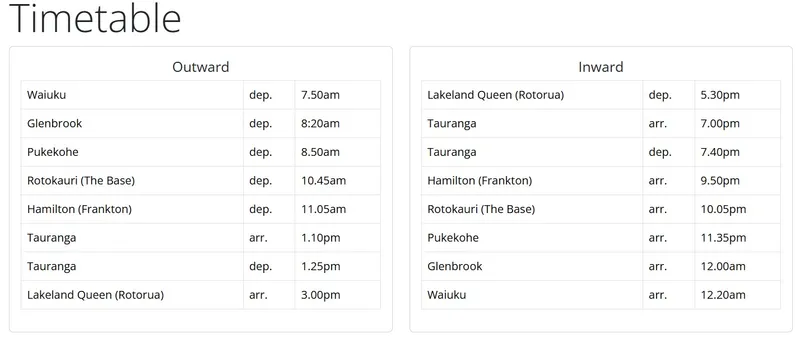
As the Kaimai Express train to Tauranga travelled south from Auckland, people leaned out of their car windows on the Waikato Expressway to film. Families waved as the locomotive pulled into Frankton station in Hamilton. They cheered as it finally arrived in Tauranga and again as it headed off to take some passengers on a day trip to an aviation museum in Mount Maunganui.
The festive response reflected the trip’s rarity. Before the express took off from Waiuku at 7.50am for its five-hour journey on Saturday, there hadn’t been a passenger train between Auckland and Tauranga in 14 years. Even that was a charter trip. It’s been 25 years since there were regular passenger train services shuttling people around the “golden triangle” of Auckland, Hamilton and Tauranga.
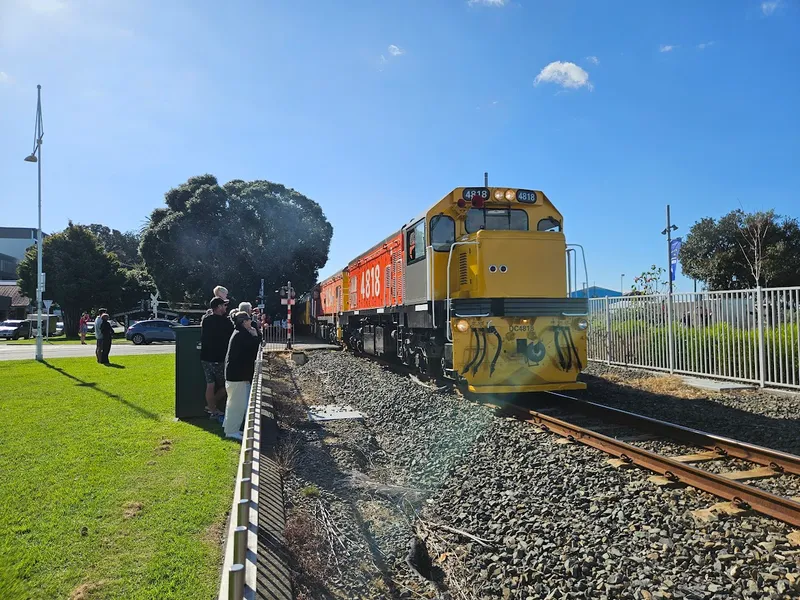
Saturday’s trip, put on by the Glenbrook Vintage Railway and promoted by the lobby group The Future is Rail, was a novelty. It was also a wormhole back to a time before we gave our transport system a firm kick in the goolies. New Zealand’s threadbare lattice of intercity passenger train services is the product of decades of decisions to prioritise cars over other means of travel both in and between cities. Since the 1950s, authorities have invested heavily in motorways while tearing up formerly popular tram lines and allowing train networks to slowly rot. That decline only accelerated after New Zealand’s rail system was privatised in 1993. When the last passenger train between Auckland and Tauranga reached the end of its line in 2001, it was only carrying about 30 people per trip.
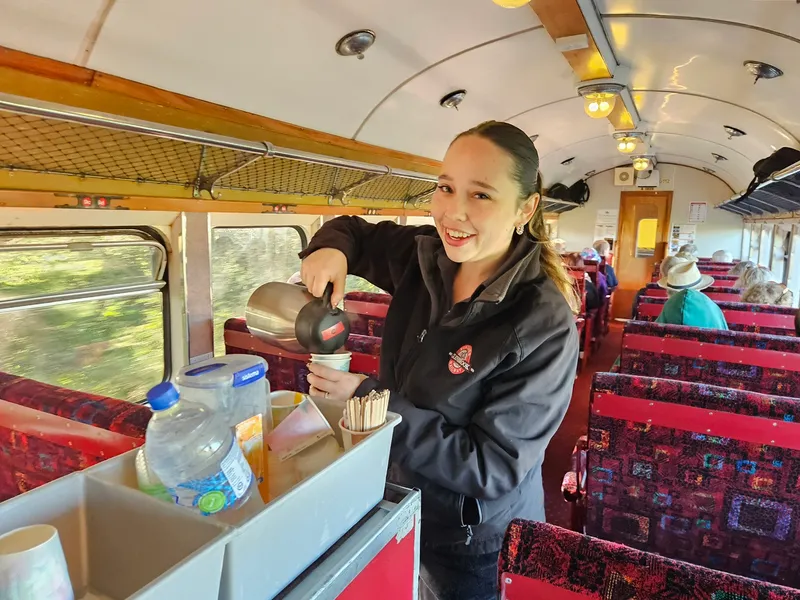
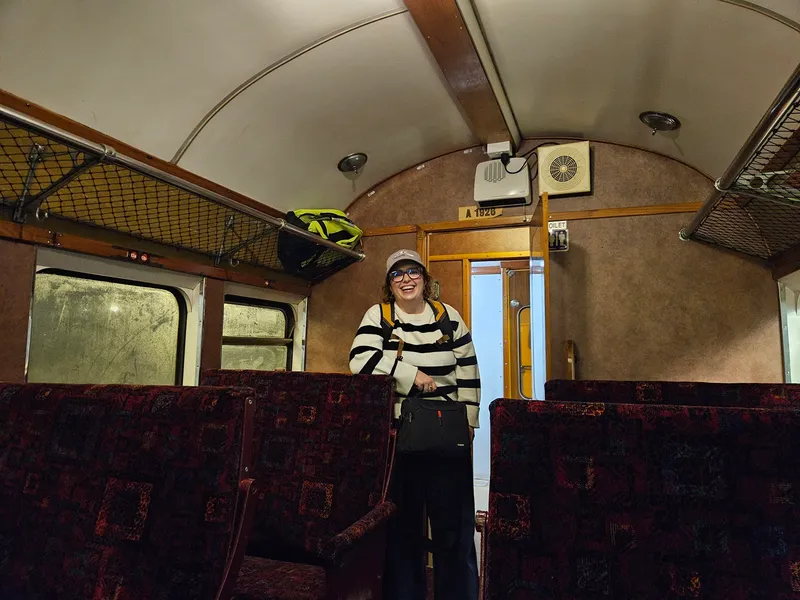
Ten times that many got on board for the service’s one-off revival at the weekend. Most of the passengers were grey-haired, likely there to relive their more train-filled youths. The trip was meant to be a taste of the past, right down to the heritage carriages that used to carry second-class rail passengers between cities back in the 1930s.
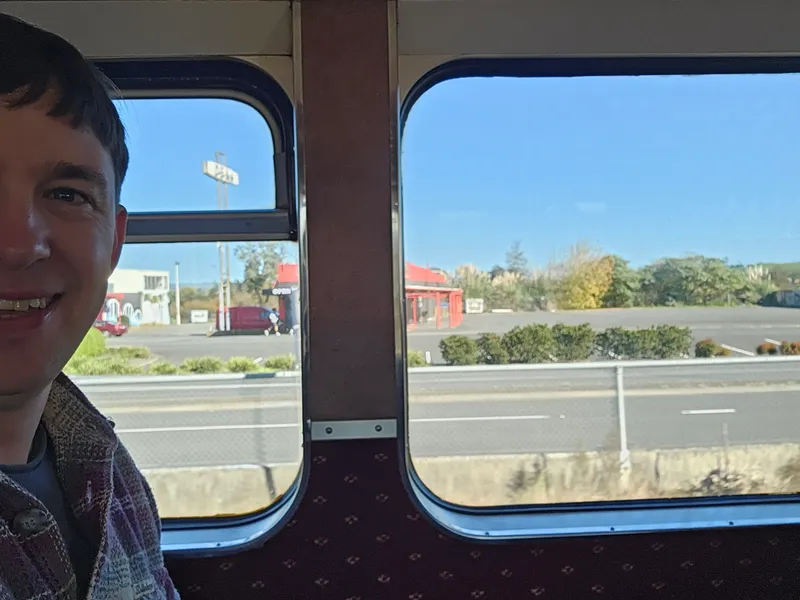
It was also meant to point to a different future. The downsides of making cars almost mandatory have never been more apparent. Petrol prices are oscillating between extremely and cripplingly expensive. Even if we exorcise the malign influence of the closed Strait of Hormuz from our souls, there’s no guarantee those costs will actually descend to a point where people no longer feel like they’re being mugged by Mobil. All that’s before you even start mentioning the massive contribution cars make to our carbon emissions and the human carnage they inflict every year.
Making people rely on cars alone was “one of the great planning mistakes of the 20th century”, said Waikato University environmental planning professor Ian White from his seat aboard the Kaimai Express. “Car travel was a symbol of freedom but now people have cars because they have to.”
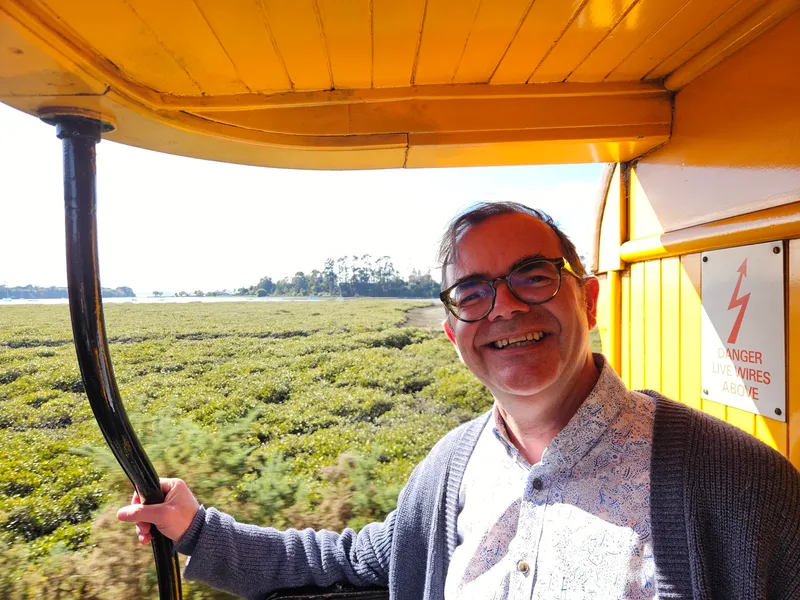
White was on board to get a taste of a more varied transport diet. He wanted a return of passenger rail services between Auckland and Tauranga. The biggest physical obstacle to that comeback is a dark 8.9km-long tube running under a mountain range. The entire rail journey on Saturday was shaped around the logistical challenge of getting through the Kaimai rail tunnel. Its length makes carbon monoxide poisoning from diesel train fumes a risk factor for passengers. The Kaimai Express wasn’t allowed to enter the tunnel within an hour of a freight train passing through. The organisers ensured all windows were closed and ventilation was shut off before we entered. When I asked one of the railway volunteers what would happen if we hadn’t taken those precautions, he gave a reassuring response. “We’d be dead within minutes.”
That might have been slightly alarmist, but before restarting passenger rail services, authorities would at least have to ventilate the tunnel. If they wanted to go further and eliminate all risk, it would mean electrifying rail from Pukekohe to Morrinsville. Aboard the Kaimai Express, a host of rail nerds took stabs at the potential cost of that project. Most topped out at $2bn – a big expense, but still a drop in the bucket compared to an estimated $20bn highway to Whangārei.
“Wouldn’t it be great if a party ran on a platform of rail in the golden triangle?” mused White, hopefully, as we got ready to enter the tunnel. He thought political parties could sell drivers on that move. “Car owners should be in favour of this,” he said. “It gets cars out of their way.”
Wish granted, at least when it comes to the Green Party. It has a long-standing policy in favour of electrifying rail in the golden triangle and one of its Hamilton-based candidates, Louise Hutt, was on board supporting the cause. So was Labour’s Georgie Dansey. Thanks to her party’s famous aversion to releasing policy, she was more constrained but did say she would “love to see it”. “The future is rail and it would be great to connect up the golden triangle,” she said.
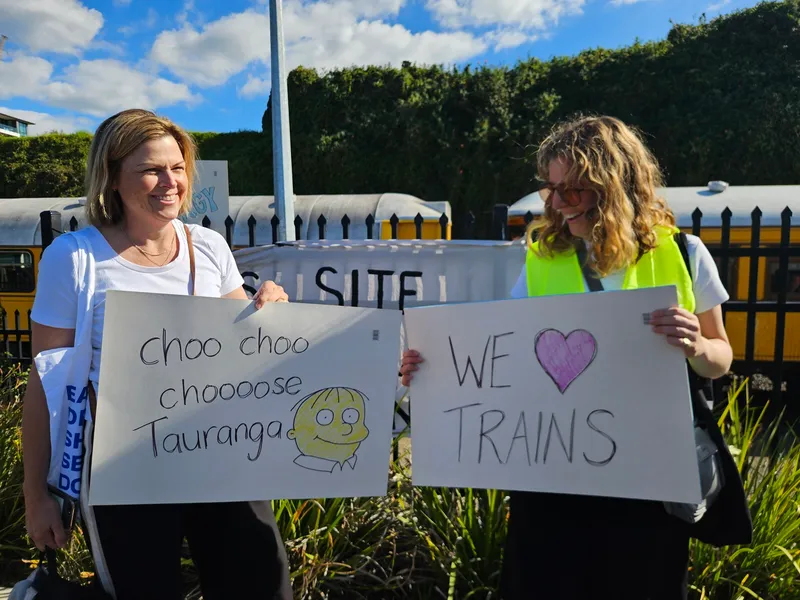
National hasn’t committed to electrification. But its Tauranga MP Sam Uffindell joined the throngs of welcomers as the Kaimai Express pulled into a makeshift station on the tracks near his city’s centre. Together with his kids, he boarded the train for its day trip out to Mount Maunganui as rail advocates stood around with signs saying things like “choo choo choooose Tauranga”.
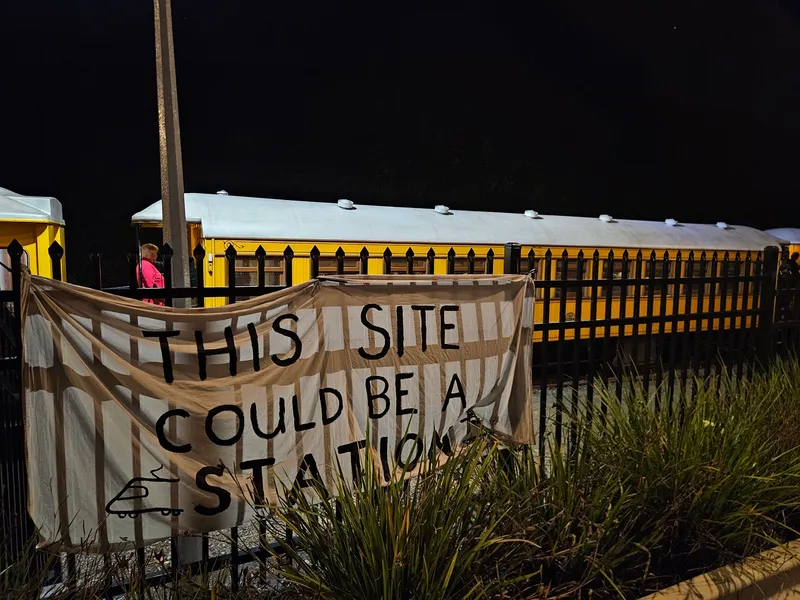
Some of those signs were still up when the Kaimai Express finally left bound for Auckland nearly seven hours later. “This site could be a station,” read one, tied to the steel fence beside the disused space where the tired-looking passengers embarked. We got back to Pukekohe on schedule at 11.30pm. The day went without a hitch, and on the way back, rail enthusiasts took turns saying how special the experience had been. But there was a tinge of regret to their appreciation. White expressed it best. “This should be normal,” he said. The Kaimai Express was an opportunity to take a rail journey that hasn’t been on offer for decades. But for many of the people on board, their most fervent wish was that it would one day be the boring old usual.
Hayden Donnell travelled on the Kaimai Express courtesy of The Future Is Rail.

Hayden Donnell
Hayden Donnell is a senior writer for The Spinoff. He previously worked at RNZ, TVNZ and the New Zealand Herald, alongside other media companies that have since closed down or been renamed. His primary passions are local politics and the Big Fresh animatronic fruit and veggies.


