The strong winds hitting Aotearoa, explained

Metservice has issued a rare red weather warning as dangerous winds sweep the country. (Image: The Spinoff)
The current pressure systems causing strong winds, power outages and wildfires across Aotearoa are due to the strongest pressure difference MetService has seen in 30 years of records. Shanti Mathias asks meteorologists to explain why.
The strong winds around the country have already caused multiple accidents, including a doctor in Wellington being killed by a falling branch, and a school bus in Christchurch being hit by a falling tree – luckily before any kids were on board. In Kaikōura, the winds have exacerbated wildfires, and there are power cuts across the South Island. Because of the difficulty in accessing some of the places where lines are down, Wellington Electricity chief executive has warned people that there may be three or four days without power in a worst-case scenario.
In essence, the weather pattern is because of a pressure difference along the country, with a low pressure front in the south and a high pressure front in the north. “It’s like when you pop a balloon,” says MetService meteorologist Silvia Martino. “When the pressure inside the balloon is higher than the pressure outside, the air wants to go from the high pressure to the low pressure area.”
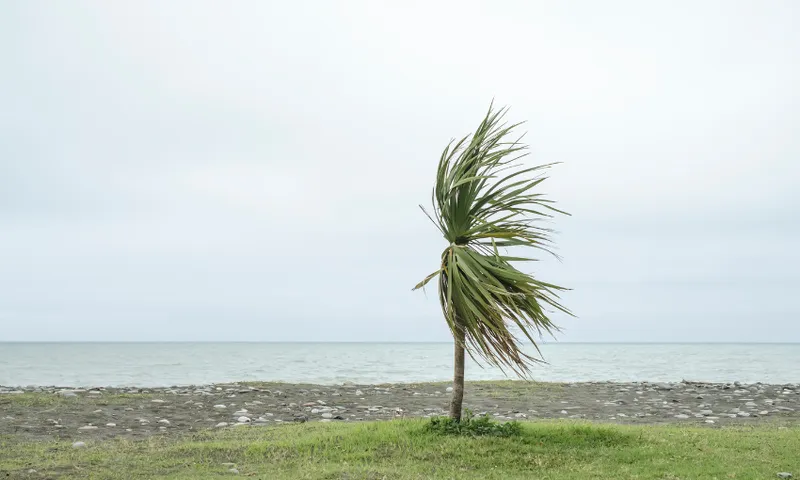
Chris Brandolino, principal scientist of forecasting at Earth Sciences New Zealand, explains that wind flows towards areas of low pressure, influenced by topography like hills on the way. “Low pressure is like a big hole in the atmosphere, and mother nature wants to fill that void, just like water flows downhill.”
The current system over New Zealand is a common one; Martino says it’s often the case that there is a big difference in pressure between Invercargill and Auckland. While the general shape of the system is frequent, the severity is not. “It’s dialled up to the max.” For comparison, the MetService team found a “place in the middle of the North Atlantic” which has similar wind speeds – but wind on the open ocean is very different to wind on land.
One reason the weather system is so strong is something that happened in September, says Brandolino. Sudden stratospheric warming, or SSW, meant that the air temperature above Antarctica in the high atmosphere increased by about 40 degrees Celsius over just a few days. “A lot of the low pressure from Antarctica got shoved north into the Southern Ocean,” Brandolino says.
“For several weeks that low pressure has sat over the southern ocean, causing these relentless systems of westerly winds.” Meanwhile, high pressure systems in the north – calm, clear weather in Auckland – create a constant “pressure gradient”.
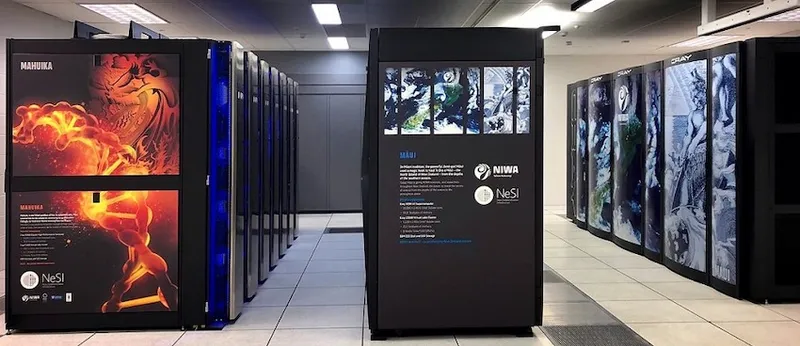
While weather models are reasonably good at predicting temperatures, wind is harder to precisely forecast. The wind warnings are for the speeds of gusts – but hills, trees and buildings can all change exactly where wind goes and how fast. “Weather is a chaotic system – the models can’t be perfect unless we have observations from every part of the atmosphere, from every part of the world, all at the same time,” Martino says.
MetService’s expert forecasters, meteorologists with at least 10 years of experience, use different models at different resolutions to make a call on issuing a warning. Weather models have quirks – one model might predict northwesterlies over Christchurch more often than actually happens, or suggest that there will be rain on the east coast when it’s dry. Forecasters compare what really happens with what the models said to create an interpretation of the forecast.
The warming climate is changing day-to-day weather. From a forecasting perspective, that means the models meteorologists use contain higher temperatures and (at times) humidity. Earth Sciences New Zealand produces seasonal forecasts, where scientists make calls on the weather for the next few months, not just the next few days.
In New Zealand, our weather system is impacted by the El Niño Southern Oscillation, or ENSO – a cycle where warm and cool waters move around the tropics, producing patterns of El Niño, La Niña and neutral weather. The Indian Ocean Dipole, a similar system of cool and warm water cycling through the Indian Ocean, also affects the weather in Aotearoa. But because of the warming climate heating up the ocean as a whole, the temperature difference required to determine a La Niña – meaning New Zealand has warmer air temperatures, marine heatwaves, and rain falling on the east side of the country rather than the west – is smaller than it used to be.
The summer of 2024 had the characteristics of a La Niña summer in Aotearoa, even though the sea did not reach the threshold of being 0.7 degrees colder than usual, the previous standard for weather patterns. Earth Sciences New Zealand is now using a variety of ocean temperature recordings, rather than a mean recording, to determine where the country is in the climate cycles. “If we didn’t change the method, we would underreport La Niña,” Brandolino says.
When it comes to forecasting into the future – when to expect strong winds or rain – the science is always being adjusted to fit with reality. “We’re trying to identify who is at the steering wheel of mother nature’s car, that’s the climate,” Brandolino says. “If you know who is driving the car, then you have something to go by to understand what is happening with day-to-day weather.”

Shanti Mathias
Shanti is a contributing writer at The Spinoff with a focus on Christchurch and the South Island. Email her at shanti@thespinoff.co.nz


