Why can’t I just be happy for Auckland FC?

A Wellington Phoenix supporter watches the new Auckland FC documentary.
Let me lay my cards on the table: yes, I support the Wellington Phoenix. And yes, I live in Auckland, home of the famous Auckland FC.
How did I end up in this unfortunate position? I put it down to my longstanding desire to follow the fortunes of a professional New Zealand football club, which from 2007 to 2024 was only possible by embracing a lifestyle known by its proponents as “the wind, the rain and the Phoenix”.
Until last year, the Phoenix regularly drew crowds of over 10,000 to their Auckland fixtures. When Auckland FC joined the A League last season, most of these people took the first opportunity to jump ship and support their local franchise. In many ways this was a logical move, and one which will have had a hugely positive effect on their emotional wellbeing. But for some reason I haven’t quite figured out yet – tempting to call it “loyalty”, but I’m not sure that’s it – I wasn’t able to join them.
I never wanted to hate Auckland FC. At the start of last season I entertained an idealistic fantasy in which I was able to reject the manufactured rivalry and support both clubs against the real enemy, Australians. Auckland FC did a lot of things right: they signed a bunch of the best local players from the national league, a talent pool I felt the Phoenix had been overlooking for years. They played their home games a short drive from my house. They had an objectively nicer kit.
But sport and especially football has a way of forcing you to take sides. Soon everything the “Black Knights” did started to piss me off. Mostly it was that they just kept winning, and that they were clearly the best team in the league – mostly I hated the idea that they might win the whole thing in their first season, without facing a single moment of struggle or heartbreak. Also, their supporters were kind of dicks about it. Why so aggro when all the Phoenix have ever done to you is hand you nine precious points on a platter? If there’s one thing worse than a sore loser, it’s a sore winner.
That said, if there’s one thing I love more than hating Auckland FC, it’s flip-flopping and changing my mind. And if there’s any medium that can compel me to do that, it’s a fly-on-the-wall documentary series – a genre which has in the past turned me into a temporary superfan of clubs as fundamentally unlikeable as Sunderland, Juventus and Salford City.
Forever Auckland FC begins promisingly, with Ali Williams declaring “We can’t do Welcome to Wrexham, I’m not Ryan Reynolds.” True, and music to my ears – Welcome to Wrexham is the only fly-on-the-wall football club documentary I’ve ever disliked, put off by how its first few episodes seemed far more interested in the club’s new Hollywood owners than the club itself.
This is unfortunately also the case for Forever Auckland FC: the main characters of the first episode are without doubt Williams and Anna Mowbray, the high-profile couple who form part of the investment group which bought into the club owned by billionaire American businessman Bill Foley. Mowbray seems to claim credit for coming up with the idea for an Auckland A League franchise herself – a shower thought brought to life through sheer business acumen, because “let’s be honest, all the metrics are there.”
The documentary doesn’t make a secret of the fact that Auckland FC is first and foremost a business venture. There’s nothing wrong with or controversial about running a modern sports franchise like a business, of course, but it does feel like a strange thing to focus on at the expense of so many other more interesting, more human angles.
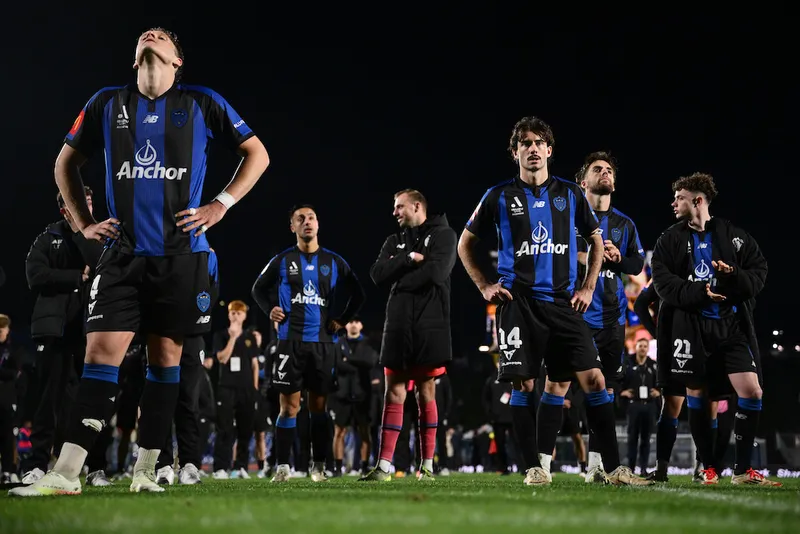
The players themselves barely get a word in, for example, and we don’t hear from any of the club’s supporters. The Port just magically appears out of thin air right in time for the first game, introduced by way of an anecdote from CEO Nick Becker about hosting the prime minister in the Mt Smart hospitality box. When Auckland FC wins that huge, historic first game at the end of the episode it feels anticlimactic, possibly because we’re experiencing it through the eyes of the club’s CEO and ownership group.
For a documentary that boasts unlimited behind-the-scenes access, a huge amount of the episode is taken up with talking head interviews and screenshots from Instagram and r/Aleague. Occasional moments, like the head of performance delivering a long sermon about eggs on the eve of the first game (“you should be eating at least four a day”), or assistant manager (and former All Whites coach) Danny Hay candidly expressing his contempt for NZ Football as an organisation, hint at what could have been.
Fortunately, it gets better. The second episode focuses on the first ever “NZ derby” between Auckland FC and the Phoenix, and does so with a far more satisfying level of detail than the first game. It also – surprisingly, confusingly – makes me kind of love Auckland’s Disney villain coach Steve Corica. “Bimbi” – so called because he used to resemble the actor who played Ritchie Valens in the movie La Bamba in his youth (“embarrassing nickname for a 50-year-old man”) – comes across unaffected and naturally funny in front of camera, and it’s fascinating watching him go about his business on game day: this is what these documentaries are supposed to be about!
In the episode’s most satisfying moment, he predicts at halftime that “that goalkeeper [Wellington’s Josh Oluwayemi] is going to give us an opportunity”, and instructs his forwards to keep pressing him. This turns out to be exactly what happens, as late in the game an under-pressure Oluwayemi passes the ball straight to Jake Brimmer for what would prove the winning goal.
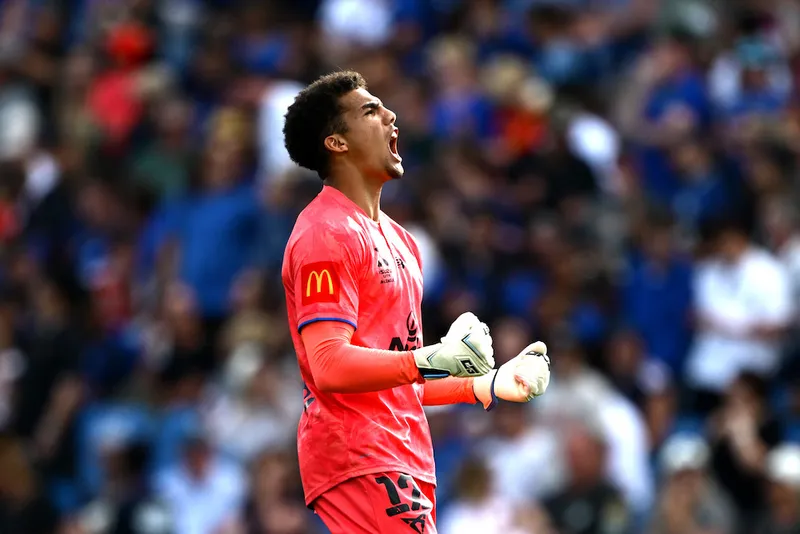
The main narrative of the episode surrounds the goalkeeper at the other end of the pitch, Auckland’s Alex Paulsen, who came up through the Phoenix academy and was their star player as they came agonisingly close to making the grand final the season before. He was then signed by Premier League club Bournemouth AFC, which coincidentally happens to be the cornerstone of Auckland FC owner Bill Foley’s football empire, before being controversially loaned back to Auckland for the season.
Controversial, because at the time Paulsen was sold to by Bournemouth the A League had a rule in place specifically to prevent these types of backdoor transfers, and that rule was conveniently scrapped specifically so that Paulsen could return to play for Auckland. None of this is explained in the documentary, of course, which simply portrays him as the victim of a cruel vendetta from Phoenix supporters, who booed him throughout the game.
Another subplot involves local signing Luis Toomey, a former Phoenix academy member with a point to prove against the club that let him go several seasons ago. Harnessing this ill will, Corica and Hay send him on as a substitute late in the game and he supplies the assist for Jake Brimmer’s second goal. It’s a triumphant moment; not mentioned in the documentary is that Toomey is now a free agent after Auckland FC chose not to extend his contract at the end of the season.
At the end of the episode, the series abruptly skips ahead several weeks to put us already near the midpoint of the season with six episodes still to go. Maybe this is an acknowledgement that winning every game doesn’t exactly make for gripping television; hopefully it’s clearing the runway for an entertaining and angst-filled final episode covering their shock semifinal loss to Melbourne Victory.
I was relieved to see them lose that game. Not entirely out of spite and jealousy, but also because it felt like it legitimised Auckland FC as a football club. If (let’s be honest, when) they do go on to lift the A League’s hallowed toilet seat trophy, it will mean so much more than if they’d won it at the first attempt. Maybe by that stage I will have cracked the complex mental arithmetic required to at least feel happy for them.
Forever Auckland FC airs weekly on Sky Open at 7:30pm Wednesday nights, and all episodes are available to stream on Sky Go, Neon and Sky Sport Now. Episodes one and two were supplied for review.

Calum Henderson
Calum is The Spinoff’s production editor. Areas of interest include sport, entertainment and new food and beverage products. He is currently ranked number 71 in New Zealand at Scrabble. Email: calum@thespinoff.co.nz


