The freshest, funkiest, most fashionable fits from the Winter Olympics 2026

Cool fashion. (Photos: Getty. Design: Tina Tiller)
From beautiful bombers to hand-painted curling shoes, these are our highlights.
Much like the fast turns of a slalom course, the Winter Games uniforms careen from the wildly creative to the exceedingly dull. Some nations use the global stage to blast patriotic colours and a sense of sporting power, while others take the type of understated approach more usually seen on a slushy day at Ohakune than an international sporting event. With this year’s event taking place in the Italian fashion capital Milan (alongside co-host Cortina), watching what competitors wear is a spectator sport of its own.
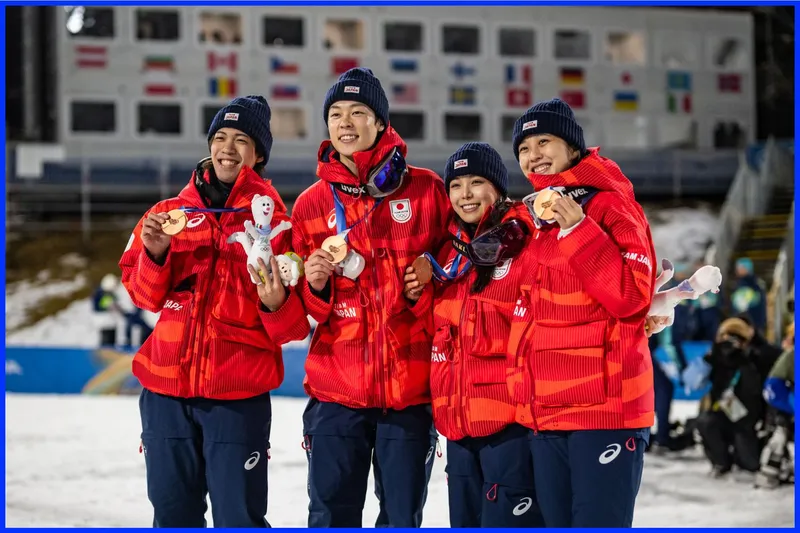
Snazziest puffers: Nozomi Maruyama, Ryoyu Kobayashi, Sara Takanashi and Ren Nikaido, Japan
Given the climate, puffer jackets are a critical element of every uniform. Team Japan’s “podium jacket” in “sunrise red” is designed by Japanese sportswear giant Asics. With its tight colour palette and variegated stripes, it strikes the right balance between bold, patriotic garb and something you’d actually want to wear off-piste in civilian life (the brand sells a replica).
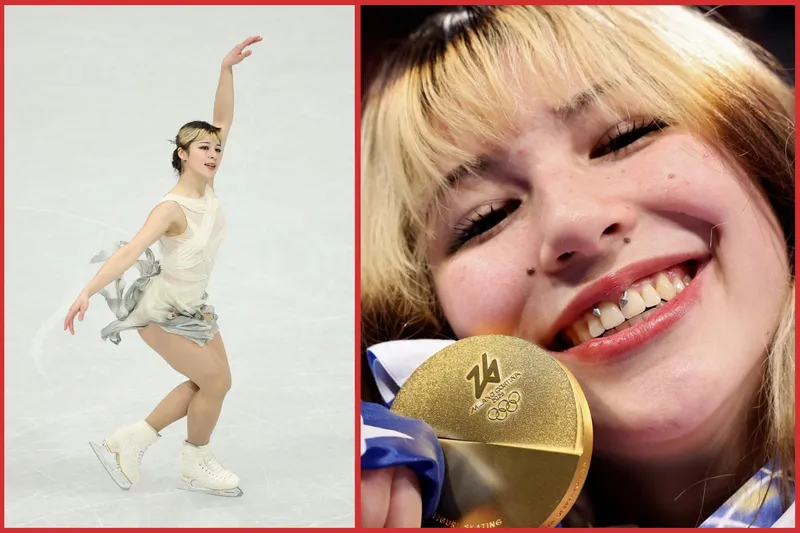
Most cutting-edge look: Alysa Liu, USA
With unmissable hair and figure skating costumes that look like they could have been designed by high-end labels Rodarte or Supriya Lele, Alysa Liu brings some edge to the Milano Ice Skating Arena.
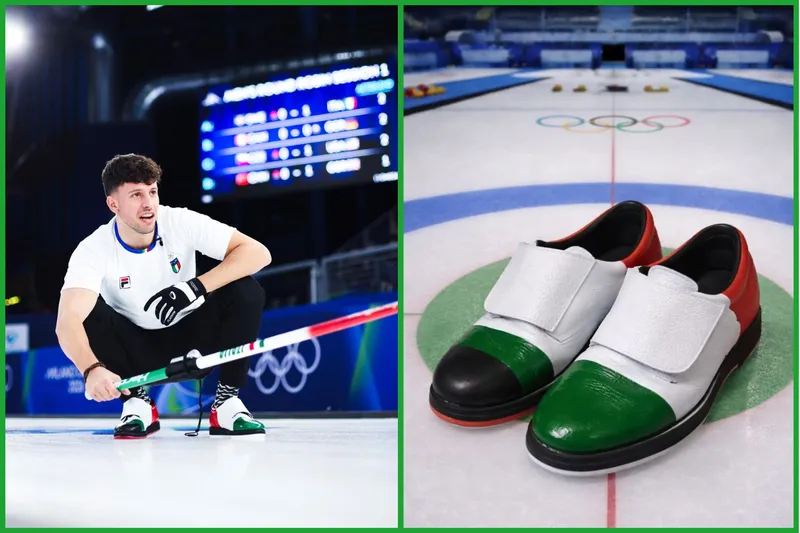
Best shoes: Mattia Giovanella, Italy
Ciao bello! Curling shoes are surprisingly technical, with each pair including a “gripper” and a “slider”. Mattia Giovanella had his BalancePlus footwear customised ahead of the Olympics, enlisting Italian artist Federica Dal Paos to hand paint them with a patriotic tricolour.
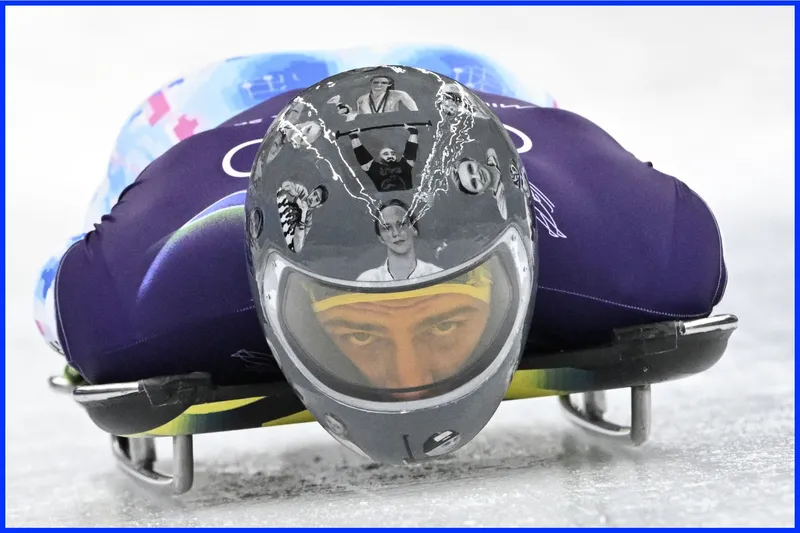
Most sobering helmet: Vladyslav Heraskevych, Ukraine
While some skeleton racers decorate their helmets with flags, dragons, Venom, or the Star of David, Vladyslav Heraskevych’s “helmet of remembrance” is adorned with the images of 20 athletes, coaches and children killed since Russia invaded Ukraine. The design prompted the International Olympic Committee (IOC)to disqualify him 45 minutes before the competition began, deciding the helmet violated the “athlete expression guidelines” (rule 50 of the Olympic Charter bans “demonstration or political, religious or racial propaganda”). Heraskevych’s subsequent appeal to the Court of Arbitration for Sport was unsuccessful. The ban has made headlines and prompted debate, with some calling the IOC’s decision discriminatory and inconsistent, pointing out that the helmet of Italian snowboarder Roland Fischnalle displayed a Russian flag, which, alongside the country’s anthem and national colours, was banned at the Games.
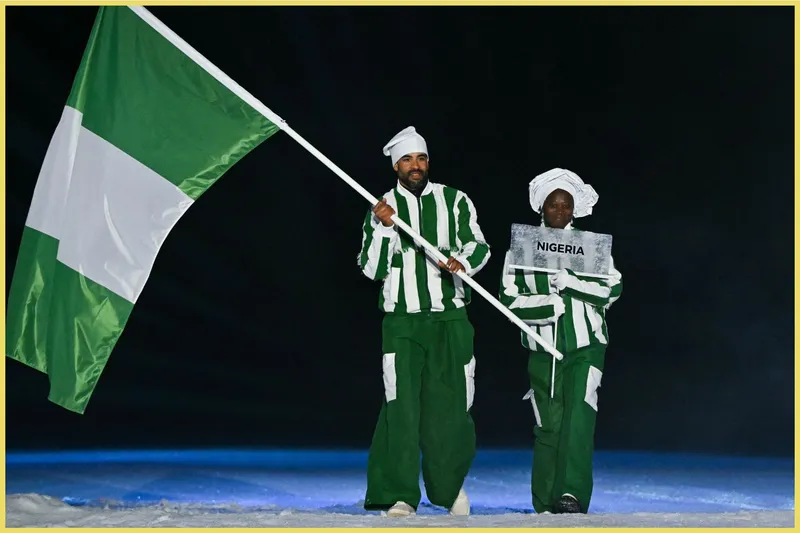
Best bomber jacket: Nigeria
Nigeria showed a refreshing alternative to the standard winter gear usually seen during the opening ceremony. Cross-country skier Samuel Uduigowme Ikpefan – the country’s only competitor – wore a sick striped jacket paired with matching wide-leg cargos.
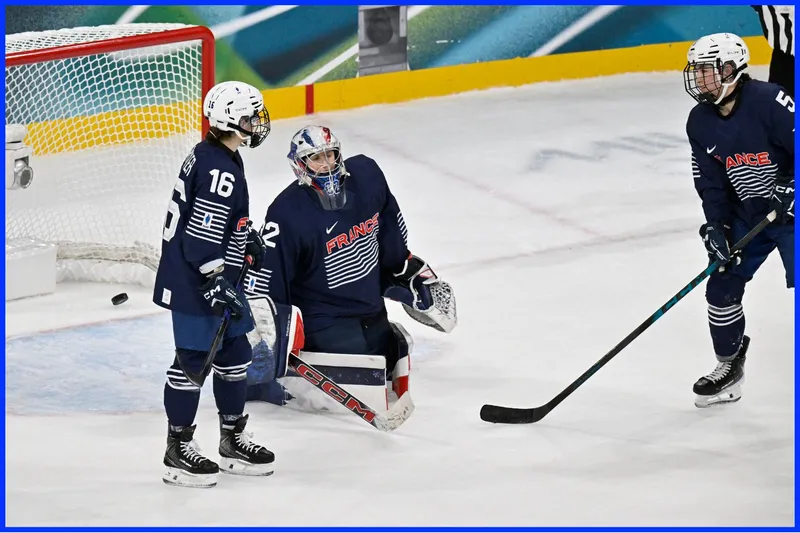
Chicest stripes: Clara Rozier, Alice Philbert and Gabrielle De Serres, France
Everyone else seems to hate these jerseys but I disagree with them. The dashing use of Breton stripes is a nice Gallic touch and the uniforms actually make navy look staunch (hard to do). They’re the work of Nike, who will hopefully enlist Jean Paul Gaultier next time to take it up a notch.
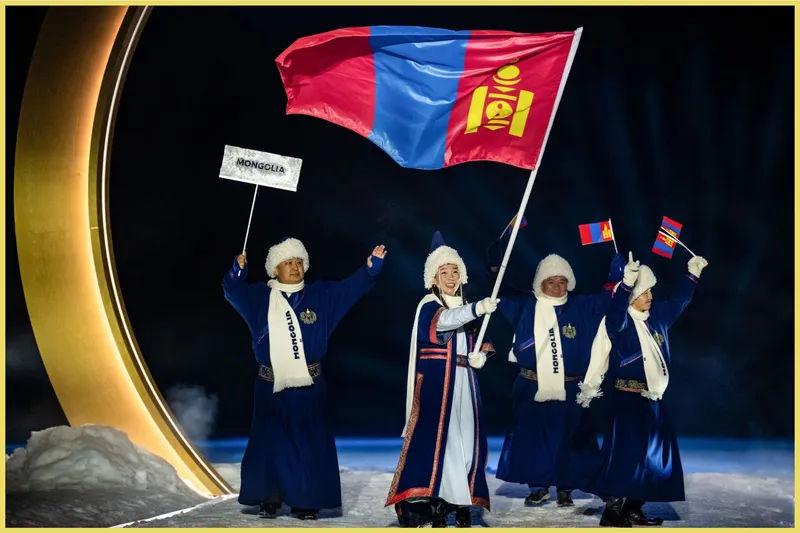
Best use of cashmere: Mongolia
While everyone else was marching around the opening ceremony in fancy puffer jackets and Nordic-looking sweaters, Mongolia’s Olympians looked like they’d just ridden in from the steppe.
Their distinctive, deeply symbolic deels (traditional robes) are the work of family-owned cashmere company Goyol Cashmere, headquartered in the capital city Ulaanbaatar, which won a competition to design the uniforms. Based on traditional Mongolian attire and made from premium cashmere, the uniforms quickly caught the attention of global media, including the Wall Street Journal and Vogue, helped by a cinematic photoshoot and support from the IOC, which put them on the runway ahead of the games. This isn’t the first time the country’s gone the historic route to much acclaim; the 2024 Paris Olympics uniforms were inspired by the embroidered outfits worn during Mongolia’s Naadam festival.
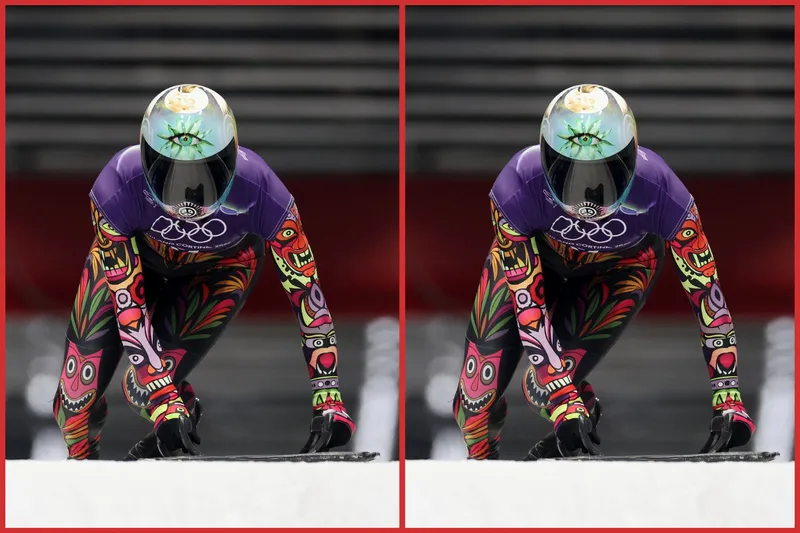
Coolest skeleton suit: Kellie Delka, Puerto Rico
Puerto Rico’s only winter Olympian had one of the best fits in the field of skeleton racing. While the sport looked terrifying, she looked incredible in this custom-made suit. Delka also wore a wildly creative helmet She wasn’t the only one – the sport has become known for them, and has been on an exponential trajectory of funkiness since the early 2000s.
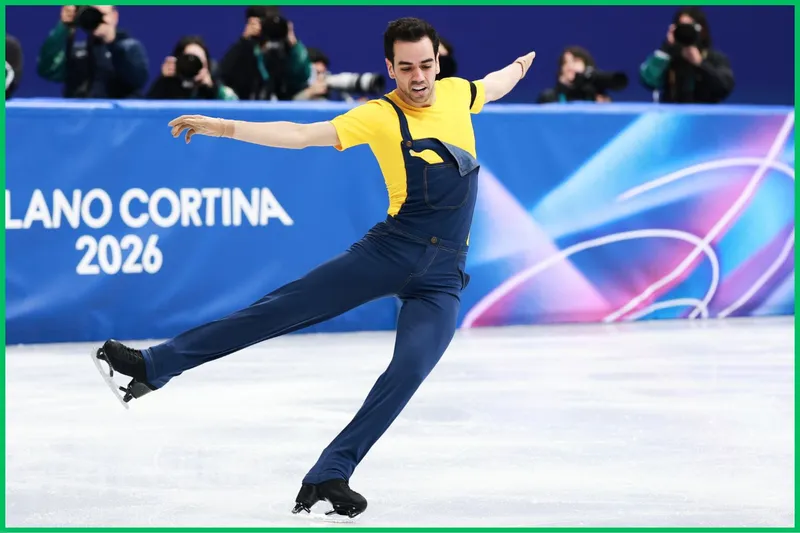
Best Despicable Me reference: Tomàs Guarino Sabate, Spain
No, it wasn’t a fever dream: Tomàs Guarino Sabate was dressed as a minion and it was critical to the figure skater’s routine, though not without its challenges. The flamboyant Spaniard overcame a copyright issue to perform his routine alongside music from Despicable Me 2 in Milan.
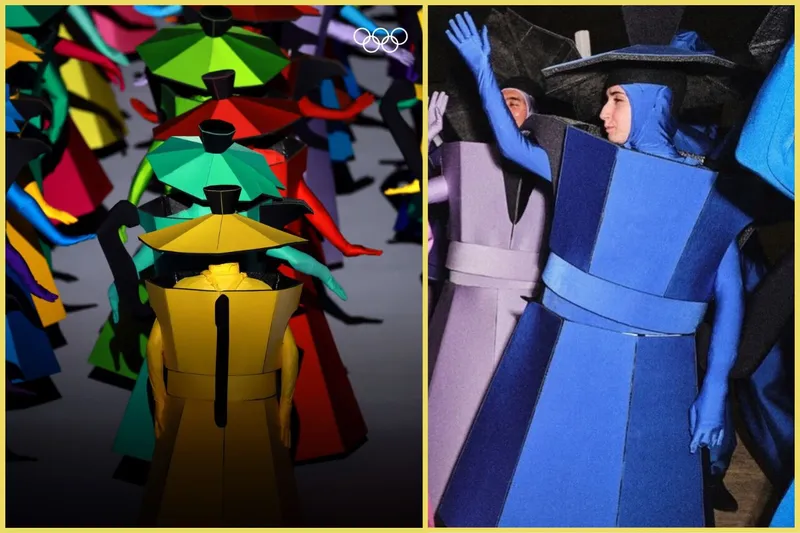
Most extravagant hat: Bialetti
A cohort of colourful coffee pots made an appearance during the opening ceremony to represent Italian design. Bialetti’s 1933 invention of the Moka Express coffee maker revolutionised stovetop espresso, and while the pots are largely unchanged nearly 100 years later, anthropomorphised Mokas of the Milan games appear to be a new and unprecedented development. With hats. Great hats.
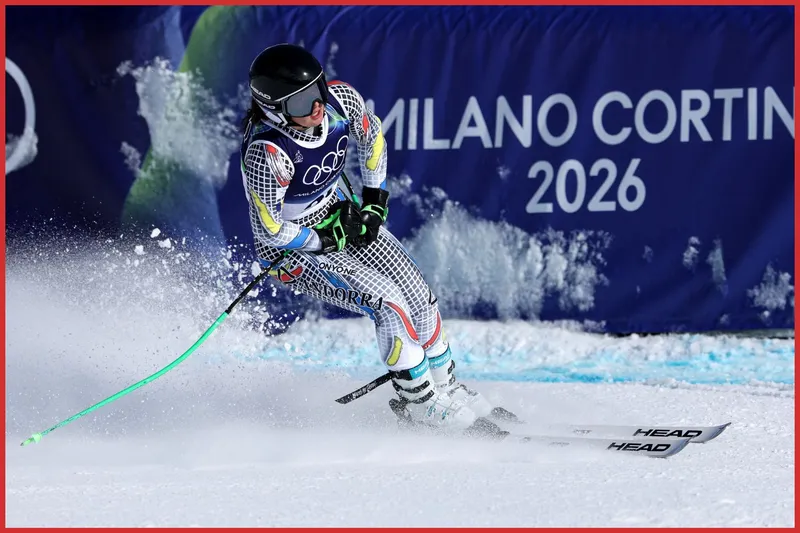
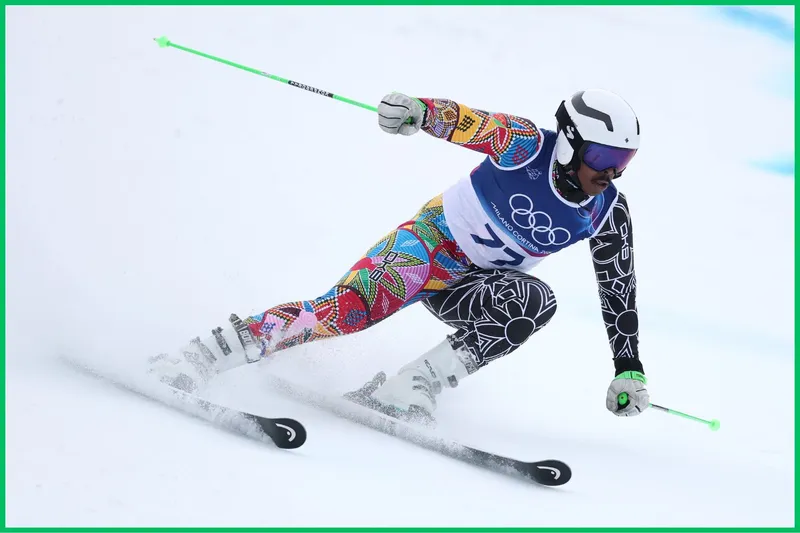
Best op art: Jordina Caminal Santure, Andorra
Andorran alpine skier Jordina Caminal Santure makes a great case for simple black and white, as well as some flourishes that call to mind the halcyon days of Microsoft Paint.
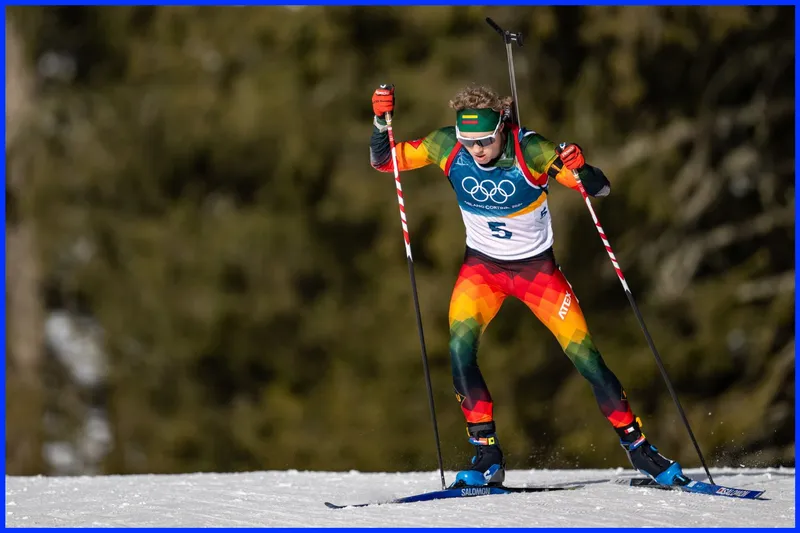
Most cheerful biathlon suit: Maksim Fomin, Lithuania
If, like me, you only recently learned what the biathlon actually entails (cross country skiing and rifle shooting) and think it sounds an awful lot like ski warfare (it is), then you’ll be pleased to see Maksim Fomin in this cheerful and not-at-all-threatening uniform designed by Aleksandras Pogrebnojus.
Best use of contrast: Shannon Ogbnai-Abeda, Eritrea
A solution to the eternal quandary of whether to wear colour or monochrome, Shannon Ognai-Abeda’s ski suit is gorgeous. It was designed in the Eritrean capital Asmara and made by Italian sports brand DKB. This is Ogbnai-Abeda’s last Olympics, and he’s the only Eritrean to ever compete in three Winter Games.
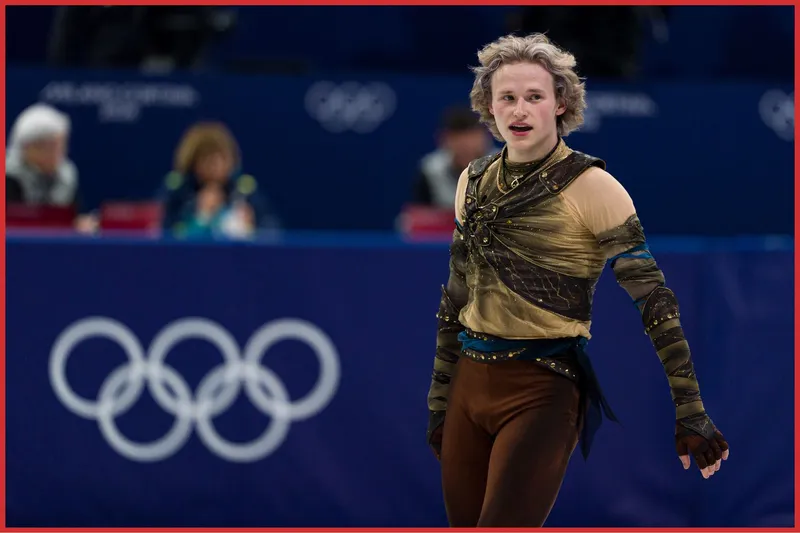
Most Middle Earth outfit: Ilia Malinin, USA
Ilia Malinin looked like he’d just trotted in from Rivendell for his short skate, set to a track from Prince of Persia: The Lost Crown. The accompanying song for his free skate competition was also esoteric. The first competitor to use a recording of his own voice, the track went: “The lost is in the unknown. Embrace the storm. You are something but not nothing. Past is not a chain but a thread; pull it, and it may lead you home. Begin where light no longer reaches, where no path has yet been made.” His outfit was the work of acclaimed costume designer Ito Satomi, who specialises in figure skating.
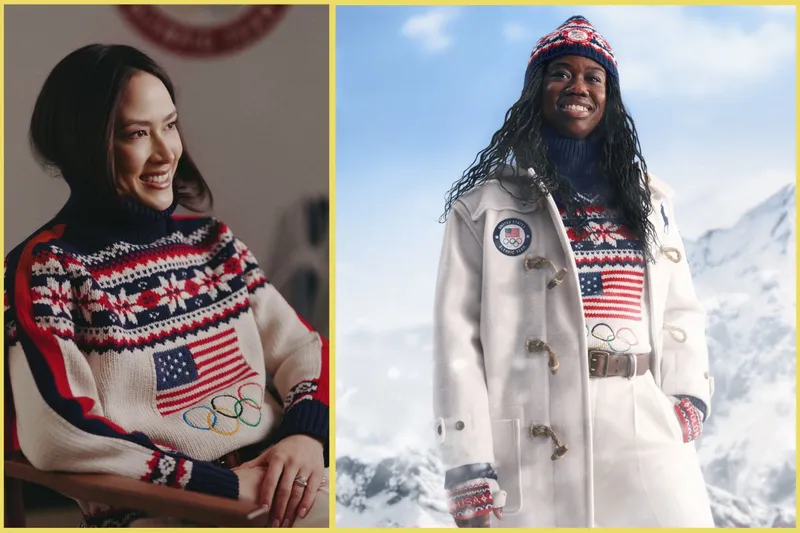
Best sweater: Erin Jackson and Madison Chock, USA
By combining a classic Fair Isle pattern with those unmistakable rings, this really screams “Winter Olympics”. It’s made from 100% wool and is manufactured in the US, along with everything else in these opening ceremony outfits (very patriotic). They’re courtesy of Ralph Lauren, the longtime official outfitter of Team USA and purveyor of Americana. Fancy yourself an Olympian? There’s a retail range for the civilians, though that jumper is sold out, sorry. And if you’re Snoop Dogg – Team USA’s first “honorary coach” – you’ll be kitted out in the official closing ceremony uniform.
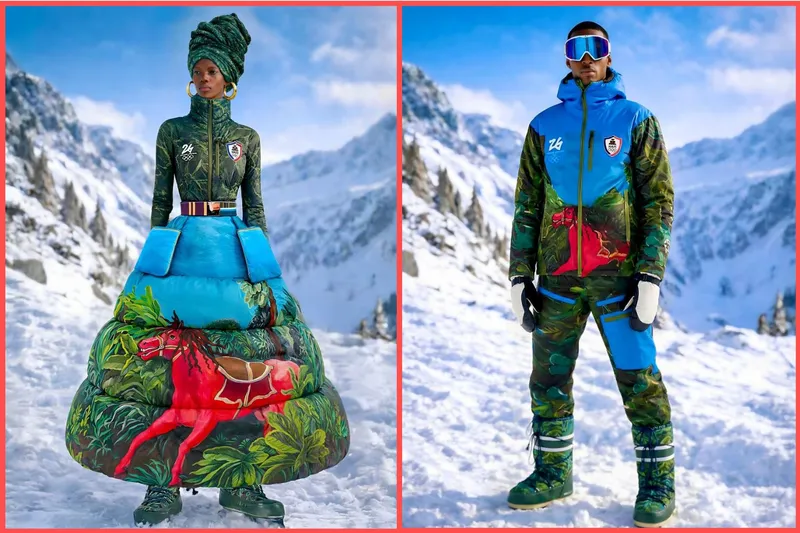
Most impressive hand-painting: Haiti
Haiti’s opening ceremony outfits had more artistic flair than most, well deserving of one of those broken medals, if they gave them out for fashion achievement. They did get a write up in Vogue, which lyrically described the “red horse sweeping across a landscape of lush foliage” that was hand-painted in Italy. Italian-Haitian designer Stella Jean is behind the outfits, which draw from the work of Haitian artist Edouard Duval-Carrié (revolutionary hero Toussaint Louverture was omitted after the IOC deemed him too political).
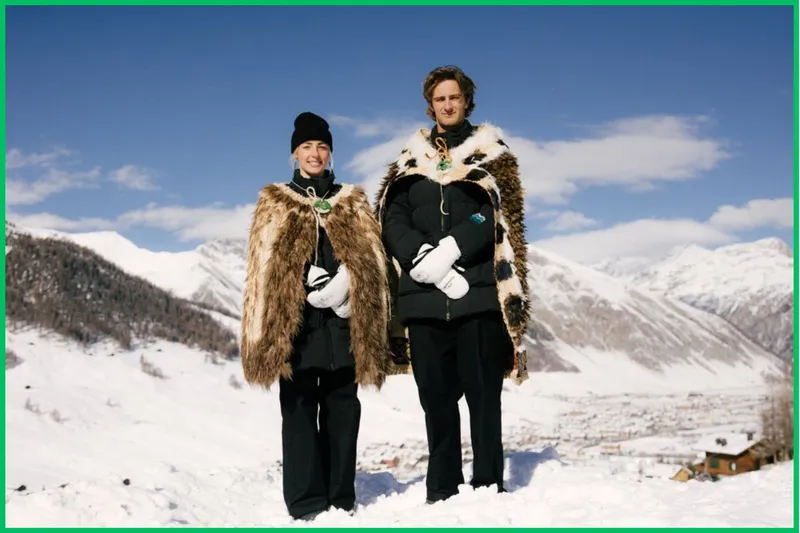
Coolest kākahu: Zoi Sadowski-Synnott and Ben Barclay, New Zealand
It’s an honour to wear a kākahu. NZ Team Chef de Mission Marty Toomey presented kākahu to New Zealand’s ngā pou hāpai, or flag bearers, Zoi Sadowski-Synnott and Ben Barclay. Barclay was cloaked in Aroha Atu Aroha Mai, while Sandowski-Synnott wore Te Hono Ki Matariki. The latter was created by Rānui Ngārimu, alongside 12 master weavers; it took 16 months to make and was blessed by Kiingi Tuheitia in 2024 before its debut at the Paris Olympics.
Emma Gleason
Emma Gleason is a staff writer at The Spinoff and an award-winning fashion journalist. But it’s not just clothes that interest her, you’ll find her exploring tasty cheese, influenza outbreaks and more important things right here. She has experience with some of the country’s leading media outlets as well as the toaster in our kitchen.


