
Record Auckland patronage, a Wellington bounce, and data showing buses are 10 times safer than driving: the case for public transport has rarely been stronger, writes Catherine McGregor in today’s excerpt from The Bulletin.
To receive The Bulletin in full each weekday, sign up here.
March madness runs into the fuel crisis
Auckland’s public transport network notched its busiest day in seven years last Tuesday, with patronage up 7% on the previous week and 7,000 more trips than the previous single-day record, Natasha Gordon and David Williams report for the Herald. The fuel supply crisis is clearly driving the shift: AT’s Stacey van der Putten told the Herald that while the difference in cost between the two modes was negligible a few weeks ago, “the cost of driving 15km in or out of the city is now roughly double the cost of travelling the same distance by public transport.”
The surge lands at peak March madness. As Joel MacManus explains in The Spinoff, March is traditionally Auckland’s most gridlocked month, when universities start and end-of-financial-year business activity surges. Yet MacManus writes that this could be the last year Aucklanders feel the full force of it: when the City Rail Link opens in the second half of 2026, the number of people living within a 30-minute train ride of the city centre will immediately double, relieving pressure on both vehicle routes and other train lines.
A rough few weeks ahead
Rachel Maher reports for the Herald that planned Auckland rail closures – over the school holidays, Easter weekend and Anzac Day weekend – will go ahead despite the fuel crisis. Auckland Transport says deferring them would create bigger problems further down the line, as CRL-connected works, network-wide systems tests and timetable trials would otherwise fall during term time, when patronage is highest. The Public Transport Users Association’ John Reeves called the timing “incredibly unfortunate” but conceded the bind AT is in: “Ideally, we would like to have it pushed back perhaps through to mid June. However, the City Rail Link has to open this year.” His message to first-time train users who encounter a bus replacement: “just bear with it.”
Wellington joins the surge
Wellington has seen a similar, if modest, uplift: RNZ reports that Metlink recorded 3% more people on trains and buses last week than the same time last year. That’s a fillip for a system that has been heading in the wrong direction. Tom Hunt has reported in The Post that bus patronage fell 1.4% in the six months to December – a reversal from September’s “record highs” – while train patronage dropped 6%.
The main problem appears to be fares: a 3.1% fare rise takes effect from May 15, less than a year after a 2.2% increase that also cut the off-peak discount. Another issue, particularly for the capital’s train system, is the rise of working from home. Writing in The Post last week, Hunt found there are now 31,000 fewer Wellingtonians commuting each day than before Covid – what the Greater Wellington Regional Council has called a “permanent structural change”. Rail use has never fully recovered to pre-Covid levels, and the council warns that if the trend continues, some harbour ferry services and duplicate train routes could face an uncertain future.
One more reason to catch the bus
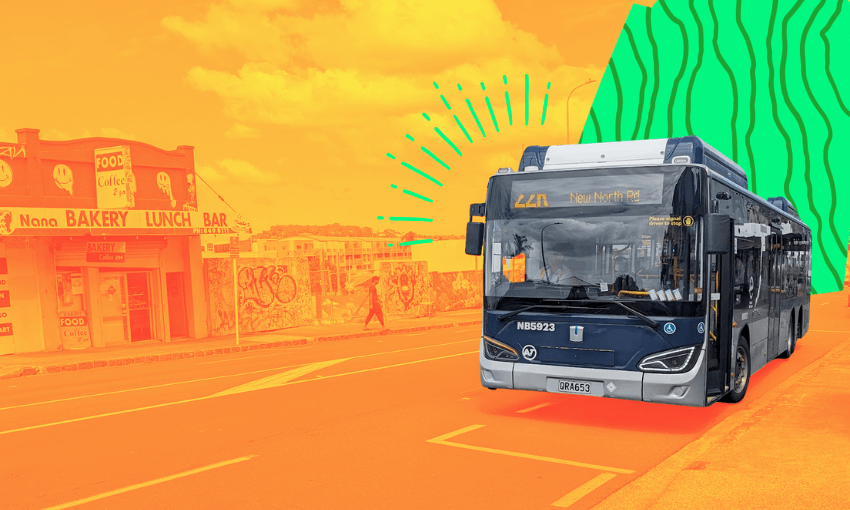
This morning on The Spinoff, Shanti Mathias offers another incentive for those mulling the switch. Drawing on ACC and NZTA data, she reports that bus passengers have the fewest accident claims of any form of road transport in New Zealand, even accounting for how much time people spend on buses. And the difference isn’t minor: according to AT’s Ping Sim: “An hour in a bus has 10 times less accident risk than an hour driving a car.”
The safety margin comes from multiple layers: bus drivers are professionally trained and regularly assessed; buses never skip their WOF; drivers sit higher than most road users, improving visibility of cyclists and pedestrians; and routes predominantly run on slower, sealed urban roads. As the University of Auckland’s Jamie Hosking tells Mathias, the benefits extend outward – cars are “much more dangerous to other [transport users] by far”, meaning every additional bus passenger makes the road fractionally safer for everyone else on it.