Insiders look back on the failed attempt to change New Zealand’s flag, 10 years on

John Key and some of the alternative flag designs (Photo: Getty Images; design Tina Tiller)
In March 2016, after a $20m-plus process, New Zealanders voted for the status quo. Vexillologist Brian Cham talks to those involved in the referendum, including prime minister John Key, about what could’ve been done differently.
Since the 1970s, various official steps have been taken to acknowledge the increasing diversity of Aotearoa: we’ve removed “British” from our passport covers, adopted Māori as an official language and fully ended the “White New Zealand” immigration policy. A step we haven’t quite managed to take, however, is replacing the Union Jack on our national flag. But 10 years ago this month, we came pretty close.
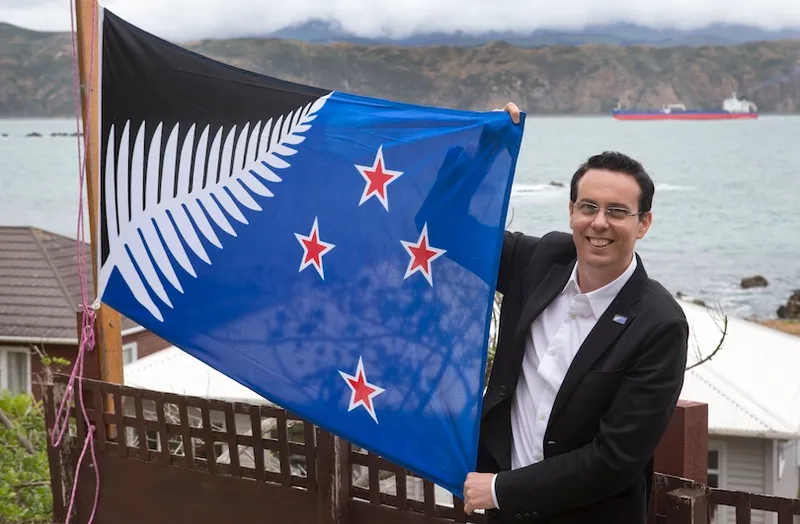
The March 2016 referendum pitted the existing flag against Kyle Lockwood’s black, white and blue silver fern design that voters had chosen from a field of five in an earlier referendum held the previous year (Red Peak was added to that original shortlist after a public outcry at its exclusion). In the final referendum, we narrowly retained our current flag, and ended up with unresolved questions about process, identity and politics that still resound today.
Did we approach the flag question the right way?
If given a time machine to redo his vision, former prime minister John Key says he’d “just change the flag”.
“In hindsight, a referendum was a big mistake because referendums aren’t very effective. They’re always better for a no campaign than a yes campaign. It’s really easy to articulate the things people might hate.”
He’d replicate Canada, South Africa and Minnesota, where elected representatives initiated change to now-iconic and inclusive flag designs. “We convoluted ourselves with too much process, 20-odd million dollars of it. All I had to do was change the act and I could’ve gotten 61 votes [in parliament] to do that. There’d be a lot of moaning from certain people and three months afterwards, everyone would like it.”
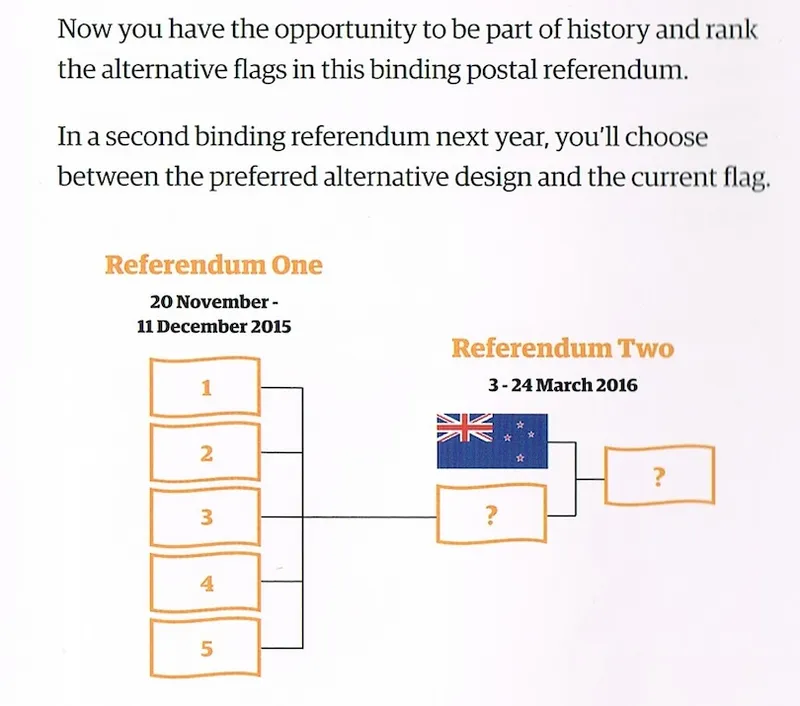
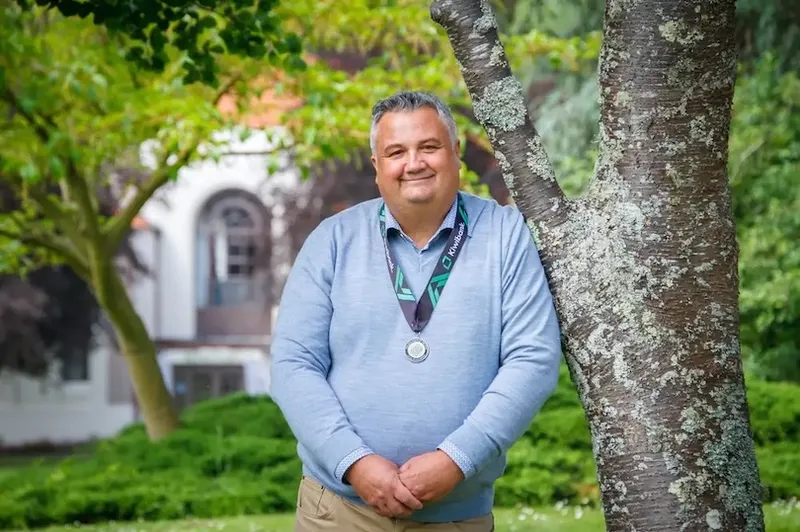
Malcolm Mulholland, who was one of 12 members of the cross-party-appointed Flag Consideration Panel, maintains the process was ideal: the first referendum narrowed down finalist designs to Lockwood’s alternative design, and the second pitted that against the current flag. “I don’t know that we could’ve done it another way.”
He is countered by Ted Kaye, American vexillologist (flag expert) and author of Good Flag, Bad Flag. Around the same time as New Zealand was considering changing its flag, he chaired Fiji’s national flag committee and exchanged thoughts with ours.
“The process was fundamentally flawed,” says Kaye now. “The people involved were just trying to make the best of it. I wish I’d had a chance to advise the government.”
To explain, he displays the final ballot asking whether to adopt Lockwood’s design. “People who don’t want to change vote no. People who want to change but don’t like the alternative design vote no. So, there are two no votes to every yes vote.”
Was the flag alternative chosen the right one to offer?
Even its designer has reservations, pinpointing the colours. “At the time, a lot of people didn’t like the black.” Revisiting the panel’s choice, Mulholland reflects, “It felt like a compromise at the time – a bit of old and new”, as people had come to desire “something more bold and distinct”.
Key now believes we were “overcomplicating” designs. “If you’re going to get everyone to chip in on design, it’s like how a camel is a horse designed by a committee.”
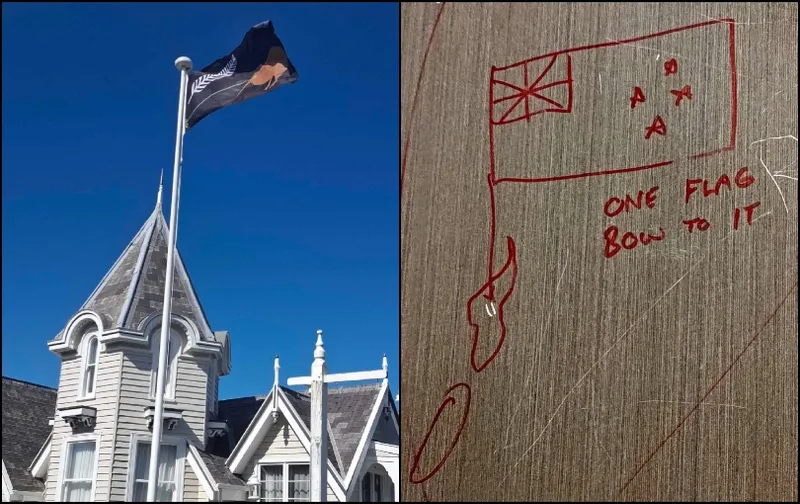
What design should a future campaign pick? Many people spoken to for this story recommend a stylised silver fern on black, emphasising appearances beyond sports: businesses, products, backpackers and Air New Zealand.
Key appeals to universal recognition. “If I hold up a silver fern to 1,000 people, whether they’re New Zealanders or not, what do they say? ‘New Zealand’. It’s simple, like the maple leaf.” Mulholland appeals to history: “When you look at symbolism in the [world wars], it tended to be the silver fern or kiwi, not so much the New Zealand flag.”
Lockwood also identifies a resurgence of Māori imagery. But for anyone considering the tino rangatiratanga flag, its last living co-designer Linda Munn remains strongly opposed to adopting it as the national flag. “We’ve sold off enough of our culture,” Munn says. “It will always stay in the hands of Māori.” Recalling a government offer to include it in the referendum, she says now that she flatly refused, responding, “Why don’t you design your own flag?”
Design and process aside, some recognise a wider issue: partisan politics.
Was the referendum even about flags, or Key himself?
Key laments that “referendums become politicised. Labour and the Greens had a policy to change the flag. I just took them at face value. Then they got all their people to vote against it.
“A lot of people said it’s a legacy project for me. I never saw it as that. If I wanted a legacy project, I would’ve built some big building.”
Mulholland, who consulted the public nationwide, agrees that people “looked at their decision along party political lines” and many voted against change “to get back at [Key]”.
Accusations of personal bias were amplified when two variants of Lockwood’s design were selected as finalists after Key publicly endorsed it. Lockwood comments, “It confuses me to this day. They could’ve just chosen one.”
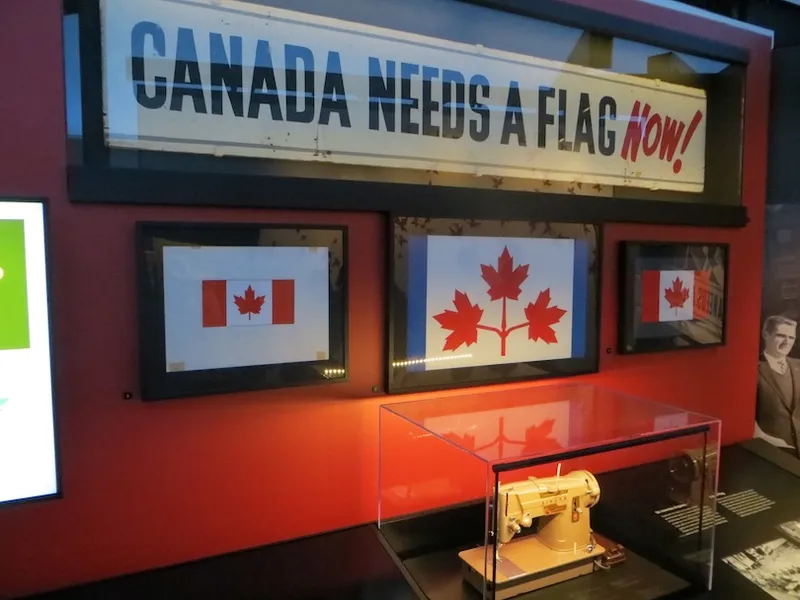
The perils of design endorsement are affirmed by former Canadian PM Stephen Harper, who shared his first-hand experience of Canada’s national flag change in the 1960s with Key during our effort. Comparing both countries for lessons again, he reckons that Canada’s Pearson Pennant flag proposal wasn’t adopted “because it was the choice of the prime minister. If people think the leader is trying to impose his own flag, that will be the one not picked, and I think that’s part of what happened in New Zealand.”
What flag really won the referendum?
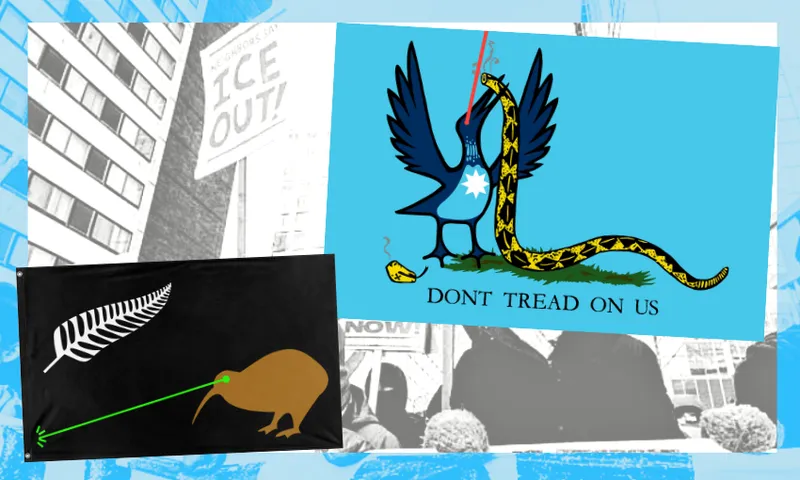
The most remembered design wasn’t even an official contender – the famous “laser kiwi” gag. “Some of us jokingly said, ‘let’s just include it’, Mulholland reveals. “But knowing the public, it could’ve become the design people voted on to have a laugh or make a mockery of the process. Can you imagine that? Luxon shaking the hand of Albanese, and behind is bloody laser kiwi! Fantastic!”
It has now ripened beyond an inside joke to reach international saturation. Imitations abound – most recently, as The Spinoff reported last month, a laser-eyed loon submitted to Minnesota’s 2024 redesign of its problematic state flag.
Luis Fitch, chair of Minnesota’s flag commission, recalls a “big smile” on first seeing the laser loon and thanks us for our influence. “I didn’t know the full backstory at first, but I soon learned about New Zealand’s laser kiwi flag and realised we were seeing a kind of ‘second-generation’ meme design. Even though it was never a serious contender as an official flag, it played an important role.” The laser loon now adorns public library cards and anti-Ice protest flags.
Does the flag question remain relevant?
Insiders judged 2016’s result (44% for change) narrower than expected. Key reflects, “There was real desire to change. Even the Queen was sympathetic.”
They agree it’s even more relevant now, citing our burgeoning global profile, social divisions and multiculturalism.
Research shows colonial ideologies have gradually declined, and Wikipedia’s referendum article attracts more than 200 daily hits. Lockwood remains surprised at continued interest. “I thought it would all die down a couple of weeks after the result. I’m still selling [flags] a decade later.” He hopes a future flag “truly resonates with and represents all New Zealanders”, even if it’s not his.
Some suggest waiting for other constitutional changes to revisit the flag. Key is more decisive: “My advice – just do it. Without a referendum, it could be done tomorrow.”
Mulholland says his panel functioned well, but a future one should appoint members from design and vexillology backgrounds. Channelling international experience, American vexillologist Kaye also stresses expertise: “A public vote on flags is like voting on how much steel you should put in a bridge. When it comes to designing it, that should be left to the experts.” He praises George Stanley and Jacques Saint-Cyr, the specialists behind Canada’s iconic design.
Key encourages a future interested PM to recognise “in the modern world, we can all identify what takes us apart. Our population, our ethnicity, it’s all changing. The flag is used as a rallying tool for building that sense of what brings people together. It has real consequences. Achieving a greater binding together is greater than any kind of monetary thing.”
He adds reassurances: “There are a million things that prime ministers decide and they don’t get unpicked. The negativity drops away, then people like the status quo. Can people even name what the old Canadian flag looked like?”
A decade on, the flag question feels deferred, not settled – waiting for when society is ready to draw on past lessons and decide our identity once more.

Brian Cham
Brian Cham (briancham1994.com) is an Auckland-based vexillologist who has served as expert flag design consultant for the state flags of Utah, Minnesota, Maine, Illinois and Massachusetts. He has spoken internationally about flag design and the flags of his homeland.


