Veteran researcher Richard Benton retraces the journey of te reo Māori – from playground whispers in the 1960s to today’s fragile revival – and warns that history could yet repeat itself.
I started my research career in 1963, not long after then secretary of Māori affairs Jack Hunn had asserted it was entirely up to Māori individuals whether they wanted to preserve their language or other “relics” of their “ancient life”. Hunn also noted as a matter of course that “each Māori who can no longer speak the language… or take his place on the marae, makes it just so much harder for these remnants of Māori culture to be perpetuated”.
This was the natural order of things, and what was important was that Māori children should become more proficient in English. I was awarded a fellowship by the Māori Education Foundation to investigate the English language difficulties of Māori children, and suggest remedial action. I visited every Māori School in the North Island and talked with children, teachers, parents and community members. However, I was personally much more interested in finding out where Māori was still widely spoken, and carried out my own informal research programme in parallel.
I discovered that there were a lot more Māori-speaking children than teachers realised: Māori often was a hidden language, with knowledge of it revealed only in explicitly Māori contexts. Nevertheless, it was clear that as a language of the whole household, Māori had been replaced by English in many places – although it was still widely spoken or understood by adults. In parts of the East Coast, Bay of Plenty and Northland, the vitality of the language was still sufficiently obvious for me to recommend that bilingual education – where Māori as well as English would be used for teaching the various subjects in the curriculum – be implemented following Canadian and Swiss Romansh models.
Meanwhile, the educational establishment continued to stress the overriding importance of English, with early childhood specialists employed by the Māori Education Foundation trying to persuade mothers who still spoke Māori to their children, to speak English instead. At the same time, innovative teachers (such as Hirini Moko Mead) were teaching Māori as a step towards language revival and Māori activist and student organisations were becoming increasingly concerned about the prospect of the loss of the language. This came to a head in 1972, when Ngā Tamatoa, Te Reo Māori Society of Victoria University, and the New Zealand Māori Students Association organised and presented a petition signed by over 30,000 people to parliament, pressing for the teaching of Māori language and culture in all schools and the recognition and revitalisation of the language.
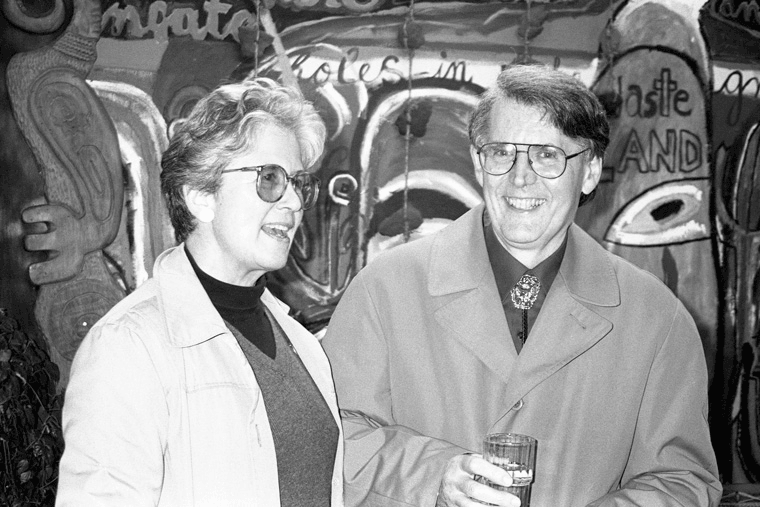
In the same year, the New Zealand Council for Educational Research had begun planning a sociolinguistic survey of language use in Māori households and communities, to gather concrete data on where, how and by whom the language was understood and used. This went hand-in-hand with advocacy for bilingual education as an adjunct for language maintenance and revival, and the recognition of Māori as an official language of New Zealand. The survey involved 6,470 households, home to 33,338 individuals. Data was collected on the Māori and English language use of these individuals between each other and in a variety of social interactions in six domains of use: home and family, work, school, neighbourhood, religion and the marae, along with general language preference in reading and writing.
The findings provided a graphic illustration of the rapidity of language loss. Under UNESCO criteria, a language can be regarded as endangered in a community where everyone can speak the dominant language, if only one family adopts that in place of the local one. Therefore, even solidly Māori-speaking communities were susceptible to a process which saw families relocated and scattered as part of the government’s assimilationist “pepper potting” policy.
When I taught in Te Kao in 1961, Māori was the dominant language in the community and the only one I would hear in the school playground. When I visited Ruatāhuna School in 1963, the only way one could communicate with five- or six-year-olds was to speak Māori. By the time of our survey, just a decade later – to my astonishment and disbelief – the situation had changed radically. In both communities, many of the younger children had English as their stronger or only language. The change had come from an influx of English-speaking families as the result of mill closures in Ruatāhuna and Māori Affairs land settlement schemes in Te Kao. Where newcomers had previously adopted the local language, the local children instead adapted to the newcomers, and family language policy often changed also as a result.
Similar changes had taken place in other formerly solidly Māori-speaking communities, and by the 1970s – although Māori was still widely understood and spoken by adults in these areas – there were only a handful of localities where Māori was the language of most households. Elsewhere, it was the language of the marae, ceremonial activities, and kaumātua – with a few families struggling to maintain the language but most reverting generally to English.
The situation was, however, far from hopeless. Many households, even in the most Anglicised urban areas, had at least one Māori-speaker among their members. Our survey had also been a consciousness-raising exercise as well as a data gathering one, with a flow-on effect from both aspects. The Department of Education used our report on Rūātoki – one of the few remaining solidly Māori-speaking communities – to justify the establishment of bilingual school there, and the kōhanga reo movement was also established partly in response to our demonstration of the urgency of the situation. Other movements like Te Ataarangi and kura kaupapa Māori flowed from this.
Extrapolating from our data, I estimated that in the mid-1970s there were about 64,000 fluent speakers of Māori (almost all of Māori ancestry) and probably another 30,000 who could understand Māori well. By 2011, about 15,000 of these people would still be alive and living in New Zealand. The future of the language therefore depended on kōhanga reo and Māori-medium schools working with families to maintain and expand the Māori speech community, along with agencies like the Māori Language Commission (established in 1987), Māori radio, television and publishers providing support, plus substantial growth in employment opportunities for Māori-speakers.
If all went well, there would be 83,000 fluent and potentially fluent speakers by 2011, steadily increasing and becoming predominantly youthful, with hundreds of thousands of people, both Māori and non-Māori, knowing at least a little of the language through the various other Māori language programmes on offer. With time, these numbers would likely increase exponentially. Much depended on continued institutional support and the attitude of the wider community.
These predictions have been fairly closely reflected in reality. However, there are still no grounds for complacency about the future of the language – no language spoken by less than 8% of the population is secure, especially when most of the population also speaks another language by default.
The current resurgence of colonialist ideology: sidelining the importance of the Treaty of Waitangi, declaring that New Zealand is an English-speaking country (with the implication that it should not also be a Māori-speaking country), giving the name Aotearoa a lower status than New Zealand, and attempting to marginalise tikanga Māori in the public sphere, all bode ill for the future of the language and could undermine the progress made over the last six decades. Rewi Maniapoto’s words apply today to those who want the Māori language to take its rightful place in New Zealand life, rather than return to the wasteland of the 1960s: Me whawhai tonu mātou. Ake! Ake!