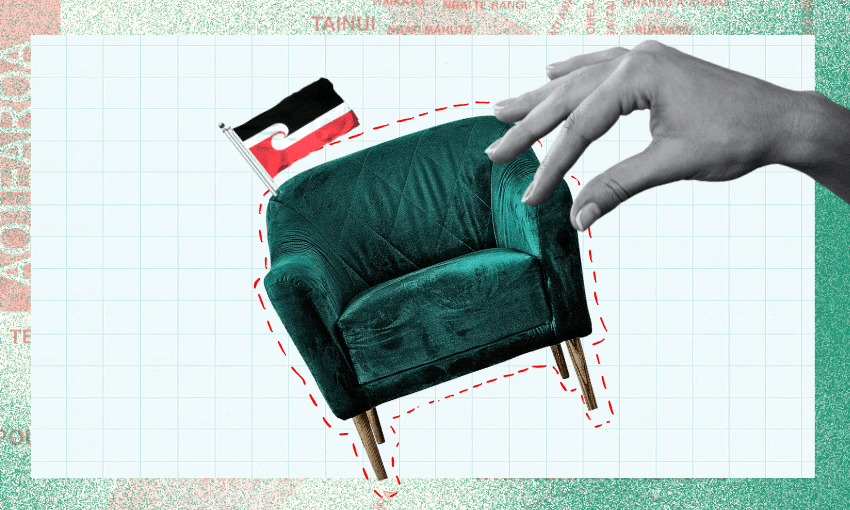



The Greens want to entrench them, NZ First wants to scrap them. Here’s how the Māori electorates work – and why their future may hinge on coalition negotiations.
For 159 years, Māori have had guaranteed seats in parliament. Now, once again, they’re causing disagreement. It’s not the first time. The seats, there to specifically represent Māori, have been contentious since they were introduced in 1867. Green Party MP Hūhana Lyndon has introduced a members’ bill seeking to entrench the seats into law. A similar bill was last introduced in 2019 by former Labour MP Rino Tirikatene. New Zealand First – who voted for that bill in its first reading and once held five Māori electorates – is campaigning for a referendum on the seats, seeking to abolish them.
Here’s the background and what could happen in the future.
What are the Māori seats?
The Māori seats are electorates that were established specifically for the representation of Māori in parliament. Until they were introduced in 1867, communal land ownership excluded Māori from voting, as people had to hold land in individual title in order to vote. The seats were created as a workaround. These electorates are separate from the general electorates. Currently, there are seven Māori seats across the country.
How do they work?
While anyone can stand as a candidate for a Māori electorate, only those on the Māori roll are eligible to vote in the Māori electorates. Just like those on the general roll, voters in Māori electorates get one party vote and one electorate vote. People of Māori descent can choose whether to be on the Māori or general roll.
The number of Māori electorates is relative to the number of people on the Māori roll. The more people on the Māori roll, the more Māori electorates there are. Approximately half of all eligible Māori voters are currently on the Māori roll. If every eligible Māori voter chose the Māori roll, the number of Māori electorates would roughly double – to around 13 or 14 seats.
Why do some people want to get rid of them?
Since their inception, opponents have criticised the Māori seats as undemocratic.
Words like “racist” or “separatist” often get thrown around by right-leaning politicians and citizens.
The seats were initially established to ensure fair representation for Māori in a parliament operating under rules and regulations that favoured non-Māori. However, their existence was only ever meant to be temporary. The seats were expected to last only five years until Māori met the property qualifications for the general roll.
There are currently 33 MPs of Māori descent in parliament – the highest number in history. They make up about a third of all MPs, nearly twice the proportion Māori represent within New Zealand’s overall population. Critics argue this is proof there is no longer a need for separate Māori seats.
They also say Māori can win a seat in parliament just like any other New Zealand citizen. This criticism has strengthened under MMP, which people say effectively guarantees Māori fair representation in our House of Representatives.
Some argue that because many Māori choose the general roll, the separate seats do not represent the majority of the Māori population. However, proponents of the seats say this is because Māori are placed on the general roll by default, something which some have campaigned to change.
Why do others want to keep them?
Supporters argue that Māori were guaranteed equal partnership under te Tiriti o Waitangi, which equates to guaranteed representation in parliament, if not equivalent representation. Those in favour of the seats say there is an ongoing need for them to ensure Māori are adequately represented in parliament.
Despite having the highest number of MPs with Māori descent in our nation’s history, advocates argue it does not necessarily translate to proper representation of the Māori population. The argument is that the need for the seats remains due to differences in political alignment, the nature of representation, and ideological disagreements over how Māori should be represented.
Proponents say having dedicated Māori voices at the table leads to better, more inclusive, and better-informed decisions that benefit the entire community, not just Māori. The seats help correct historical under-representation of Māori in governance, a legacy of colonisation, and ensure that MPs are directly accountable to a Māori constituency, ensuring issues like systemic inequality are addressed. They also allow for the representation of unique Māori worldviews and perspectives.
Why does the issue come up at every election?
The Māori seats can be polarising. Taking a stance can be seen as a way to win over undecided voters, who feel strongly, or even convince people who would otherwise not vote to support a party for their stance on a single issue.
There has been an increase in populism around the world and New Zealand is not exempt from this trend. Led by Winston Peters, New Zealand First has been the dominant populist party in Aotearoa for decades.
In recent years, Act has also criticised policy promoting equitable outcomes for Māori. Act says race-based policies are divisive and favours one set of rules for everyone.What would happen if there was a referendum on the seats?
Political parties opposed to the seats have long wanted a binding referendum to determine their future. NZ First says it wants a referendum because the seats are no longer relevant or serve the original purpose.
Māori make up less than 20% of the population, meaning the outcome would largely depend on non-Māori voters. If even a modest majority of that group opposed guaranteed representation the seats could be rejected regardless of strong Māori support. Referendums tend to favour simple arguments over more complex historical and constitutional explanations.
Turnout dynamics, political mood and framing (the seats are often framed as conflicting with “one person, one vote”) would also matter. If older or more conservative voters turned out in higher numbers than younger, more liberal voters – as is the historical trend – or if the vote became a proxy for broader debates about Treaty obligations or co-governance, opposition to the seats could consolidate further and decide the outcome.
Asking a national majority to decide on a minority’s dedicated representation creates conditions where that minority is unlikely to control the outcome.

What would happen if the seats were entrenched?
The Green Party wants to entrench the Māori seats. The party says the general seats are entrenched and it’s constitutionally unbalanced that the Māori seats are not. Entrenching means the Greens want to ensure it’s very hard to get rid of the seats. To do this, a 75% majority (normal laws only require 50%) would need to vote in parliament to pass a law to entrench the seats, and it would mean only another super majority vote later could change or abolish the law.
This process is designed to protect specific electoral provisions deemed highly significant to the country’s democracy and makes it difficult for advocates to get entrenchment across the line, as broad cross-party support on such a polarising issue is highly unlikely. Of course, it also makes it just as hard to undo.
So, what’s likely to happen to the seats?
What the future holds for these seats will depend on the policy priorities of parties after November’s election as they negotiate to form a coalition. If New Zealand First or Act are in a position to be negotiating to form a government and they make the issue a bottom line in their negotiations, then there is a strong likelihood a binding referendum will take place or the seats, or they could be abolished through legislation.
If the Green Party makes it into government, it could try to get the seats entrenched, but it would be difficult. They’d need to do more than negotiate support with coalition partners, but secure a 75% in favour vote for the entrenchment.