Culture wars or mission creep? Free Speech Union goes after NZ regulators

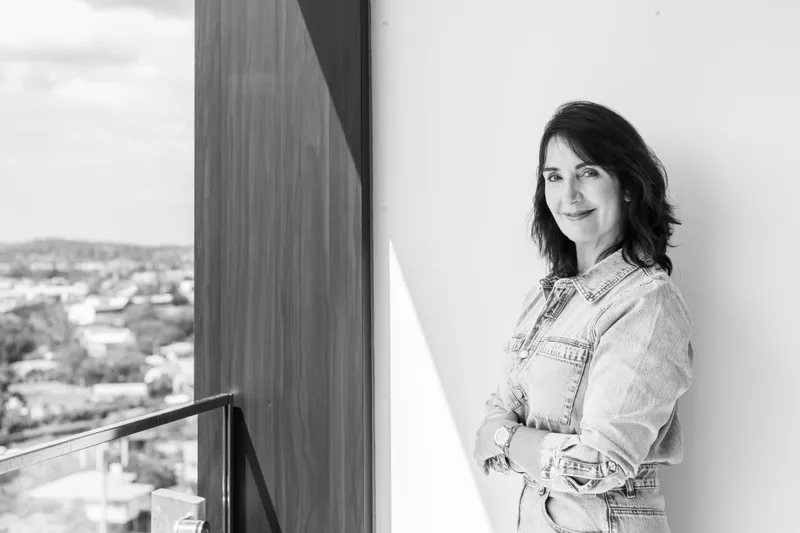
Free Speech Union chief executive officer Jillaine Heather. (Photo: Supplied).
The Free Speech Union is worried people are being told what to think and say, and has zeroed in on the medical council, architects board and nurses council.
Is it about free speech or is it a culture war? Is it about being culturally appropriate or telling people how to think and feel? As with most stoushes, it depends who you talk to, and it’s no different with the Free Speech Union (FSU) and its recent crusade against regulatory bodies in Aotearoa.
The group – established in 2021 out of the Free Speech Coalition – has become a significant force in the country’s civic engagement sphere, advocating for the protection of speech rights across media, academia and politics. Recently it’s zeroed in on regulatory bodies, including the New Zealand Registered Architects Board (NZRAB), The New Zealand Medical Council, the Nursing Council of New Zealand and the Veterinary Council of New Zealand.
Why? There are plenty of clues in the media release the FSU put out in August 2025, about the architects board, a regulatory body that licenses and regulates architects in Aotearoa. “When registration hinges not on technical skills but on social, cultural or ideological attitudes, compulsory regulation becomes a tool for policing speech, mandating approaches, and limiting discussion, whether intentionally or not,” it read.
It was released in response to work the architects board is carrying out on how to engage with te ao Māori and mātauranga Māori. It includes things like understanding legislative obligations under te Tiriti o Waitangi.
The FSU had got in touch early in the process as the architects board proposed these changes to professional competencies for architects in Aotearoa, says Judith Taylor, the CEO of the board. “They came to us to say, ‘Look, we’ve got concerns about this. As a regulator, why do you think you have the authority to require this knowledge?’”
The architects board has a licence to use the same registration process as the Architects Accreditation Council of Australia, including its education process. In 2021, the Australian council updated its national competency standard to include “a greater focus on more meaningful engagement with our First Nations peoples”. This centred around architects in Australia being able to demonstrate an understanding of indigenous knowledge and sustainability knowledge.
“They described First Nations as Aboriginal and Torres Strait Islanders – makes perfect sense, in Australia. It’s less relevant when you’re practising architecture in New Zealand,” Taylor says. So, the architects board decided to produce a schedule to be added to the Australian-based agreement that replaces mentions of First Nations in the performance criteria with Māori. Effectively, Taylor says, the changes meant architects practising in New Zealand would be empowered to know when certain cultural considerations would likely be appropriate and what that process would entail, for example consulting with mana whenua when designing a public library.
Taylor says the changes are not burdensome and there’s no suggestion architects will not be registered because of political beliefs. “If I’m doing an alteration to my kitchen, that doesn’t mean that I have to be fluent in te reo or know how to engage with iwi,” Taylor says.
Still, before the architects board could begin public consultation, the FSU was knocking on its door.
“Their concern was that these documents would be prescriptive and say that if you become registered as an architect in New Zealand, you must have this knowledge or behave in a particular way,” Taylor says.
Taylor met with two FSU representatives and tried to explain the reasons for the changes. The FSU challenged her to “just focus on physical safety,” she says. Taylor then explained that public protection is the main focus of the board’s work, but that it also has a duty to ensure architects in New Zealand have a range of competencies, including cultural competence and safety.
“It felt as though they had formed the view that the NZRAB, in some way, was going to dictate to architects how they must deliver their services,” Taylor says. “It’s not our role. We’re not about dictating views.”
According to Taylor, when the conversation ended and everyone was leaving the meeting room, the FSU representative indicated they understood the position of the architect’s board but that “wasn’t going to stop them from giving us an arm wrestle”.
“They were trying to create a fuss where one needn’t be, but that’s their job on the planet. Good luck to them,” says Taylor.
The FSU is going bigger than just the architects board. The New Zealand Medical Council wanted those in its sector to acknowledge the impacts of colonisation on Māori health outcomes. The Nursing Council of New Zealand wanted to ensure people weren’t sharing hurtful information online. And the Veterinary Council of New Zealand took action after a suppression order was breached. All were targeted by the FSU.
In a submission to the Medical Council, the FSU said the council is forcing doctors to believe “contested sociological and political narratives, drawn from Critical Social Theory, postcolonial theory, and indigenous rights frameworks”.
Why is the union taking such an interest in regulatory bodies? CEO Jillaine Heather says “it’s because it impacts on people’s livelihoods”.
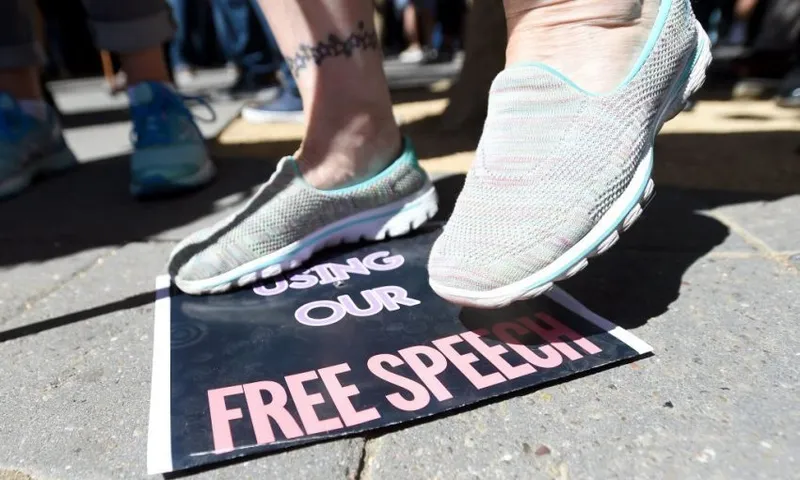
The crux of the issues is the regulatory bodies are going beyond their legislative remits, she says. “There has been mission creep into what people must think, believe, and say – or what people can’t say in their own private life, which I don’t think is a healthy or a sustainable model for a flourishing community.”
Heather says the FSU’s members are worried. She can’t say exactly how many members it has (although at one point it had about 1,000), but there is a significant subscriber base and a large number of supporters.
It’s not only the FSU’s members who are worried either, Heather says. “We do get quite a bit of contact from the public and from people, employees etc, that feel as if their expression rights have been curtailed, or their livelihoods put on the line.” She was unable to offer any specific examples saying she would “need to refer to the details”.
Heather acknowledges the “important jobs” regulatory bodies do, but she says the FSU will continue to pressure them to ensure “they focus on regulating the profession and the standards and safety standards that they’re meant to focus on”.
Back at the architect’s board, Taylor is amused: “I think it’s hilarious that they would like to tell us what to do.”

Liam Rātana
Liam Rātana (Ngāti Wairupe/Ngāti Kurī) is editor of The Spinoff's Ātea section. He is passionate about indigenous and minority issues. Liam enjoys cooking, poetry, photography, and exploring the outdoors.


