

Book recommendations for the spooky season and beyond.
In the 2015 film The VVitch, a black goat asks a young woman, “Wouldst thou like to live deliciously?” And the answer is – who wouldn’t? Living deliciously surely means to live fully, to savour each morsel life dishes up. I also take it to mean choosing simple pleasures and creating one’s own path. If that definition makes me a witch, then pass me the broomstick.
Jokes aside, while I don’t identify as a witch, I have had a few strange interactions with people requesting spells. And one time the manager of my local Salvation Army store did the sign of the cross as I approached her. When I told my coven (I mean book club) about it they cackled (I mean they laughed a lot).
I have always been drawn to stories of powerful women, those on the outskirts of society. This Halloween season I don’t have any magic to make our broken society better: I wish I did. But what I do have are handbooks, in the form of novels mostly, filled with stories of women that choose enriching, delicious lives.
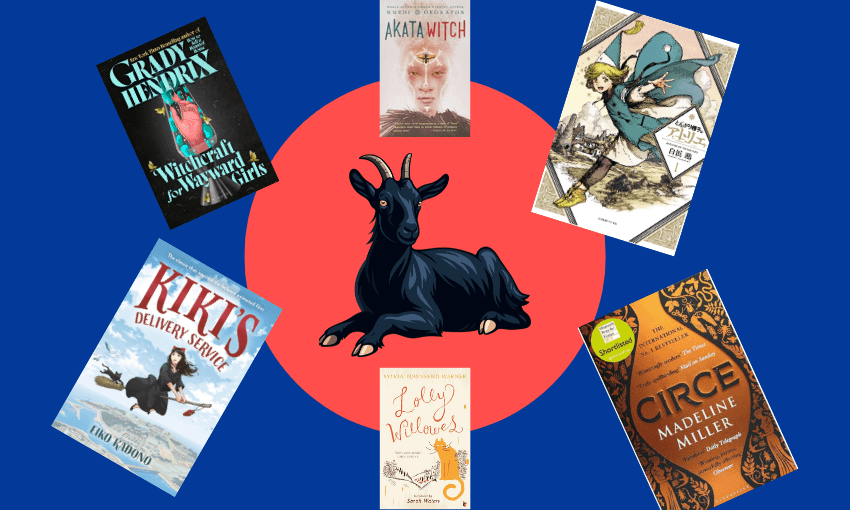
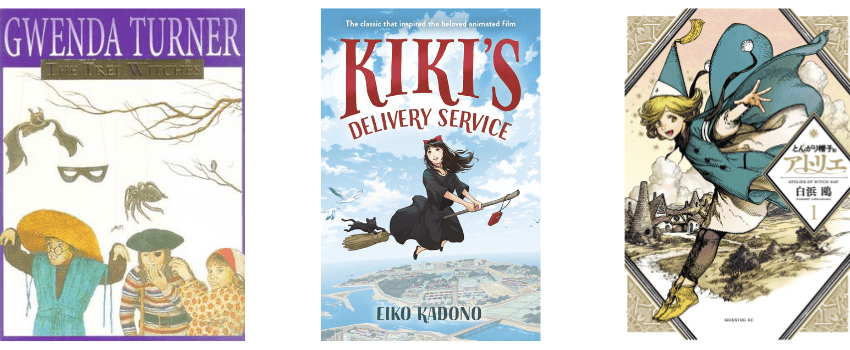
The Tree Witches by Gwenda Turner
We have many wonderful witches in New Zealand children’s literature. One story that I think is worth hunting out in particular is The Tree Witches. Turner is known for her hyper realistic 90s children’s books about everyday life in which kids wear polar fleece and have fun. This simple picture book captures the joy of childhood, the power in make believe, the freedom of the backyard, the spells of wordplay and the delight of a new friend.
Kiki’s Delivery Service by Eiko Kadono
I was familiar with Kiki’s Delivery Service because of the Studio Ghibli film. In the book, Kiki leaves home and becomes an independent witch. This short novel explores themes of self discovery, community, perseverance and independence. This would make a magical read-aloud story or beginner’s chapter book.
Witch Hat Atelier by Kamome Shirahama
A lot of the kids I know are really into manga. If you’re in the same boat and want a good manga series to offer them, I would suggest the Witch Hat Atelier books by Kamome Shirahama. The magic in these books is beautiful and original: the witches use sigils (a type of symbol) to form spells. Shirahama is a masterful artist and shows the importance of nurturing your own talents and that spell casting is simply creativity.
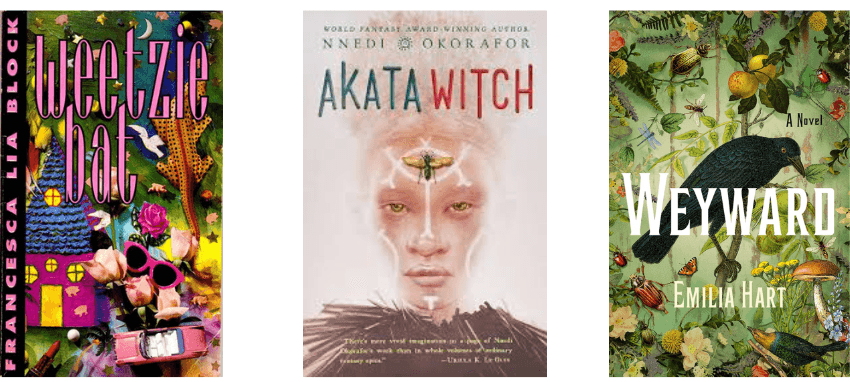
The Weetzie Bat books by Francesca Lia Block
Witches are huge for teens. When I was a teen it was The Craft, Sabrina, Charmed – whimsigoth and feminism were amalgamating into something great in the 90s. But the elusive and strange books I really fell in love with at that age were the Weetzie Bat stories. They are a series of novellas about unconventional families in LA in the 1980s. They are punks and artists with a heavy touch of magic realism. They are bubblegum-pink mixed with Lana-Del-Ray-yearning. The books explore dark themes of drug use, suicide, homophobia and racism but also show young adults choosing to be true to themselves and the power of found family. Adults beware though, these books are for teens: they are pretentious and poetic and angsty and whimsical and so OTT – 14-year-old me loved them.
Akata Witch by Nnedi Okorafor
Many witch books centre young white witches following the European folkloric tropes of witchcraft. A wonderful alternative is Akata Witch. Sunny lives in Nigeria and during puberty she is awakened to the magic in her life and must grapple with her newfound powers. This is sense-heavy writing and the magic in this novel is earthy and dangerous: the goodies are not entirely good and the baddies are new levels of sick and dark.
Weyward by Emilia Hart
An adaptation of Weyward would have made for perfect Montana Sunday Theatre viewing back in the day. It is melodramatic and a bit unoriginal but also compelling and touching. I would have loved this novel in my early 20s. It centres three women from the same ancestral line in the 1600s, 1940s and present day. Each woman is coming of age and finding out about her powers as a witch. Each woman faces abuse at the hands of men and some of the violence is hard reading: the tone is more social commentary than fantasy. There are beautiful passages about our connections to nature and the ways a loved home and garden can become a sanctuary.
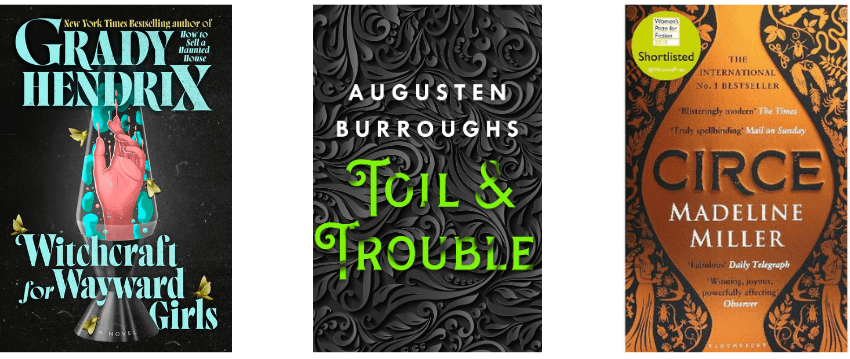
Witchcraft for Wayward Girls by Grady Hendrix
Witchcraft for Wayward Girls is a proper horror novel. The protagonists are young unwed mothers in the 1970s who are sent away to birth their babies in shame. This novel is pulpy but it is also very well researched and sincerely scary. The witches in this novel are not sweet women in gingerbread houses, they are proper feral forces and some scenes kept me up at night. The most interesting thing about this novel is that even with strong forces of supernatural danger, the nastiest characters were entirely human and real.
Toil and Trouble by Augusten Burroughs
Augusten Burroughs is an American memoirist, often similar in tone to David Sedaris. In his fascinating 2019 memoir Toil and Trouble, he explores his tumultuous relationship with his mother and his realisation that a strong spiritual power akin to witchcraft is what he draws upon to protect and create. With a good dose of cynicism and humour, Burroughs recounts bizarre occurrences in his unconventional life and how creating a home with his husband and dogs healed him and restored his faith in love.
Circe by Madeline Miller
Circe is a novel based on the Greek myth. Miller has turned ancient ideas into a lush and easy-to-read novel. It is a balm for the mind to spend time on an island with a character happy in her own skin – no phones, no boss, don’t proceed to checkout, cancel the parent teacher meeting, you don’t have to change the head of the electric toothbrush. Although the story tackles intense themes it’s also just a lovely novel about a woman finding out about herself, her family, her loves and her legacy. She happens to be a goddess, a witch and an exile so it’s interesting stuff, too.
Lolly Willowes by Sylvia Townsend Warner
This is one for those who are trudging down the path of life and looking longingly for a crossroads. Lolly Willowes is a novel for the many middle-aged women that are invisible, who feel pitied and unappreciated. Set in the 1930s, Laura Willowes leaves her life: she abandons her family and moves to a strange wee village in the English countryside. Once there, she finally begins to know herself, connect with nature, connect with her body and connect with her quiet small powers as a witch. This is for those who stare longingly at the moon through double-glazed suburban windows.