A view from the junction of media and politics

Mike Munro, former journalist, press secretary, chief of staff and government relations guy. Image: Supplied.
Made possible by


Mike Munro’s parliamentary career spans gallery journalist in the time of Muldoon and Lange, spin doctor to Helen Clark and chief of staff for Jacinda Ardern.
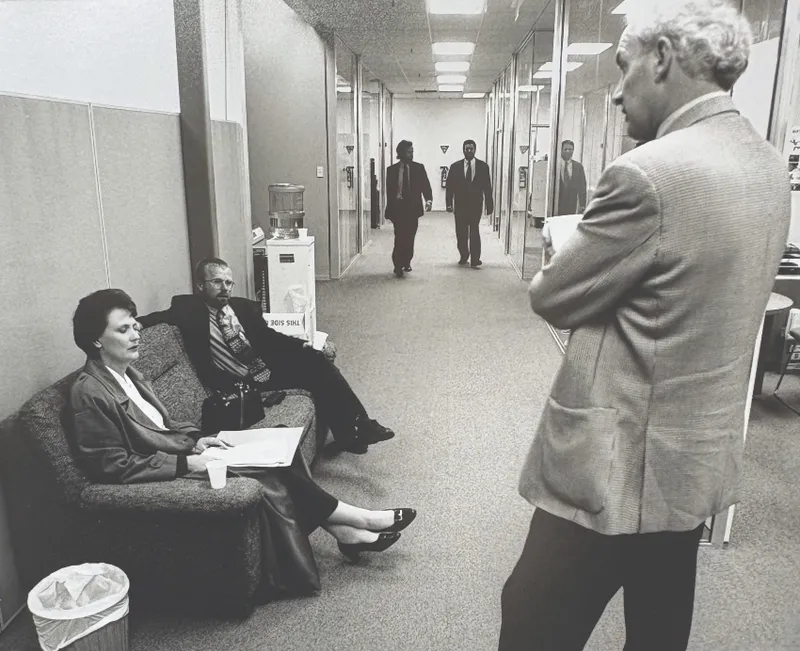
Mike Munro landed in the New Zealand parliamentary press gallery in 1984, as the tide was going out on the remarkable reign of Robert Muldoon. The inhabitants of his new workplace would regale him with stories about stories, and how they’d been won. In Ringside: A Political Memoir, Munro relays a yarn about a New Zealand Herald reporter in the 70s who, upon hearing an “animated conversation” in the hall above the press gallery, hauled himself up via a coat-stand into the cavity between the floors. The recorded conversation between a cabinet minister and a senior Treasury official – about plans to build a coolstore in Bahrain for exported meat – ended up on the front page of the next day’s paper.
All of which, I suggested to him on a new episode of At Large with Toby Manhire, made the latest skirmish between the media and house authorities, in which Speaker Gerry Brownlee has reportedly considered issuing a suspension over an unremarkable Stuff photograph, seem at once tame and draconian.
The ceiling surfing, said Munro, was really a “once in a lifetime” burst of high-wire journalism. “There’s always been petty rules around parliament about where the media can film and not film. That’s been around forever.” So had a succession of speakers set upon “imposing his or her authority”.
What had changed more markedly, he said, was the direct accessibility of senior MPs. “In the mid-80s, you could walk into the Beehive very easily, and you could walk into a minister’s office … If there was no front-of-office staff there, you just went and knocked on the minister’s door, and hopefully they’d open it.”
Another change in the politics-media interface took place during Munro’s time in the gallery. “When I joined, you had press secretaries who were seconded from government departments. They came from a wing of Internal Affairs called the Tourists and Publicity Department. These public servants were very efficient, helpful, capable people, but absolutely non-political … That was followed by the age of more political communications in the Beehive. That era came with Lange and Douglas and co. So that was quite a big change, just not in the way politics was communicated, but for journalists, dealing all of a sudden with spin … Things came with a wee bit of a tweak on it.”
Clark and Ardern’s contrasting approach to media
In his second life within the halls of power, Munro took up a job as Helen Clark’s chief press secretary. Clark was already an experienced politician, but among many “had a reputation as being a bit standoffish, a bit cool, and not always comfortable in front of the media”.
One of Munro’s initiatives was to invite gallery journalists to dinners with Clark at his place in Kelburn. “I just thought that Helen would benefit from that, and so would the media, in getting to know each other … We ended up doing several over a period of a couple of years, groups of about five or six political editors would come along and they’d often say to me afterwards, ‘Helen is quite a gossip, really, isn’t she?’ I said, ‘Well, yes, they all are when you get them in the right setting – politicians like to tell a few stories about their rivals or challenges or whatever’ … It was just about the journos seeing another side of Helen’s makeup and personality, and I think over a period of time that had benefits for her and for them.”
Jacinda Ardern was not so keen on that approach, to the frustration, for example, of Barry Soper, who lamented in his recent book that Ardern’s “avoidance of the press gallery became a significant issue.” He wrote: “She didn’t relate to the messenger, the team of journalists who make up the parliamentary press gallery, and they didn’t really know her. Even things like hosting drinks in her office … Her predecessors did this often. Ardern did it only once, a few months after becoming prime minister, then stopped.”
“That sort of off-grid activity with journalists was just not something she was comfortable with,” said Munro. “Jacinda was a very good communicator, and there’s nothing wrong with her ability to get in front of journalists and show her personal, empathetic side. She was able to do that … I wasn’t her media adviser, but I don’t think I would have recommended [socialising with gallery reporters] to her. I don’t think that was something she wanted to do, and also she wouldn’t have been comfortable doing it. Jacinda could get quite sort of anxious about her media interactions, whether on or off the record.”
Asked about how the public might respond to scenes of politicians and the media mingling behind closed doors, as well as the layer of PR across Wellington politics (Munro has also spent several years in government relations), he said, “it’s just the way that we act and interact as humans. It doesn’t matter if it’s politics or sport or business, the people who are at the pitface often want to get to know the journalists that they’re dealing with – there’s a lot of fraternising, for example, between sports rugby reporters and the All Backs management, there’s a lot of fraternising between business journalists and the captains of industry in New Zealand, the heads of our big corporations. It’s all about building relationships and one side wanting to get to know the other. I’m not so sure if it would shock people that much.”
An insidious thing
By the time Ardern moved into the ninth floor, of course, social media had begun its steady march to overtaking the mainstream titles in the race for eyeballs. The prime minister of the time was able to take advantage of that in communicating her message unmediated by the fourth estate, but it was increasingly a vehicle for misanthropy and misinformation.
It was most pronounced, of course, in the Covid-era outpourings, but there had already been a sign of the nefarious potential in social networks in the wildfire propagation of lies about Ardern’s soon-to-be-husband, Clarke Gayford.
“it is an insidious thing,” Munro said. “I remember talking to a minister one Monday morning when I was working for Jacinda. He’d come back from Saturday night in a corporate box watching a Super Rugby game, or whatever, and he said that those rumours about Clark Gayford had been one of the main topics of conversation in the box, which was stunning, because in this corporate box, there would have been business corporate types, senior politicians, and yet here they were discussing this.”
It came to a head while Munro was travelling with Ardern in Europe. “We were getting reports about the story, which was escalating in her absence. I got a call from the police commissioner’s office late one night in London, who said, ‘look, we’re getting asked by the media whether we are going to say anything about the allegations.’ They just wanted us to know that they were getting so bad that they were considering [issuing a statement], which is very unusual for the police. They don’t normally put out statements denying they’re looking into somebody. They tend to confirm investigations.”
“They wanted me to know, and I couldn’t be seen to be directing the police commissioner’s office, but I just made it clear that that would be very much appreciated if they did that, because these rumours had got to such a point that it was just getting ridiculous, and it was causing a lot of distress, not just to Clark, but to the prime minister as well.”
Munro had been forced to stand down as chief of staff owing to ill health by the time Ardern moved to quit her regular slot on Newstalk ZB with Mike Hosking, but he did talk to her team about the decision. “Jacinda was finding her dealings with Hosking really, really difficult. It was stressing her out, having to go on that weekly session with Hosking.”
His advice was “why don’t we just drop it?” He said, “there will be a massive reaction for a while, there will be an overreaction from the media, you’ll be accused of running away, etc. But all these things, this sort of news, it’s always perishable. It passes … I just didn’t see the point in her continuing it, because I didn’t know how we’re going to make it better.”
And what about Christopher Luxon’s similar call earlier this year to jettison a weekly appointment on TVNZ’s Breakfast? “I understand the reason for him doing it,” said Munro, although: “Luxon comes across as such a different personality from Jacinda, [so] I’m surprised, really, because Luxon does ooze lots of self-confidence, and he doesn’t come across to me as the sort of person who would be overawed by someone like by Tova.”
Winstonology
Few can boast a career in the world of politics that reaches back as far as the 80s, but even Munro cannot match Winston Peters for longevity. At one point, Munro even played the part of the mercurial politician, in debate prep for Helen Clark. “It was one of the few times that I could be quite rude to Helen Clark, to her face.”
In those days, there were debates with leaders of major and minor parties, assembled together. “We would have staff members playing the part of the other politicians. Heather Simpson [Clark’s chief of staff] always did Jim Bolger, that seemed to be a bit of a given, and the rest of us have divvied up the minors between us, and I found myself on more than one occasion doing Winston Peters … He had several stock expressions, and I think during the session I just had to chuck them out continually.”
As chief of staff in a coalition government, one of Munro’s most important tasks was liaising with NZ First and the Greens, and their respective chiefs of staff, Jon Johansson and Tory Whanau. He said: “For the most part, we did that. We acted like adults, and we kept each other well informed, and got together socially, as well as for work-related stuff. I can’t imagine that happening today.”
As someone who had studied Winston Peters from near and afar across several decades, what did Munro think of the NZ First leader’s insistence he won’t go with Labour after the 2026 election? “Well, all the rhetoric would suggest not,” said Munro. “He just seems to have really got it in his head that he was done over by Labour last time around, really, really badly, and he’s not going to forget and forgive very quickly, and with everything he says publicly, you’d have to say there’s there’s not a snowball’s chance in hell of him doing that.
“But we’re talking about Winston Peters here, and you just never write these things off absolutely emphatically. But it would be, it would be the greatest surprise at the political age if suddenly he found a reason to go and talk to Chris Hipkins after the election with a view to possibly forming a government.”
Ringside: A Political Memoir is published by Upstart Books.
To get every episode of At Large with Toby Manhire in your podcast feed, follow here for Spotify, or here for Apple. If YouTube is your cup of tea, you can subscribe to the Spinoff here and find all the episodes here.
The Spinoff Books section is proudly brought to you by Unity Books and Creative New Zealand. Visit Unity Books online today.

Toby Manhire
Toby Manhire is editor-at-large at The Spinoff. He loves to cast a pod, whether it's Gone By Lunchtime, At Large or Juggernaut. He is a former editor of The Spinoff and has worked as a journalist in NZ and the UK since the last millennium.


