20 takeaways from NZ Fashion Week 2026

Fashion! (Photo: The Spinoff)
Including, yes, people still wear sunglasses inside, shorts and ruffles are having a moment, and much more. Emma Gleason reports from Shed 10 in Auckland.
1. New Zealand fashion appears to be alive and well.
If you’re doing a pulse check on the local industry you could start with the gobsmacking number of designers involved in this year’s fashion week. By my estimates more than 180, most of them local, showed their wares in one form or another.
2. New Zealand Order of Merit medals make good accessories.
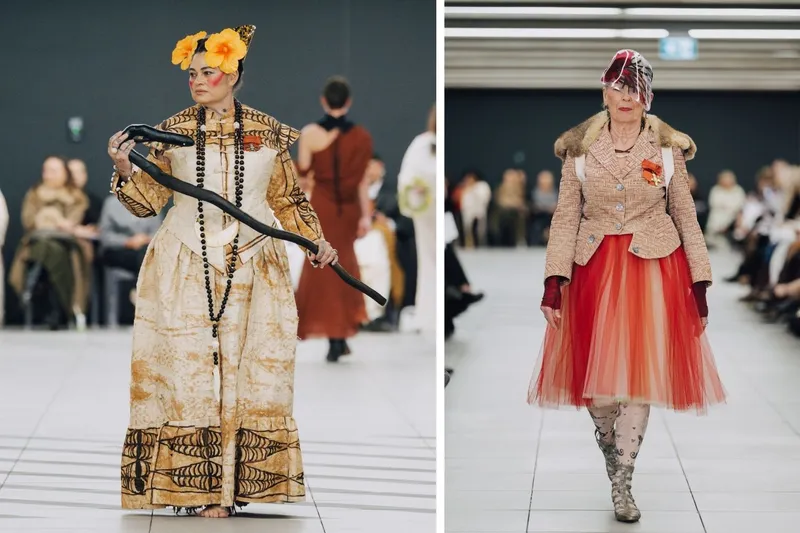
Both Doris de Pont and Rosanna Raymond wore theirs (slay) during the opening night show, The Art of Style. Directed by Dan Ahwa, it melded vintage and contemporary fashion with art objects, millinery and pieces from the archives of the New Zealand Opera and Royal New Zealand Ballet for a moving reflection on the state of dress in Aotearoa.
3. Designers (and organisers) have been looking abroad.
Although fashion week was reliably patriotic there was an international flavour to this year’s event that suggests the industry is looking overseas for inspiration, markets and skills. Yes, we’re an island at the bottom of the world with constrained manufacturing and customers, but we’re part of this global industry too, dammit. Pitching New Zealand labels abroad was a popular strategy from the early 2000s, but in 2026 global thinking looks more like an exchange of ideas than chasing wholesale accounts in Europe.
Kāhui Collective, the group show helmed by Kiri Nathan, featured designers from Taiwan, Alaska and Fiji. Nathan also connected makers from around the world at the first New Zealand Indigenous Fashion Symposium on Tuesday. Panel discussions unpacked everything from trade and growth to intellectual property. It’s a landmark event on the schedule, one that captures the shifting purpose of NZFW, which is no longer a closed-off trade show. As with many of the week’s shows, tickets were available and there was a retail element to the collective’s programming, with garments for sale at The Cloud and Te Pā, Nathan’s Glen Innes fashion hub.
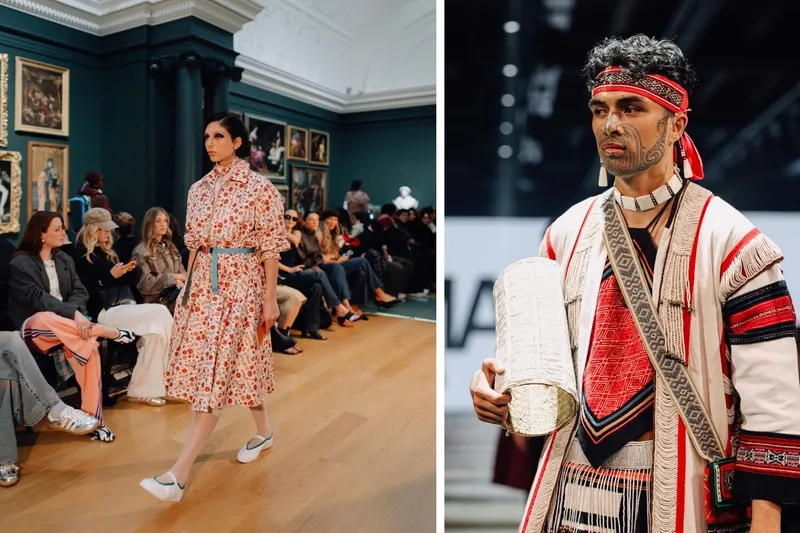
Guests at China Now experienced work from Chinese brands Gu Axin J by HO, while Khadi Beyond Borders showcased work from Indian designers Rajesh Pratap Singh, Shruti Sancheti, Samant Chauhan and Pawan Sachdeva. To put that show in context, NZFW signed a “memorandum of understanding” with the Fashion Design Council of India in 2025. Christopher Luxon was there and has described New Zealand’s “global reputation across fashion and the creative arts” as “growing”. (And he knows growth.)
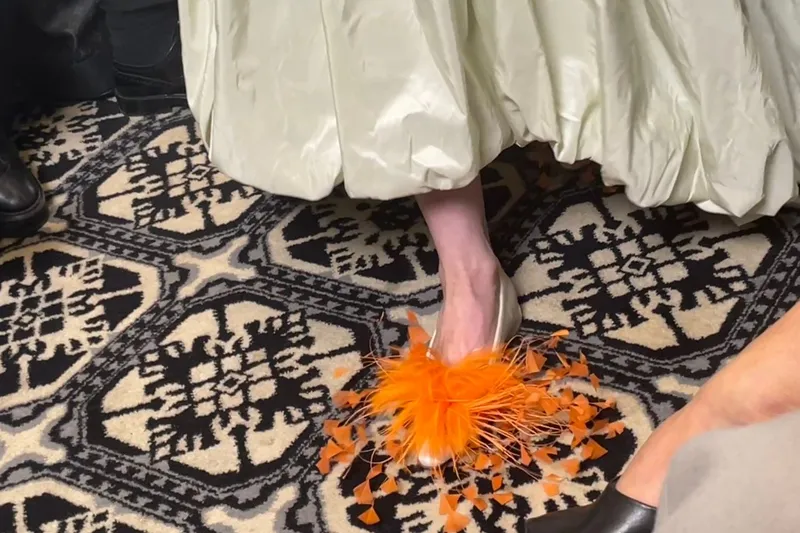
Our design talent often heads abroad seeking just that. Some come back. Claudia Li presented a tribute to New York, where the New Zealand designer founded her eponymous brand. The show was held in a part of Auckland commonly used as a stand in for “cities abroad”. Under the crown moulding of the Northern Club, guests (me) contemplated the practicality of pistachio silk taffeta and feathered footwear for navigating the CRL (worth it).
Karen Walker had her eyes elsewhere too. Her show The Grand Tour was inspired by the tradition of rich aristocrats traipsing around Europe in the 1600s-1800s to absorb “culture”. For us that meant 80 models dashing through Auckland Art Gallery – past works by Fatu Feu’u and Rita Angus – dressed in combinations of Walker’s eponymous brand, Levi’s and Adidas. It had all the chaos of a photogenic piazza during peak tourist season, which was the whole point.
4. Fashion people love coats. And hats.
And jackets trimmed with something that came off an animal. There was more of that than I expected.
5. The milestones felt significant.
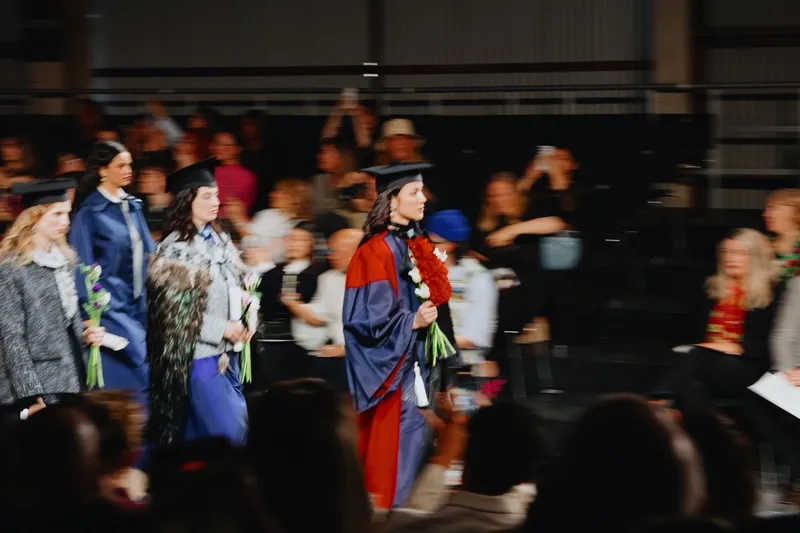
Nora Swann’s group show Pacific Fusion is marking its 10th year. NOM*d is 40. Wellington brand Twenty-seven Names was back on the schedule too, celebrating turning 20 with its first fashion week show in eight years. Models dressed in bubble-hem skirts and crisp satin carried books and, for the finale, diplomas. Some wore robes and mortarboards as Sean Paul blasted out the speakers. Rachel Easting said that after two decades in business, she and co-founder Anjali Stewart felt like they were finally graduating into adult life. “Maybe we’ve made it.” They gave guests a prospectus that outlined a syllabus of classics (“go hard or go Homer”) and ethics (“I shop therefore I am”). Full marks.
6. Audiences are getting louder.
People cheer now! Goodbye po-faced expressions, hello celebration. There were whistles, cheers, chahoos and even one “yes bitch”, uttered by comedian Johanna Cosgrove.
7. There’s more media coverage than you can follow.
Everyone’s doing it. Brands make their own content now and so do model agencies. NZFW even has its own robust self-owned media strategy, no longer relying solely on third-party outlets like newspapers and websites. But they were there, of course. Fashion Quarterly, which has been covering the event since its launch in 2001, had eight people on the ground this year, but other titles sent fewer staffers.
Delegate registrations of all varieties increased in 2026. This year counts seven internationals, 28 media, 19 KOLs (“key opinion leaders”, which is the latest evolution of content creators), 87 industry and 24 photographers. Media delegates still outnumber KOLs, but those are as valued as traditional media and, some might argue, more influential. Joining local creators like Jess Molina and Zeenat Wilkinson this year was Australian influencer Sophia Begg (AKA Sopha Dopha), who boasts 791,000 followers on Instagram.
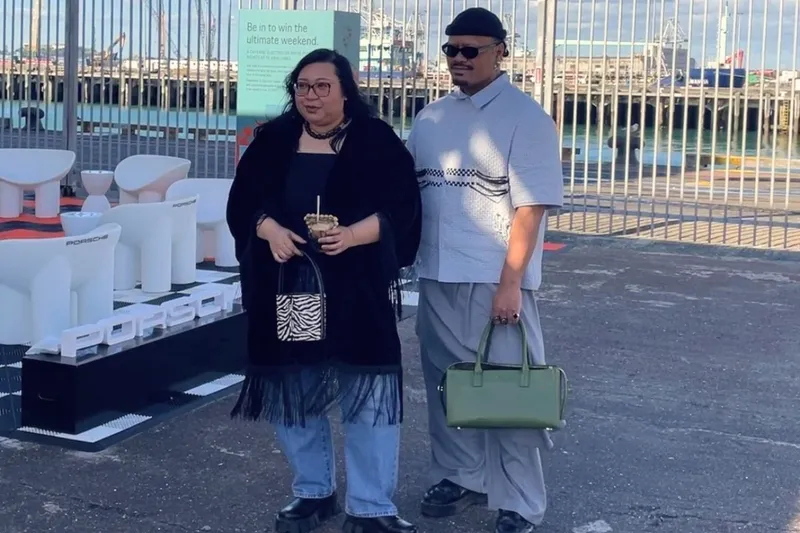
Molina describes the job as a “privilege”. She feels a sense of responsibility to share her experience and perspective for her highly engaged followers, who love the coverage. “Every time fashion week rolls around, I really reflect on the small part I play in this ecosystem.”
8. Street style is still a whole thing.
Good weather nourished a bumper crop of activity outside Shed 10 this week. Guests mingled, photographers circled and tiny mics were myriad. It’s all “mildly chaotic”, according to Felix Jackson, who has been shooting street style at fashion week for three years. He can tell when someone wants their picture taken; they’ll dawdle or look out into the distance. “Or they kind of hold themselves in a way that’s very pose-ready.” He’s more than happy to oblige. “You’re here to stunt,” Jackson explains, between shots. “So I will gladly take your photo.”
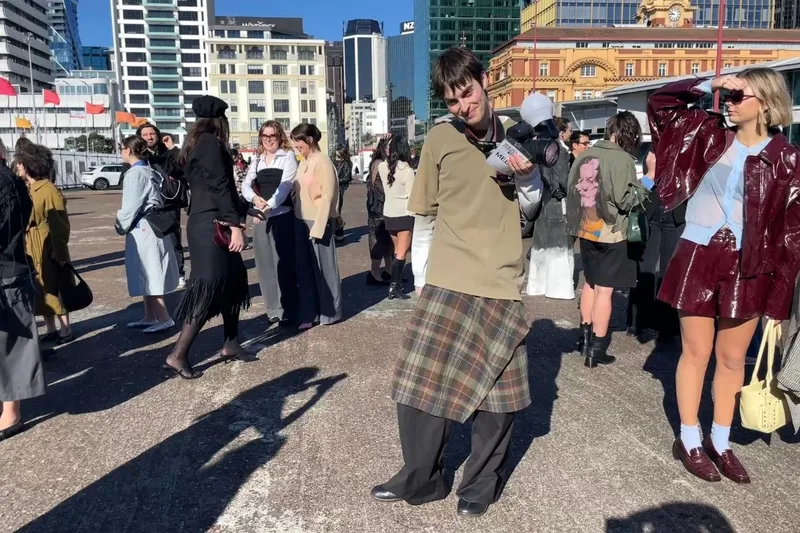
Street style content performs better than runway reviews for Fashion Quarterly because it gets way more engagement, explains editor Sarah Murray. “People often like and share the street style imagery, and are interested in what everyone is wearing,” she adds.
Street style is a huge part of NZFW, says stylist Sammy Salsa (who is popular with the photographers), but it can overshadow the shows. Critical of relying on borrowed clothes, he prefers to dress himself. “I’m not a scab.” Salsa says he makes a point of financially supporting local brands and bought a Zambesi outfit to wear to their show today. “I come from nothing so I know what it’s like to not have anything.”
9. Fashion week is part of Auckland.
Located primarily at Shed 10 downtown means the event rubs up against commuters, high school students playing basketball and men wearing high vis. Michael Allen is one of them. He’s working on the electrified ferry upgrade of Queens Wharf and this is the second fashion week his team’s witnessed first hand. “We love it,” Allen said. “It’s nice to see some events. I actually had a tour this morning.”
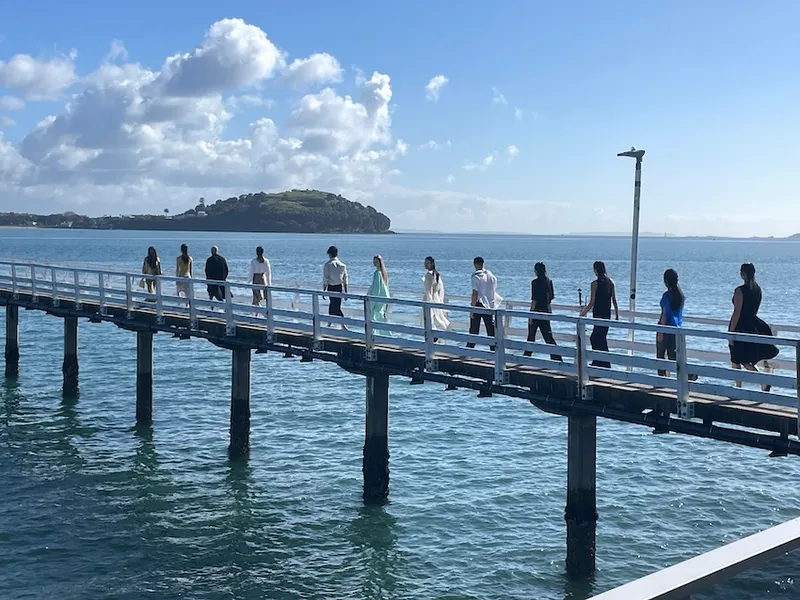
Zambesi’s magnificent harbourside show on Friday morning drew a large crowd, predictably dressed in mostly black, including Auckland mayor Wayne Brown. He wasn’t just there for the fashion (though did look good in a turtleneck and suit). Brown has known the Findlay family for years. “I’m here as much as a friend as a fashionista,” he told The Spinoff, adding that he and Zambesi co-founder Neville Findlay go back 50 years. Brown is into the fashion too though. “It’s part of our economy and it’s wonderful.”
10. People still wear sunglasses inside.
The bigger the better, even in the dark. I guess it’s good because no one knows where you’re looking. Maybe you’re just dissociating. Instead, you could talk to your seat neighbour about your busy schedule (but not as busy as Paul Goldsmith) and whether you’ll catch the flu. Is there a valid excuse for dark eyewear? Does it even matter? Apparel editor Caitlin Mitchell, seated front row, was quick to point out her sunglasses were prescription.
11. Our runway diversity is better than most.
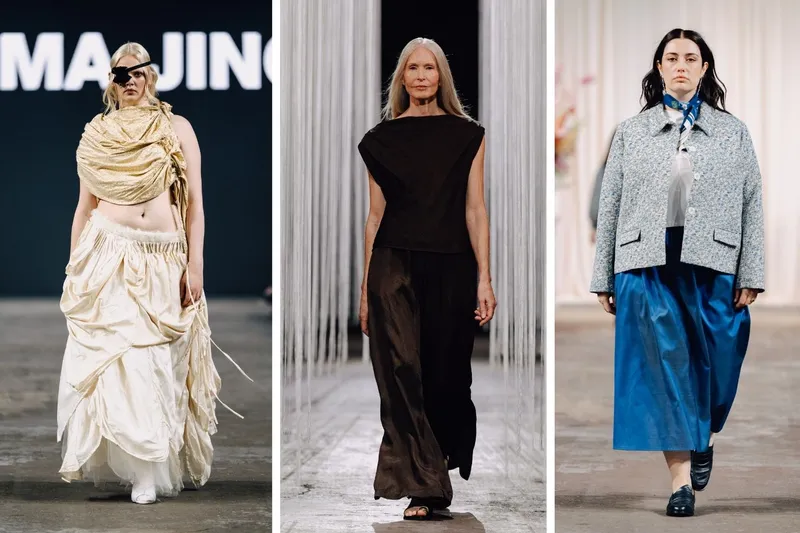
Much has been made of the shrinking runways overseas and Ozempification of fashion, but the same can’t be said for NZFW. We saw bodies of all sizes on the runway, pension-aged models and racial diversity. Did it feel tokenistic or performative? Actually, no.
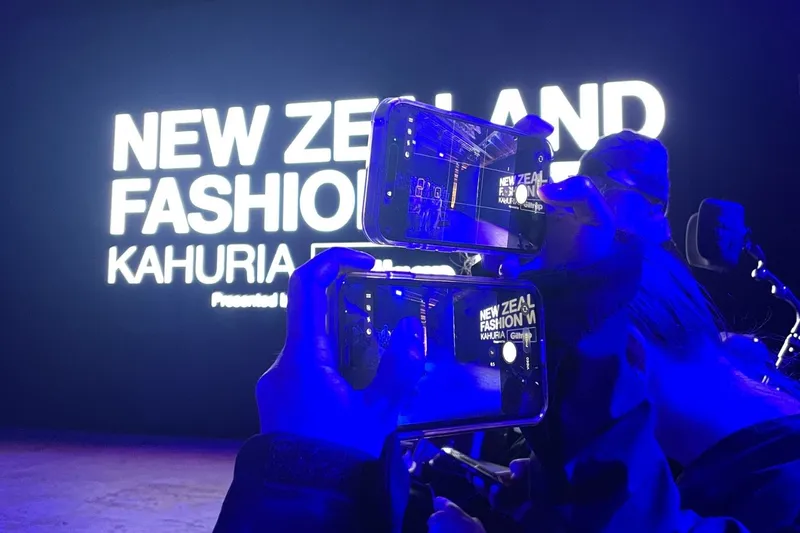
12. Guests use their phones, a lot.
For photos of the show, photos outside the show, photos of anything and everything. For vox pops and selfies and reels and vignettes. For capturing Claudia Li’s embellished corduroy coat or actor Thomasin McKenzie at Karen Walker. For pretending to be busy if you have no one to talk to. To write notes about “hot pants” and “pirates” and “capris”. For Google-mapping the distance between Hotel Britomart and Durham Lane (it was 10 minutes’ walking but we made it in six). For finding your e-ticket, which I’m sure is here somewhere.
13. It’s time to dress up.
Rather than compete with athleisure and streetwear brands, it seems designers have realised they need to establish a point of difference. Clothes were markedly more formal this year. Think suiting, silks, lace, embellishment and other things you’ll probably-definitely need to hand wash.
14. Public shows work. So do ticket sales.
Everyone’s finally accepted it. Long gone are the days of industry-only shows and public-facing “‘fashion weekends”’. Instead, customers and fans mingle with media and buyers. This year most shows were ticketed, including Juliette Hogan. Her customers “got on board almost immediately” and the event sold out early. “Which we don’t take for granted,” she says. Although this doesn’t change the brand’s ability to do a show, she explains, tickets have made it more accessible for its audience.
Ticketing also dismantles a barrier to entry for brands. “NZFW removed the participation fee designers used to pay to take part,” Hogan explained. Instead, a set number of seats in each show are allocated to them to sell. “It’s a shift that puts more of the risk on fashion week, and it makes a real difference to designers.”
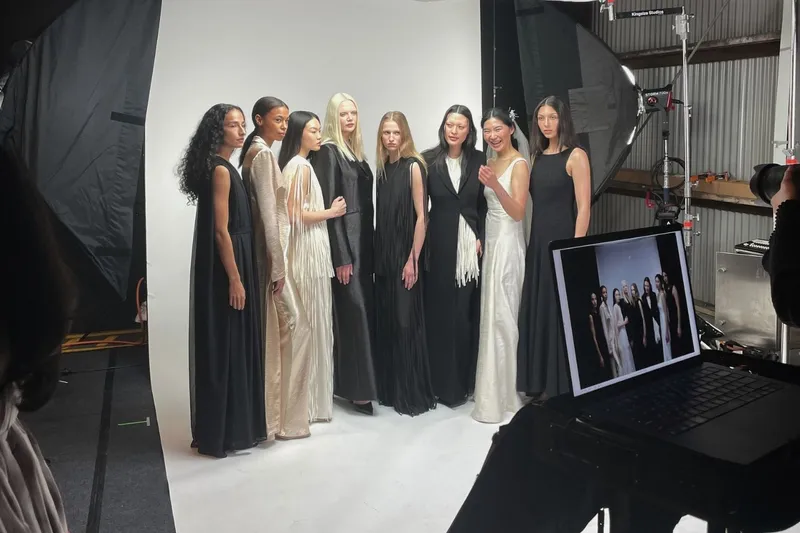
Fashion weeks are “incredibly expensive and difficult to pull off” according to Australian journalist Patty Huntington, someone who’s well versed in the format. Ticket sales generally account for a small revenue stream, but what they do accomplish is interest and support. “It’s a way of getting the public on board.”
We saw that this week, as a diverse range of ticketholders came down to Shed 10. There were high school students in the audience at The Graduate Show on Wednesday, where they saw work from Whitecliffe, Massey and Otago Polytechnic. Many of them wore striped school blazers and so did I (embarrassing).
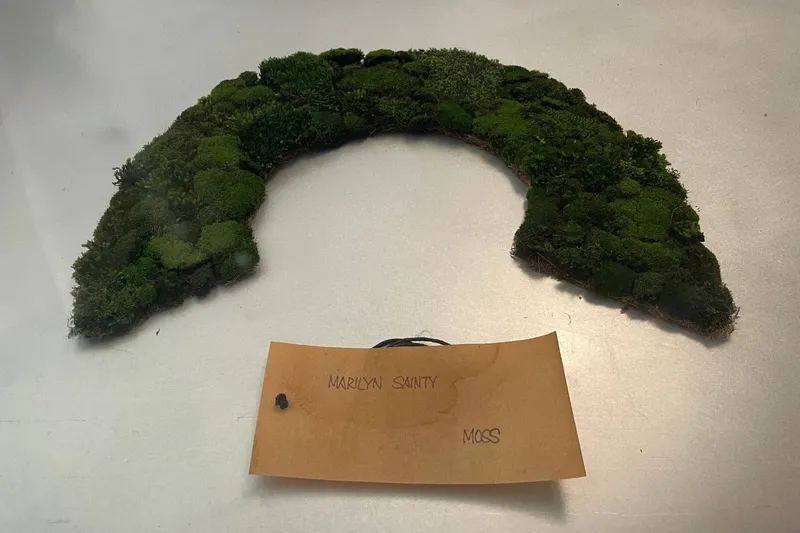
People show up. The Keep’s exhibition The Collar drew well-dressed throngs of ticket buyers (and a different crowd to Shed 10) to Karangahape Road.
15. Shorts are a garment of national significance (but all the blokes who wear them in the dead of winter already knew that).
They appeared in Almost. Every. Show.
16. So did ruffles, bows and knee-length skirts.
Fashion week is heavily womenswear focused. Sorry lads.
17. Emerging designers commanded a lot of attention.
The event functions as an incubator, and an important one at that. The Graduate Show showcased design students and their ambitious ideas. It’s reliably one of the most boundary pushing of the week’s events; where else are you going to see leather chain mail, a “resist Putin” T-shirt or a corset referencing the bombing of Hanoi?
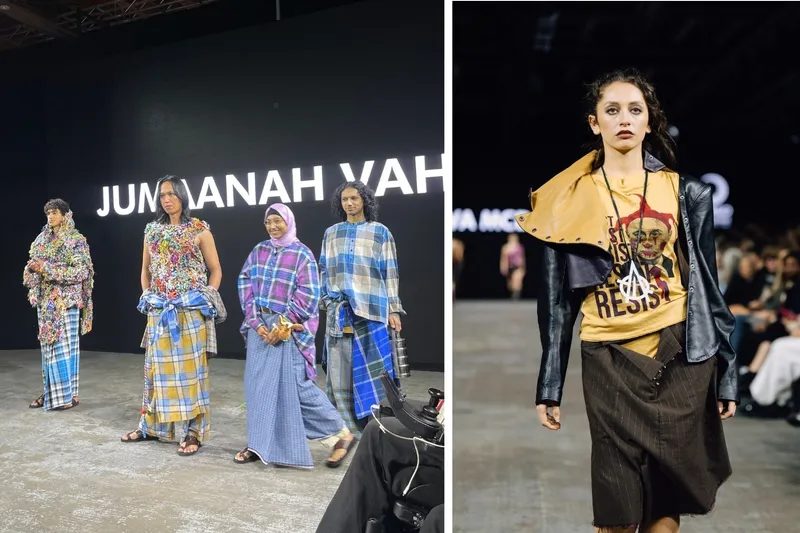
Small brands benefit from group shows like Pacific Fusion, The Future of Fashion, Kāhui Collective and The Studio. That show focuses on “early-career designers who have established a reputation in the market” but might not have the resources or capacity to produce a solo show, explains creative director Dan Ahwa. “Some are relatively new, while others have been steadily building their businesses for a decade.” The hope is that they gain runway experience and create content to support their marketing throughout the year. “And connect directly with customers, industry and potential stockists.” (Because at the end of the day, fashion is a business.)
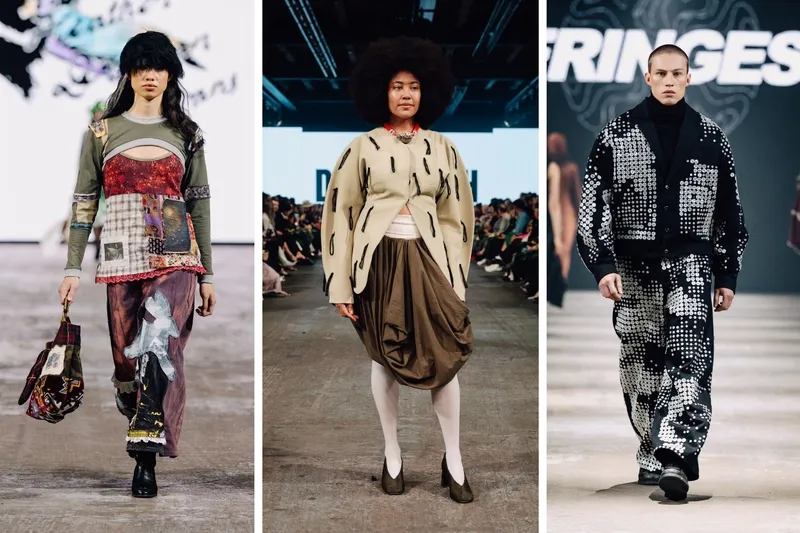
18. So did the establishment.
Zambesi and NOM*d have been showing at fashion week for decades and both were on the schedule this week. NOM*d’s range, its 81st, was full of fresh ideas – and colour – including a stylish riff on the classic striped polyprop (someone alert Shanti Mathias). Zambesi broke with its after-dark tradition and held a morning show for the first time. It’s reliably the highlight each year. “Designers of that generation are still doing the coolest shows of the week,” said Patty Huntington. “It’s really quite unique.”
Both brands and many others in the schedule, including Penny Sage and Twenty-seven Names, still manufacture locally, even as costs rise and resources shrink. So do many small labels.
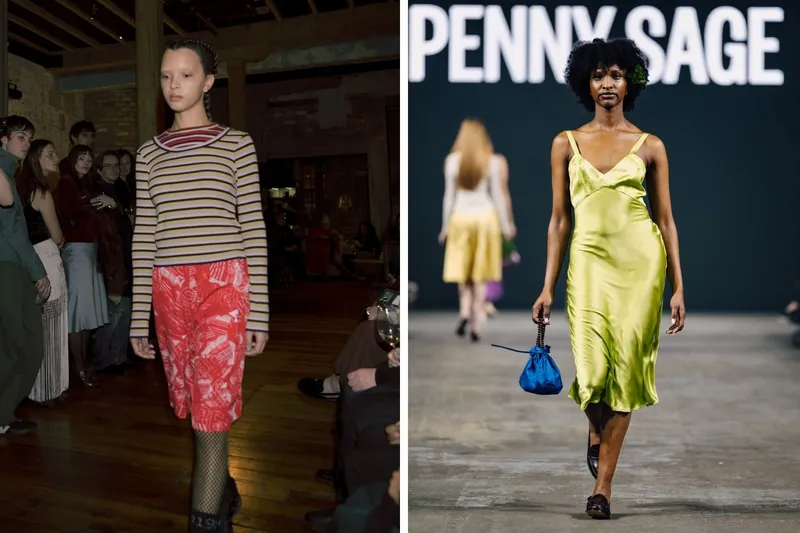
19. Everyone’s been wondering what clothes are for.
Are they for Instagram? The algorithm? Has that distracted us from their purpose (clothing our bodies) and pleasure (moving through the city as living, breathing human being). Does it even matter? And who’s going to buy them?
20. And whether fashion is art.
That was the premise of opening night. It was discussed front row and backstage through the week, debated in blogs and DMs. The industry has been looking for the answer. Maybe they found it. Or maybe the searching is the point.
Emma Gleason
Emma Gleason is a staff writer at The Spinoff and an award-winning fashion journalist. But it’s not just clothes that interest her, you’ll find her exploring tasty cheese, influenza outbreaks and more important things right here. She has experience with some of the country’s leading media outlets as well as the toaster in our kitchen.


