Echo Chamber: Attack of the taxes!

Paul Goldsmith. (Photos: Parliament TV)
What’s scarier: having 11 new taxes, having 11 portfolios, or having to remove a member’s bill at the 11th hour?
The troops may be tired and the headlines may be hostile, but the fight to win election 2026 is not yet lost. As the National caucus returned to parliament’s battleground this week, they had a new beat to march too, piped in directly from Simeon Brown’s office, level 6, the Beehive: tax, tax, tax, tax.
During Tuesday’s question time session, taxes were mentioned more than 40 times by the prime minister and his ministers. It began off the bat during the first oral question to Christopher Luxon from Chris Hipkins, with the Labour leader quizzing Luxon on the price of bread. “Well, 600g of white bread [is] about $2.20 today,” the PM responded. Well, Luxon’s right if he’s talking about the cheapest of cheap bread – but he seems more of a Vogel’s man, doesn’t he?
New mega minister Paul Goldsmith – who now holds a whopping 11 portfolios after Chris Penk’s removal from cabinet – was quick to his feet following a patsy question from colleague Nancy Lu. No, Goldsmith declared, the government is not considering implementing a streaming tax. “You don’t do anything anyway, Goldie,” grumbled Labour MP Willie Jackson from his bench. In an unfortunate turn of events for Jackson, Goldsmith made sure to mention that the member’s Broadcasting (Commercial Video On-Demand Levy) Amendment Bill – which proposed a levy on streaming services to fund local productions – had been removed from the parliament website that morning.
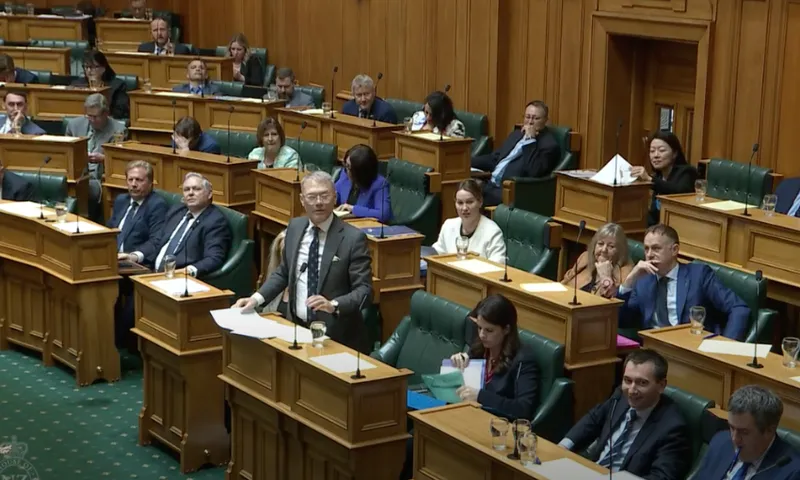
Next, the House moved onto an urgent debate on Penk’s sacking, called for by Hipkins. But National was keen to look elsewhere, with Brown making sure to mention the taxes allegedly looming if the left bloc is able to form a government 19 times. “They’re trying to hide and talk about anything else,” said Brown – not of his own party, but of Labour.
Afterwards, two big bills passed third readings. The first was Te Here ā Nuku (Nelson Tenths) Bill, which will return 7,500 acres of land to Te Tauihu Māori and provide $420 million in compensation. And the second was the Climate Change Response (Tort Liability) Amendment Bill – made famous by a few disappearing documents – that prevents companies from being subjected to lawsuits for their climate emissions.
MPs returned to the House for Wednesday’s question time to lob barbs across the aisle. And while party matters are typically safe from question time scrutiny, Hipkins tested his luck trying to get more out of the prime minister on Penk’s sacking – but specific questions about education minister Erica Stanford’s involvement in the failed coup saw his line of questioning shut down.
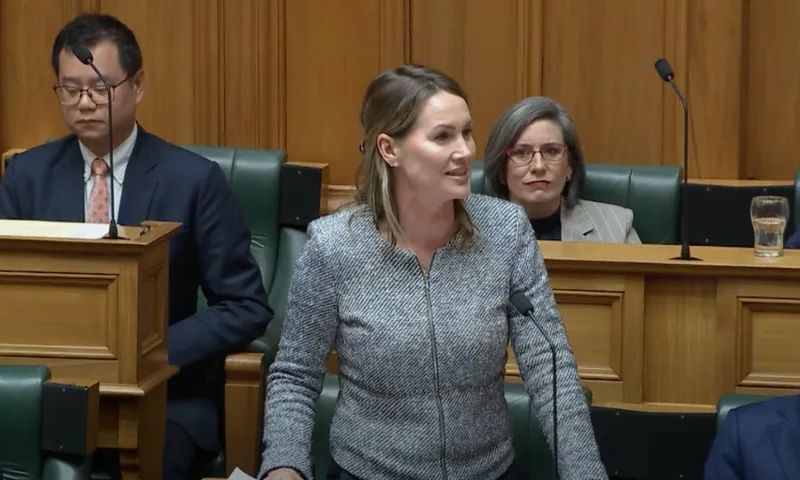
Hipkins’ deputy Carmel Sepuloni did manage to embarrass the National benches, however. Her line of questioning led women’s minister Nicola Grigg to boldly declare “we will continue to invest in initiatives that support women’s leadership”. Sitting in front of Grigg and leaning over her seat to watch the minister with wide eyes was Stanford. It was only last week that she was described by Grigg as being a good friend, “but not a prime minister” – a girlboss sadly cut down a size by another.
Later, the mega minister was back again. This time, it was Banks Peninsula MP Vanessa Weenink who was given the honour of asking Goldsmith whether he would be introducing a streaming levy. As already established yesterday, the answer was a resounding “NO”. So what will the government do to support local content instead, asked Weenink.
Jackson’s response was quicker than the minister’s: “Nothing!”
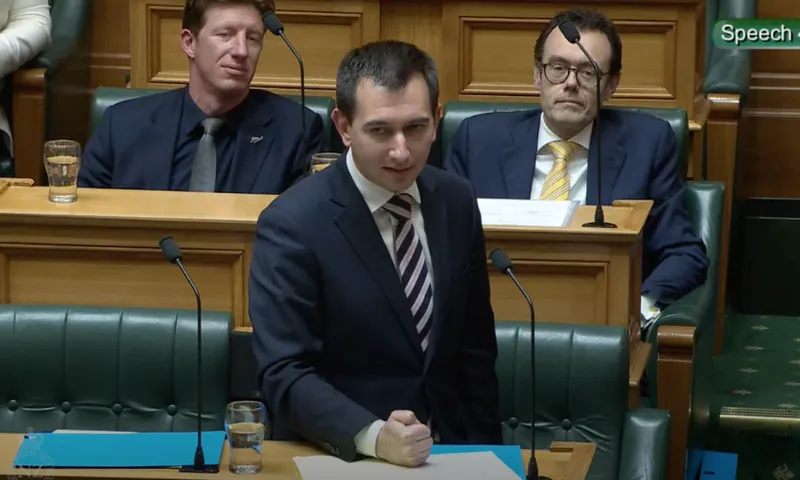
Next came general debates, where all five National MPs who had risen to speak talking about tax. “We say no to Labour’s taxes,” declared Brown. “Tax, tax and more tax,” sang National backbencher Catherine Wedd. “Tax, tax, tax,” cried Carl Bates. Their battle cry echoed across the parliamentary jungle, but the soldiers on the red team seemed more bored than afraid.
Afterwards, the first of what will be a swathe of valedictory speeches in the lead-up to the election took place. Labour MP Duncan Webb bade goodbye to the halls of power – there’s only one ideal way to properly leave parliament, Webb acknowledged, “which is by choice”. He gave a special thanks to the media – though only veteran gallery reporter Audrey Young was around to hear it in person – and recalled the first sign that his career was “on the slide”. “Luke Malpass did one of his ‘how ministers are doing’, and he said, ‘and then there’s Duncan Webb – affable and competent’,” Webb sighed. “Damned by faint praise.”
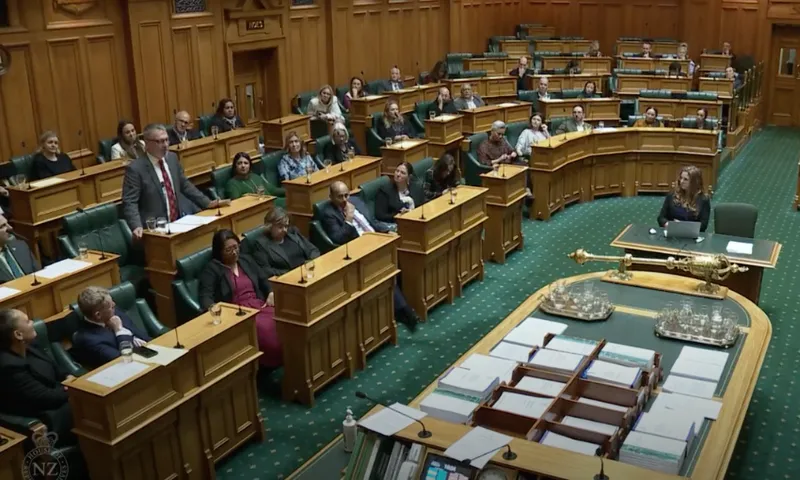
By Thursday, the weight of all 11 of his portfolios seemed to be getting to Goldsmith. Those late nights spent being yelled at by Winston Peters and the seven cups of coffee in the morning were clearly scrambling Goldie’s brain. Presumably, anyway – it would be the only explanation as to why, for the third day in a row, he was made to stand in question time and promise no new streaming levy.
The troops stood down for the week. The boots on the ground had won the battle: Netflix was safe.

Lyric Waiwiri-Smith
Lyric is an award-nominated politics reporter at The Spinoff. She covers parliament from the press gallery, pens the weekly column One MP, One Pint and is endlessly curious about what makes our decision-makers tick. Off the clock, Lyric loves a live gig, a cold brew, and being a Wellingtonian (on a good day).


