Uncomplicated pleasures in a complicated world: Bill Manhire and Jenny Bornholdt’s new poetry, reviewed

Two former Poet Laureates launch new collections today.
Made possible by


Two of Aotearoa’s greatest poets are launching new collections today. Books editor Claire Mabey reviews them both.
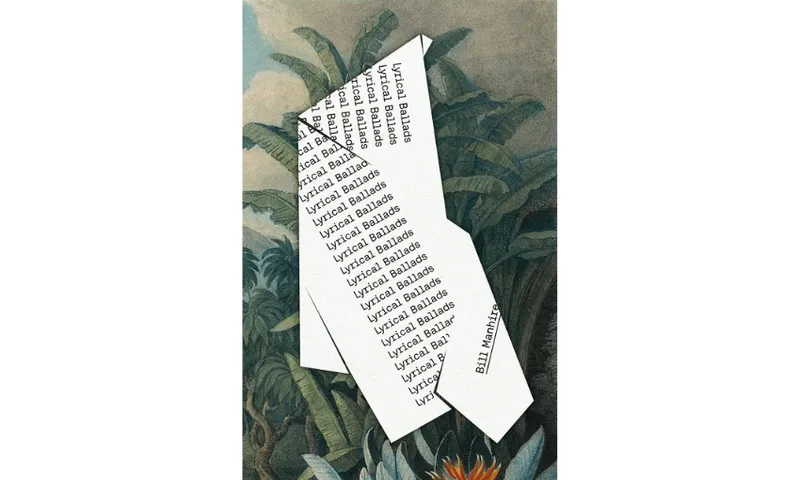
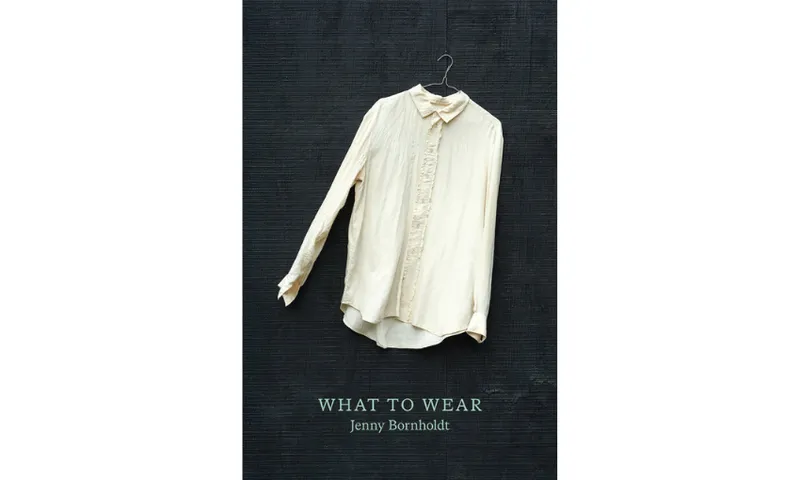
They look good together. The crumpled white shirt on the cover of Jenny Bornholdt’s What to Wear extends a ghostly gesture to the folded paper on the cover of Bill Manhire’s Lyrical Ballads. I read both collections side by side, albeit in very different ways. Manhire’s I read alone, cover to cover; Bornholdt’s I read with my son in a game we invented – my son rolls a many-numbered dice then I read the poem on the corresponding page number. You might not think poetry written by a former Poet Laureate would mean much to a seven-year-old. I didn’t think it would. But that’s underestimating both poetry and children.
Manhire and Bornholdt are two of Aotearoa’s most accomplished and revered poets. What struck me in both of their latest collections is just how much reading them felt like sinking my feet into the cool sea after running across hot sand. The poems are close – ponderous at times, playful in others – and potent. The mastery at play is that of simplicity; or at least the impression of it. Manhire and Bornholdt reminded me, again and again, just how much poetry can cut through the noise and get to the true nature of things, like individual drops of rain in a deluge. Despite associations to the contrary (poetry can at times present as intimidating if it’s not kept in regular consumption from a young age) these collections are profoundly relatable, and I think will offer great comfort and pleasure to readers young, middling and old.
Dusk
It’s got me beat, the way
the hills just fall asleep.
– Bill Manhire, Lyrical Ballads
Lyrical Ballads is hefty. It operates across five parts and runs to 131 pages, which is a treat for both diehard Manhire fans and newcomers alike. The title is a clue, perhaps, to Manhire’s mission. In 1798 William Wordsworth and Samuel Taylor Coleridge published Lyrical Ballads, intending the work for ordinary people and not scholars or aesthetes. Ballads are the tool of the bards: oral storytelling as a mode of passing information to the masses, and entertaining them, too. Manhire’s Lyrical Ballads does all of these things. To read it, as I did, cover to cover, is to traverse a landscape that rises and falls, moves you in and out of the sun. One moment you’re contemplating the wonder of light slipping over a distant landscape (‘Dusk’, above) and in another you’re struck by ‘A Final Warning’ which opens with “I walked past the stars / the silence of grandfathers” and ends with an image of a person being tested for medical problems: “I think I’ve got the lot”.

The poems in Lyrical Ballads are tinged with endings, with old age. The sweetest of these are charming, small portraits of the grandparent – my favourite is ‘The Grandfather Stole’, in which a child’s first smile is taken away to be buried in the bush so that the child “would always be happy”. It is typical of Manhire’s blend of melancholy and comedy, even whimsy. Always a grin, a tobacco tin, at the back there somewhere. There’s the Manhire rhyme alive and well, too: always employed elegantly and for weight, like gongs in an orchestra. In ‘Walter’s Fish’ the word “again” sets off a chorus of “complain”, “game”, “same”, “pain”. The rhyme builds one upon the other, growing heavier as the portrait of a man troubled by “ruined roads and flooded paddocks / again and again and again” emerges.
Destruction is a thread. Part one of the collection is filled with scenes ranging between domestic interactions and snapshots of the world beyond, and behind. ‘Gaza’ is a short, devastating portrait of a dead child, held by dead parents. ‘Live Cross’ is a sly sucker-punch:
I speak to you now, a fine rain is falling.
You can probably just hear the mother calling.
In ‘Harm’, Manhire personifies destruction as a beast “huffing and puffing / breathless by the time it knocked on the door.” Over the poem it is a relentless force, finding its way into homes and to the people hiding from it, an inescapable intruder.
Part three of the book presents a shift: here the poet is playful, inhabiting characters and presenting small novels. One of my favourites is the very funny ‘Hello’. It begins: “I fell out of someone’s / debut novel, and now // I don’t know what to do.” The character is unmoored, ill equipped and unsure of his own story: “I think / maybe the workshop // hated me.” The workshop being the Master of Creative Writing students’ forum for hashing out peer feedback on manuscripts, a forum that Manhire is very familiar with given he brought it to Aotearoa when he set up the International Institute of Modern Letters in 1997.
The undulating tone of Lyrical Ballads carries the reader on and on. I found it hard to put this collection down, so I didn’t. Most of the poems are short: short and often heavy, weighted with that signature emphatic rhyme, but also with melancholy. By the end, I was left with a resigned sadness reverberating through me, as if the poems were riding out on frequencies designed to reach certain destinations. One frequency ran fast and straight: the simplicity and directness of poetry, both refreshing and acute. Another wave, more subterranean, carried the sense of an ending. There are unmistakable glimpses of a writer contemplating finality: ‘The Final Poem’ being the most explicit. It is a curious, brief poem, one of surprise and perhaps even irritation. The final poem not arriving as expected, or desired.
The poem I keep coming back to, swallowing back a lump in my throat with each re-read, is ‘As We All Know’, which begins: “beauty is here barely a moment, / but we still pass it around, / free gift to all.” That idea moves into the memory of a baby being passed between people “for what felt like months, / even through the window // twice!” and ends with “and at last / back to the woman / who never wanted // to let it go.” So tidily done – the momentum of the perfection that a baby represents, with that comedic image (passing the baby through the window) leads us up to a blow when we reach the mother who is all too aware of the vulnerability, the ache of connection that will inevitably change and profoundly.
In terms of tone, Jenny Bornholdt’s What to Wear chimes with Lyrical Ballads. There is an acute sense of translation, a heightened listening and watching the close world; and endings, too. I should expand on how I read this one. For any readers with young children, I cannot recommend Bornholdt’s picture book, The Longest Breakfast (beautifully illustrated by Sarah Wilkins) highly enough. It’s funny, curious and relatable, and, it turns out, a gateway into poetry. Because my son loved The Longest Breakfast I tricked him into trying Bornholdt’s latest. It was his idea to roll a dice to pick a page number, and so we gamified the ancient tradition of reading aloud.
My son laughed a lot. Not because the poems in What to Wear are particularly funny in a child’s sense of comedy, but because they tip our view sideways: there is a through line of delight and curiosity that resonates, it turns out, with the innate childlike talent of seeing mystery and magic in the everyday.
Luckily
the wolf is inside
when the bird
comes to splash about
in what has become
a birdbath.
So begins ‘Luck’, the first poem in the collection. Each of the three stanzas evokes a fairytale shiver: the wolf; the sound of horns deep in the forest; and, in the final stanza, the wild laughter of a kookaburra in the old gum tree.
Bornholdt illuminates the deep lore of nature throughout the collection. In ‘Forecast’ people go to the beach and are “hurled about / by the sea’s mighty / might” and they “tumble and fall”. In ‘Swimming’ the narrator hears the trees next door “coming down and the earth, / after rain, / make a sucking sound / as if drawing breath.”
Thrilling! The wild, near-magic elements resonated with the child reader beside me, and the child reader inside me. It was my son who first realised that the poem ‘Carlo and Isaac’ was about playing video games. “I’m about to die”, it begins, and later, “It’s almost night time – I’m on 76 percent.” And to end, “I’m fully dead”.

As in Lyrical Ballads, death is a thematic riff in What to Wear. The poems ‘Funeral’ and ‘Horse’ sit side by side. The first an exquisite, intimate observational poem ‘At the Funeral of Our Friend’, which ends with the narrator gently lifting a praying mantis from the shoulder of a man in the seat in front: “With my heart / I gave thanks, lifted it / from his shoulder / carried it outside / and loosed it / into the day.” ‘Horse’ mirrors the kind of nostalgic conversation you might have at a wake – “There was talk / of childhood” – before bringing the reader’s attention to the quiet comedy of a hearse’s numberplate reading ‘h r s e’. Later, in the middle of the collection, the poems ‘Aged’ and ‘Plum’ sit on either side of the crease, both short, two stanzas each. Both noticing, in acute and idiosyncratic ways, how life changes when you are old. I particularly loved ‘Plum’ which extrapolates on the idea of days being numbered with the image of “plums falling / from the tree, frequent / as minutes.” Oh, how time accelerates.
Also like Lyrical Ballads, there is an underlying note of anxiety in What to Wear. A trilogy of poems towards the end of the collection – ‘MRI’, ‘Scan’ and ‘Heart’ – share the uncanny experiences of medical examination. In ‘MRI’ the narrator tries her best to turn the cacophony of the machine into far away tales; in ‘Scan’ the machine passes “like a cloud / like an envelope”, and in ‘Heart’ the voices of the nurse and doctor speak of “tiny veins”, “Clear as mustard”.
The poem that both my son and I read over again was ‘Poem with a hole in it’: nine pages of stanzas interspersed with word-lists, tunnels from another world carving trenches in the story of tradesmen come to dig a hole in the front lawn. It’s the story of transformation: of new habits formed to adapt to the interruption of construction. It’s the story of getting to know strangers and listening to how they talk, what they have to say, and noticing what they do to reconstruct your physical world. The “wordholes” (my own term) are delicious mouthfuls: words rare, at times, never seen together in this way before: “cable / intrepid / adit / brae / toady / minty / sly / joy / hone”. It is also a family story, which may also explain why it resonated particularly with an intergenerational reading aloud: the inhabitants of the house all in the adventure together.
I cannot recommend Lyrical Ballads and What to Wear enough. There is so much to be found inside each. So much there to soothe you, understand you, lead you on. Both lend themselves to quiet readings alone, but also to sharing with friends and family – even the kids. These poets are reaching across time, across ways of seeing and remembering and supposing. Reading Manhire and Bornholdt is an uncomplicated pleasure in a complicated world. I am tremendously grateful for them.
Lyrical Ballads by Bill Manhire and What to Wear by Jenny Bornholdt are launching 6pm tonight, February 11, at Unity Books Wellington. On Sunday, March 8, Bill Manhire will speak with Damien Wilkins about the collection, and his career, at the Aotearoa NZ Festival of the Arts.
The Spinoff Books section is proudly brought to you by Unity Books and Creative New Zealand. Visit Unity Books online today.

Claire Mabey
Claire Mabey is a children's author of The Raven's Eye Runaways, The Raven's Eye Rebellion, and a picture book Cass and the Beast illustrated by Jill Calder. For a long time Claire worked on literary festivals and is the founder of Verb Wellington. She lives in Te Whanganui-a-Tara with her partner and son.


