Emergency food grant decline rates up 60% in two years

More struggling New Zealanders are being turned down for all categories of emergency assistance, with the Ministry of Social Development attributing the rise in declines to ‘strengthened hardship approvals’.
The rate of New Zealanders in financial hardship having their emergency food grant applications declined has risen by 60% since 2023, data released to The Spinoff under the Official Information Act has revealed. Declines have risen across the board, with 66% more applications for all categories of special needs grants being turned down than two years ago.
The Ministry of Social Development (MSD)’s Special Needs Grant Programme offers one-off grants loaded onto a payment card to cover essential and emergency costs such as food, medical treatment and housing, and New Zealanders do not need to already be receiving a benefit to apply.
A spokesperson for MSD said the rise in declined applications was due to the ministry having “strengthened hardship approvals” by returning to pre-Covid processes in December 2023. “Before Covid, managers were required to sign off a range of hardship grants,” the spokesperson said. “These practices were temporarily waived during the Covid response. This was never intended to be a permanent change.”
“From December 2023, following a decision during Covid to temporarily waive this requirement, manager approval for hardship grants was again required in certain situations, such as when clients don’t have verified ID or for direct payments into bank accounts.”
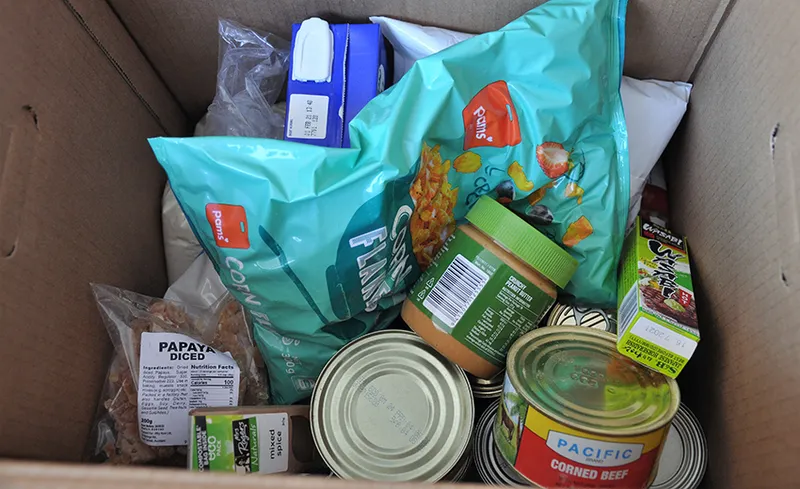
Food is by far the largest category of grant application made across the three years for which The Spinoff asked for data, with 4.15 million in total in 2023, 2024 and 2025. In 2023, 3.96% of the 1,387,359 applications made for food grants were declined. In 2024, slightly fewer food grant applications were made (1,359,171) but the rate of declines had risen to 6.28% and by 2025, applications had risen and so had declines, making up 6.33% of the 1,401,600.
As MSD tightens access to food grants, community advocates say they’re struggling to keep up with a “huge increase in demand”. In January, Kay Bereton of the Beneficiaries and Unwaged Workers Trust told The Spinoff that her local food bank in Nelson had had to restrict its offerings to one food parcel a month per household. “So then people rely on the kindness of strangers, things like Kai Rescue, and stealing – that’s what it pushes people to do,” Bereton said. “It’s really frustrating, and really sad.”
MSD’s limits on accessibility mean that over a six-month period, singles who fall under the income limit can receive $200 in food grants. “If you’re over that $200, you pretty much get a straight no these days,” Bereton said. In the same period, couples receive $300, families with one or two dependent children receive $450, and families with three or more dependent children receive $550 – these limits can be exceeded for “exceptional circumstances”. “For a lot of people, it’s every day that they can’t afford food,” Bereton said.

Bereton said experience of rejection, and the feeling of it being a lottery whether you get a sympathetic or dismissive MSD case manager, had put a lot of New Zealanders off applying for food grants in the first place. “It’s pretty awful being rejected face-to-face as well,” Bereton said. “It’s so demeaning.”
In November 2025, a report on community food support from Kore Hiakai (Zero Hunger Collective) noted that 25% of New Zealanders experienced ongoing food insecurity. “While the level of food insecurity peaked during the pandemic lockdowns, a rising baseline of food insecurity is spreading across the motu,” the report read. It recommended increases to benefits and better access to special needs grants as methods to combat food insecurity. The Salvation Army’s 2026 State of the Nation report said that in 2025, the charity had distributed 7% more food parcels than in 2024 and almost 50% more than in 2019.
Social development minister Louise Upston told The Spinoff she was confident that New Zealanders experiencing financial hardship were receiving adequate support. “I accept it’s really challenging right now, and continues to be for some families [in the] tail end of a recession,” Upston said. “But I’m confident that the special needs grant process is available and getting support to where it is needed most.”
Declined emergency housing grants also on the rise
Data released under the Official Information Act also shows far fewer emergency housing grant applications being made and a far greater proportion of them being declined since the gateway to emergency housing was tightened in August 2024. Across 2023, just over 3% of the 103,920 emergency housing grant applications made were declined. In July 2024, decline rates were at 5.6%, and by October, that had risen to 13.6%. For the full calendar year of 2025, just 23,421 emergency housing applications were made, with almost 34% of them declined. MSD stats show that more than $36 million was spent on emergency housing grants in the quarter ending September 2024. In the same period in 2025, that had dropped to $9.64 million.
MSD cautioned that due to the type of emergency housing (EH) grant changing when the gateway tightening was implemented, data before and after these changes was not directly comparable. But a spokesperson said, “Emergency housing is a last resort, and we work with clients to see what other options are available. We are often able to provide another type of accommodation assistance before approving emergency housing. The rate of declines varies depending on whether a person is presenting for the first time or reapplying for EH, with the former generally experiencing a higher rate of declines.” This variation was due to suitable alternatives for those reapplying – such as the possibility of staying with whānau or friends – already having been investigated and not identified.

“Implementing EH gateway changes (August 2024) has been a significant change for ministry staff and clients alike,” said the spokesperson. “We’ve been monitoring our frontline practice to ensure the EH gateway changes are being implemented in accordance with the government’s policy intent.”
In January 2025, the government announced its target of reducing the number of households in emergency housing by 75% by 2030 had been met five years early, amid allegations that the tightened gateway was contributing to rising homelessness.
In July 2025, a Ministry of Housing and Development briefing later released to the Herald said social service providers had warned that “People seeking support do not understand decisions made by MSD [Ministry of Social Development] to decline support … Of particular concern is the way criteria such as ‘contributing to their own homelessness’ are interpreted and applied by MSD… The absence of emergency housing has noticeably worsened the homelessness situation, highlighting the need for alternatives.”

Lyric Waiwiri-Smith
Lyric is an award-nominated politics reporter at The Spinoff. She covers parliament from the press gallery, pens the weekly column One MP, One Pint and is endlessly curious about what makes our decision-makers tick. Off the clock, Lyric loves a live gig, a cold brew, and being a Wellingtonian (on a good day).


