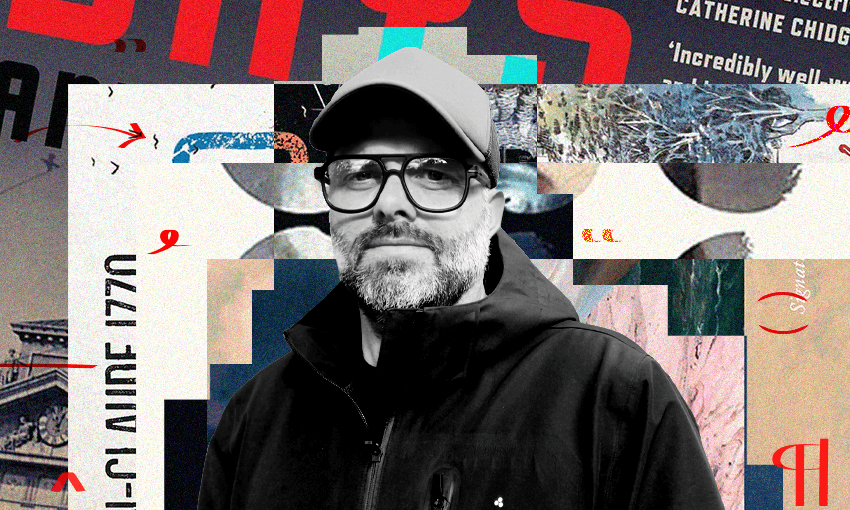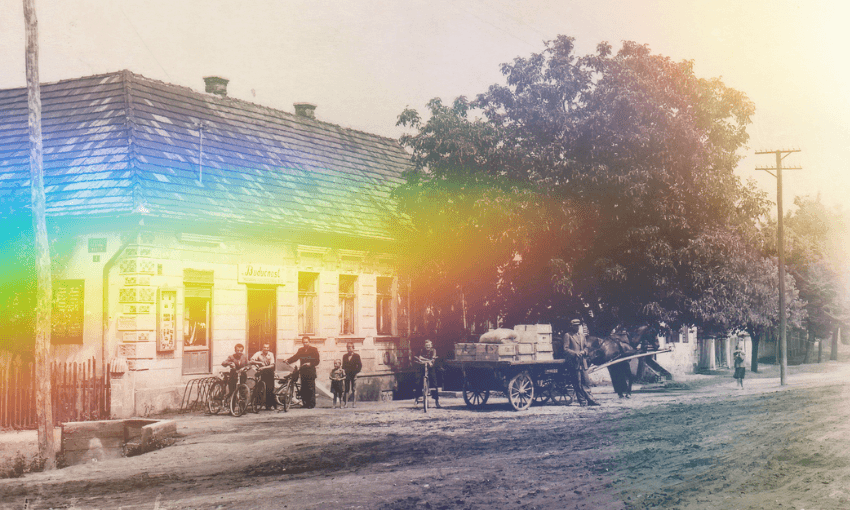



Tim Grgec tells his family’s story of escape, assimilation and ‘late-generation’ longing for what was lost.
We weren’t supposed to arrive in Kotoriba by taxi. Dad’s uncle and aunt were ready to greet us at the train station – which, for the village, is proudly the oldest in present-day Croatia – only our connecting train from Lake Balaton, Hungary, didn’t show up. We waited for hours until the man at the desk shrugged for the last time as if to say, “maybe tomorrow.” Visiting Kotoriba was the reason for our five-week holiday to Central and Eastern Europe. Dad was finally taking me and my older brother Petar to our grandparents’ village, the place they left for good in 1957.
The alluvial plain of Međimurje county, northern Croatia, holds rich soil that gave the Slavs reason to settle there in the Early Middle Ages. There are endless fields of wheat and maize crops between two rivers, the Mur to the north, which serves as Croatia’s border with Hungary, and the Drava, to the south. The area is known for its willow trees, which are stripped, dried and then woven by the region’s basket-makers. A village of around 3000 people, Kotoriba’s not on the way to anywhere. The streets are lined with squat white houses with tile roofs faded by the sun. Years later, after writing a book about my grandparents’ escape, I realised how little I understood about this place.
Everyone was staring as we hurried to the home of our stric and strina, my great-uncle and aunt. Dad knew the address from his visits before – the first time as a young man in 1980 (the first of his siblings to see the village), in 1982–83 on an extended OE, then again in 1989, when he brought my mother. He hadn’t spoken Croatian since. I’d never heard him speak it growing up, not even to my grandparents in Auckland who spoke English with thick accents and broken pieces of archaic vernacular from their youth. And yet, when Stric and Strina welcomed us at the door, Dad became that man of the past. The man I’d only seen in photos with dark hair and a moustache, who could have been a Cold War spy. There he was, speaking the village language, making jokes, as if he’d never left.
They teased Dad for still using the old-fashioned vernacular of 1950s Kotoriba. With our grandparents living so far away, the language they disappeared with and passed on to their children had been frozen in time. We spent most of the week touring the homes of distant aunts, uncles, and cousins, with Dad having to translate. Each household brought out the same stews of pork or chicken they’d killed themselves, and homemade beer and wine.
In the mornings, I woke to stovetop coffee whistling from the kitchen. With it came a shot of rakija, a homemade fruit spirit, which Strina claimed was the only way to clear the throat and start the day. She was a lively old woman, chattering to us in Croatian with no concern about being understood. Stric looked a lot like his brother, my grandfather. Apparently Stric had been the taller of the two, though a botched surgery had left him with a permanent hunchback as he hobbled around with a cane.
Since that visit to the village as an 18-year-old, I’ve felt a part of me was missing. Why did we not know more about this side of our heritage from the other side of the world, and why were we so ill-equipped to relate to it when we arrived?
In the years after that trip, I tried to embrace aspects of my Croatian heritage. I changed my surname by deed poll from Gregec (Dad’s anglicised version), to Grgec, the original Croatian spelling. I closely followed Croatian football. I bought a special pan for palačinke, Croatian crepes – Dad’s specialty, though I’ve never mastered how to keep the petal-thin mixture from sticking.
After sourcing my grandparents’ original birth certificates and getting countless forms officially translated, I became a Croatian citizen. Petar and I were sworn in at a ceremony at the Croatian Club in Wellington. The club is often busy at the weekends with language events and cooking classes. The wooden floors are worn from decades of folk dancing. But there were only four of us that Monday night: me, Petar, Issey, my wife, and Marija, the consular official from the Croatian Embassy in Canberra. To conclude proceedings, Marija played from her phone a tinny instrumental of the national anthem, Lijepa Naša Domovino, “Our Beautiful Homeland”. Petar and I could only stand there pretending to move our mouths, our mumbling barely audible in the empty hall.
Why did Dad’s side of the family never encourage our Croatian identity growing up? While Majka and Deda bickered in their own peculiar language and sent birthday cards with messages like “we hope you spend a nice day”, it never occurred to me that they were any different from anyone else’s grandparents. It wasn’t until visiting Kotoriba – and experiencing the dumb frustration of not being able to converse with my relations – that I wished we’d been encouraged to learn the language. If only Majka and Deda had told us more about their lives in Yugoslavia. If only we knew about the customs and cooking of their homeland, about where they were from. How much more enriched my life would’ve been. How different I’d be.

It’s easy to forget what it cost them to let it go. After one failed attempt which had them detained, my 19-year-old majka and 20-year-old deda escaped communist Yugoslavia in 1957. Yugoslavia was under the authoritarian regime of Josip Broz Tito, who ruled until his death in 1980. Both Majka and Deda left school at 14 and were destined to spend their days, like their siblings, parents, grandparents, and generations before them, hunched over in the fields tending to their family’s small plot of crops. Back then, most of the roads were made of dirt. There was no electricity and running water and sewerage had not yet reached everyone. Every room at school had Tito’s portrait on the wall. His hardened stare followed you everywhere, even to the forgotten villages like Kotoriba, watching his citizens’ every move.
My grandparents had heard stories of escape, of the sea, and of giant ships that could take people to the furthest parts of the world. A previous generation of Slavs and European emigrants journeyed to the United States or South America. By the 1950s, despite Tito’s Yugoslavia distancing itself from the Eastern Bloc, it was still increasingly difficult for ordinary Yugoslavians to leave for the West. The process of obtaining a passport was cumbersome and often out of reach for poor farmers like my grandparents. For many, especially those living near the border, escaping across into Austria or Italy – though risky – offered a more direct path to a new life. A life beyond subsistence farming, communism, the judgement of their relationship – given Majka’s supposedly lower social standing, as well as Deda’s looming compulsory military service for the Yugoslav People’s Army.
So without telling their families, Majka and Deda woke in the night and left Kotoriba. They were taken by an accomplice to Maribor, in present-day Slovenia, which sits on the border with Austria. The Pohorje Mountains proved a thoroughfare for Yugoslavians seeking asylum into Western Europe. There they paid an agent – someone who specialised in smuggling people over the border — to show them the way through the forest. Silently they followed this man into the night, into the great black pines guarded by armed patrolmen, and the barbed wire fences that divided East and West.
Overnight, my majka and deda became refugees in a new world. Deda soon found work as a farm labourer, and Majka lived with a family as their housemaid. They got married in November 1957 – first in a registry office, and then three weeks later in the parish church at Hartberg. My father, Stan, was born the next year in the industrial city of Graz.
It was entirely by chance they ended up in New Zealand.
With the help of the United Nations, the two initially planned to settle in Australia, where Deda had distant cousins. But when it came time for the medical, he developed pneumonia and was barred from boarding the ship. For as long as I can remember, Deda has carried a cough heavy with phlegm – a reminder of that missed voyage, and of how they came to settle here only because the next available ship, the MS Sibajak, was bound for New Zealand. And so my grandparents and infant father left Rotterdam, Netherlands, for a five-week journey to a country they’d never heard of, a country even further away from Europe. Three more children – Frank, Anna, and John – came soon after in Lyall Bay and Whanganui. Eventually, the family settled in Auckland where Majka and Deda lived ever since.

Assimilation is often framed in terms of loss, that to belong in a new country comes with the silent bargain of leaving an old one behind. Food loses its spice. Native language is forgotten. Names like my father’s, Stanko (which, in the mid-1960s, some kids turned into “Stinko” on the Keith Street School playground), are shortened to Stan. But for me, two generations on, being a Croatian citizen – on paper, at least – is more a curiosity than a serious cultural distinction. I can reclaim my heritage from the safety of Aotearoa, picking the best parts of Croatian culture – like the football team and exotic cooking – without any of the parts I’m less proud of or don’t want to understand.
I visited Croatia with my wife Issey on our European honeymoon. Unlike Dad with Mum in 1989, I didn’t take Issey to the village. Many of the older generation I met only a decade earlier – like my stric and strina – had died, and the language difficulties would’ve been too great without Dad as translator. Issey and I stuck to the Adriatic coast, to the impossibly blue coastline Croatia is best known for today.
Croatia became the 28th member state of the European Union in 2013, but we found it’s still a country hindered by Balkan disorder. Buses disappeared from their timetables without explanation, and the hot smell of sewage followed us down alleyways. Ana, a walking tour host in Dubrovnik, told us one morning of how unreasonably expensive her country had become since Croatia adopted the Euro in 2023. Her husband lived in Frankfurt and sent money for her and their three children. If it wasn’t for her ageing mother, she said, she too would likely join the exodus of 40,000 people leaving Croatia each year in the hope of a better life.
Dubrovnik’s famous Old Town walls were built to protect from invaders, and seas of visitors hop off buses and cruise ships every day to see what remains. I wondered if this was what my grandparents sensed when they returned – struck by Croatia’s beauty but confronted by the difficulties of living there. I saw it in Ana’s weariness, in the empty stares of taxi drivers stuck in traffic, and in the sighs of supermarket workers as I fumbled to weigh and bag my fruit. Here was a country buckling under the demands of western expectations, with the constant stream of tourists like me only adding to the strain.

My first poetry book, All Tito’s Children, is loosely based on my grandparents’ escape under Tito. But since returning to Croatia, I’ve felt something superficial about being able to “try on” my heritage without inheriting its burdens. All Tito’s Children, while mainly a family story, also comes from a place of intellectual fascination with communist dictatorship. In the book, I freely satirise government propaganda without understanding what it meant to live through it. I do so feeling none of the scars of Yugoslavia’s uncomfortable legacy, where violent religious, cultural, and ethnic tensions have endured for centuries. The stakes are low. The Croatia I reclaimed is more an idea than the real-life place my grandparents deliberately left behind.
In this sense, assimilation can be seen as a kind of liberation. For people like Majka and Deda, their village was their whole world. Generations before them had never ventured beyond the surrounding woods and plains. While life was slow and exhausting, the seasons were predictable. You were destined to farm the land your parents had before you, and their parents before them.
Majka and Deda bought a house at 111 Campbell St, Whanganui, within a couple of years of their arrival to New Zealand. Dad and his siblings quickly made friends with neighbours in the street. The family spent weekends with the small Yugoslav community and got around in a car along highways and sealed roads. Like everyone else, Majka bought her family groceries from the corner store, her meat from the butcher, and the milk came delivered in pint-sized glass bottles—something their relatives in Kotoriba could have never dreamt of.
But life in New Zealand gave them more than modern conveniences. It also gave them the freedom to imagine futures beyond the narrow expectations of the village. In Whanganui, my grandparents could be anonymous, unburdened by family expectations. Their children were free to choose their own paths, grow up and marry whoever they wanted. None of them would leave school at 14 to work in the fields as their parents did. So for me to wish too loudly for that cultural inheritance risks missing the point.
My longing is a late-generation comfort – the kind of thought only possible after the hard work of resettling has been done. To demand both, in some ways, dishonours the bargain my grandparents made. My frustration at not being more Croatian is only possible because they succeeded in being New Zealanders.

It’s telling that my grandparents only returned to Croatia twice. In 1980, they spent three months in Kotoriba, long enough to reunite tearfully with family and friends they hadn’t seen in over twenty years, to sit again at familiar kitchen tables and feel part of a life they’d left behind. By then, the village had electricity, a small marker of progress, yet in other ways little had changed.
The rhythms were the same: a life of subsistence farming, everything done by hand, the toll of church bells shaping lives of religious obedience. The world they left carried on without them, comfortingly unaltered by their absence, yet suffocatingly familiar all the same.
When they went back in 1990, on the eve of Yugoslavia’s dissolution, as part of a world trip, Majka and Deda were in their fifties and carried decades of another life. They’d lived longer in New Zealand than in the village. Majka and Deda still spoke the language, still knew the old streets and family rituals, but by then Kotoriba was no longer theirs. There was guilt at sitting across the table from siblings who had endured years of hardship they’d avoided. The united Yugoslavia they left was also unraveling, soon to be lost to war and bloody dissolution. After that trip, there was nothing left to go back for. And perhaps that is where I’ve sometimes misunderstood them. Where I’ve felt absence, they’ve felt freedom, a quiet relief at having left it behind.
For the rest of the family, the sense of Kotoriba and belonging is even more uneven. Dad’s brothers, Frank and John, visited the village once in the mid-1980s. His sister Anna hasn’t been. Among my cousins, Majka and Deda’s seven grandchildren, most of us have been to Croatia, but only Petar and me to Kotoriba. What emerges is not a single impression. Each visit – or non-visit –confirms the same underlying truth: that my grandparents’ decision to settle in New Zealand was permanent, and that their story of escape, and what it meant, shapes each of us differently.
Majka and Deda shared a room at the Elizabeth Knox Home and Hospital in Epsom, Auckland. The large atrium floods the entrance with light, spilling into wide corridors and open courtyards that feel more like a village than a care home. Majka passed the time on the bench outside their room, taking in the sun, while Deda did laps of the building on his walking frame. Majka died aged 86, drifting off in her sleep one morning. She’d been in and out of hospital after a series of falls, and the strain of recovery became too much. Deda made it to 88. It took him a moment to remember my name the last time I visited and, after a lifetime of hammering away in factories and workshops, he was almost completely deaf. There was a whiteboard next to his bed to communicate simple messages like, “we buy house,” or “we still in Wellington”. Issey and I showed him pictures on his iPad of our wedding and trip to Croatia. He enjoyed telling stories of how Wellington was too cold, too expensive, in 1959. Dad’s sister, Anna, was with us that morning. She said on a trip to Wellington a few years ago, aboard the Lyall Bay Number 3 bus, Deda recognised on the hill the old St Vincent de Paul hostel, Ngaroma, the first place they were housed in New Zealand.
Deda had been amused that we’d chosen to settle in Wellington — in his view, a city of blustering wind. His muttered stories came out fractured, looping, half-lost, with no real beginning or end. My inheritance was the same: indistinct, always slipping away. I tried to ask him about the willow branches back in Međimurje, how he stripped and wove them into baskets as a young man. But the conversation drifted. I was left holding only fragments – a gesture, something misremembered, the faint snap of a branch bent to its purpose.